
Hyperland — Douglas Adams's 1990 documentary on hypertext and multimedia
A concise encyclopedic overview of Hyperland, the 1990 BBC documentary written by Douglas Adams that explores hypertext, multimedia, agents and early visions of the web.
Hyperland is a fifty-minute television documentary written by Douglas Adams and produced and directed by Max Whitby for the BBC. It originally aired on BBC Two in 1990 and presents a speculative, often playful exploration of hypertext and related technologies. The program mixes interviews, demonstrations and staged scenes in which Adams plays a computer user navigating a landscape of linked information, while Tom Baker appears as the personification of a software agent that helps select and present material. The documentary itself is often cited as an early public-facing treatment of interactive media concepts shortly before the wide public emergence of the World Wide Web.
Image gallery
2 Images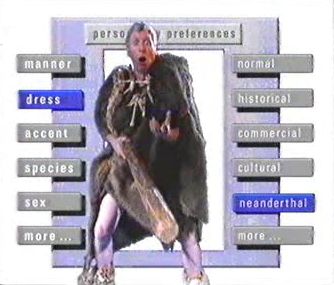
Format and central ideas
Structured around a dreamlike browsing session, Hyperland combines dramatized sequences with interviews and demonstrations to show how information might be organized and accessed. It uses visual metaphors and short vignettes to illustrate principles of linking, branching narratives and multimedia integration. The program explicitly examines how text, images, audio and video can be combined into non-linear presentations and discusses user agents, indexing and ways to navigate complex networks of material. It treats multimedia not as an add-on but as the central medium for future information systems, and explores how interactive elements change storytelling and learning.
People and projects featured
Hyperland brings together a wide range of thinkers, developers and creatives who were working on hypertext, interface design and digital media at the time. Contributors include early visionaries, researchers and artists who demonstrate prototypes or describe their ideas. Among those shown are:
- Vannevar Bush and discussion of his Memex concept as an antecedent idea for linked information.
- Ted Nelson, who explains the concept of hypertext and his Project Xanadu.
- Hans Peter Brøndmo on animated icons and dynamic representations.
- Robert Winter demonstrating an interactive presentation of Beethoven's Ninth Symphony adapted for user exploration.
- Reference to a structural idea by Kurt Vonnegut that stories have shapes which can be graphed.
- Examples of multimedia art, such as Robert Abel's work reimagining Guernica and Apple Multimedia Lab projects tied to television drama.
- Participants from Apple Multimedia Lab and others discussing an interactive treatment of the BBC dramatisation of the discovery of DNA structure (BBC program called Life Story) and the scientific event behind it (the discovery of DNA's structure).
- Short demonstrations of interactive fiction and digital puppetry, including a HyperCard-based children's story and a digital puppet named Mike Normal.
Notable features and legacy
Hyperland is often remembered for its prescient account of features that later became common on the internet: linked multimedia documents, proactive or assistive software agents, richer navigation metaphors and early virtual-reality experiments such as a prototype helmet called Cyberiad. Although it is a product of its time—mixing speculative prediction with contemporary prototypes—it accurately emphasizes the shift from linear documents to interconnected, user-directed information spaces. The program anticipated some facets of the modern web and multimedia delivery at a moment when public browsers and large-scale networked publishing were still nascent.
Why it matters
As a cultural artifact, Hyperland captures a transitional moment in digital history: analog and broadcast media encountering interactive computing. It is valued both as a documentary that brought technical ideas to a mainstream audience and as a creative piece that used dramatization to explore technological consequences. For historians of computing and media studies scholars, Hyperland is a compact example of early public discourse about how computers could change reading, storytelling and access to knowledge. Contemporary viewers often watch it for its historical context and its mixture of optimism and skepticism about technological change.
Further reading and archival notes
The program itself and many of the people and projects it highlights are discussed in later articles, retrospectives and academic treatments of hypertext and multimedia. For direct reference and archival information see a dedicated entry on the documentary Hyperland and profiles of individual contributors and projects linked throughout this article. The film remains a useful entry point for understanding how late-20th-century thinkers imagined interactive, multimedia information systems and the ways those early visions informed subsequent web development.
Questions and answers
Q: What is Hyperland?
A: Hyperland is a 50-minute long documentary movie about hypertext and surrounding technologies. It was written by Douglas Adams and produced and directed by Max Whitby. It ran on BBC Two in 1990.
Q: Who stars in the show?
A: Douglas Adams stars as a computer user and Tom Baker stars as a personification of a software agent.
Q: What are some of the topics discussed in the show?
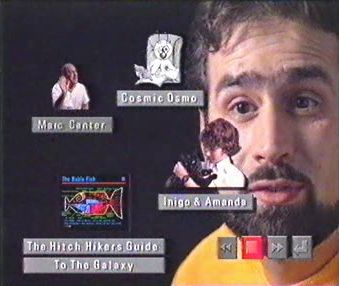
A: Vannevar Bush's Memex concept, Ted Nelson's explanation of hypertext and Project Xanadu, Hans Peter Brøndmo's idea of animated icons, Robert Winter's interactive version of Beethoven's 9th Symphony, Kurt Vonnegut's book Palm Sunday stories represented mathematically as graphs, Robert Abel's multimedia version of Picasso’s Guernica, Apple Multimedia Lab employees' multimedia version of Life Story, Amanda Goodenough’s Inigo Gets Out interactive story for children using Hypercard, Brad deGraf and Michael Wahrman’s digital puppet Mike Normal, NASA Ames Research Center scientist’s prototype Virtual Reality helmet called Cyberiad.
Q: When did it air?
A: Hyperland aired on BBC Two in 1990.
Q: How does it relate to modern web technology?
A: Hyperland describes many features that are similar to those found on the modern web even though it predates the public release of the first Web browser by about a year.
Q: Who makes an appearance in the show?
A: Marc Canter makes an appearance as an animated icon that is not "clicked" by Adams; however viewers never get to see his interview.
Q: What is presented at the end of the dream/documentary?
A: At the end of both Adams' dream and documentary there is a vision presented for how information might be accessed in 2005.
Related articles
Author
AlegsaOnline.com Hyperland — Douglas Adams's 1990 documentary on hypertext and multimedia Leandro Alegsa
URL: https://en.alegsaonline.com/art/46169
Sources
- theatlantic.com : "As We May Think"
- articles.latimes.com : "'Future Tense': The New Link Between Arts and Technology"