
Hylonomus — an early amniote from the Pennsylvanian of Nova Scotia
Hylonomus is a small, lizard‑like early amniote from about 312 million years ago, known from fossils in Joggins, Nova Scotia. Its remains illuminate early terrestrial vertebrate evolution.
Overview
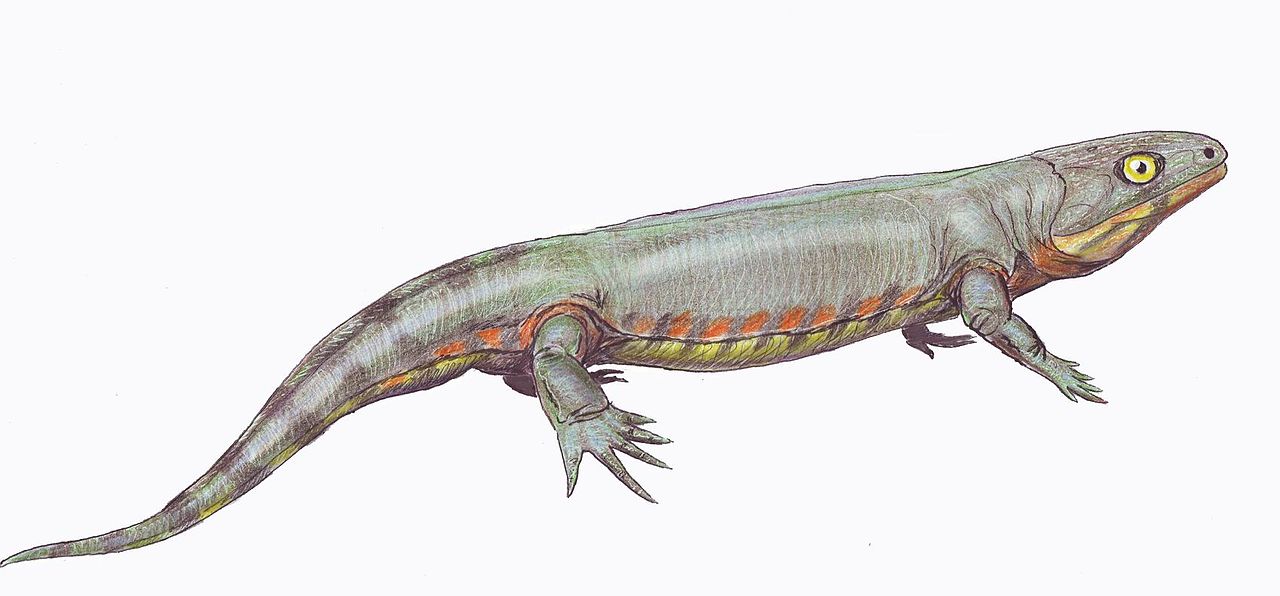
Hylonomus is an extinct, small-bodied tetrapod from the late Carboniferous (approximately 312 million years ago, in the Pennsylvanian). Its fossils, especially well known from the Joggins locality in Nova Scotia, represent some of the earliest securely identified amniote‑grade animals. In life it was roughly 20 centimetres long including the tail and had a general appearance often compared to modern lizards, though it is not a direct ancestor of any living lizard groups.
Image gallery
10 Images



Anatomy and diet
Hylonomus had a slender body, short limbs and a skull lacking the large temporal openings seen in many later reptiles. This combination of features places it close to the base of the amniote radiation but leaves some questions about precise placement—for example whether it lies on the sauropsid side of the amniote tree (sauropsid) or represents an early stem form. Its teeth were small and sharp, and the animal was almost certainly insectivorous or carnivorous on small invertebrates such as millipedes and early insects. Key characteristics often summarized in lists include:
- Small body size (≈20 cm total length)
- Skull without pronounced temporal openings
- Sharp, conical teeth suited to catching invertebrates
- Limbs adapted for crawling on the forest floor
Fossil record and taphonomy
Most specimens of Hylonomus come from fossilized stumps of large club mosses at the Joggins Fossil Cliffs in Nova Scotia. The favored interpretation is that hollowed stumps provided shelter for small animals; during storms or tree collapse creatures inside could become trapped and perish, later fossilizing in situ. This taphonomic scenario helps explain the unusually complete and abundant remains found there. Footprint assemblages from slightly older horizons in the region, including sites in New Brunswick, show trackways dated to about 315 million years ago that have been tentatively attributed to Hylonomus‑like animals.
History and scientific importance
Hylonomus has long been cited in discussions of when vertebrates first became fully terrestrial. Its age and morphology make it central to debates about the origin of amniotes (the group that includes modern reptiles, birds and mammals). Other early tetrapods that often appear in comparisons include Westlothiana and Casineria, both fragmentary or contested in their affinities, and slightly later or contemporaneous taxa found in the same general interval such as the early synapsid (sometimes called a basal pelycosaur) Archaeothyris and the early diapsid Petrolacosaurus recognized as a basal diapsid.
Classification and notable facts
Because Hylonomus lacks some of the derived skull openings used to define later reptile groups, paleontologists describe it cautiously as a primitive or stem amniote rather than assigning it confidently to modern reptile lineages. It remains an important fossil for understanding the ecological conditions of Carboniferous coal‑forest floors and the early steps by which vertebrates freed themselves from a dependence on water for reproduction. Continued study of Hylonomus and contemporaneous material helps refine the timing and sequence of anatomical changes that led to fully terrestrial vertebrate life.
For additional context and specimen information, see descriptions and site reports associated with the Joggins locality and comparative studies of early tetrapods (amphibian affinities discussion), early insect fauna (early insects) and invertebrate prey reconstructions (millipedes).
Questions and answers
Q: What is Hylonomus?
A: Hylonomus is an extinct stem tetrapod which lived 312 million years ago during the Pennsylvanian.
Q: How big was Hylonomus?
A: Hylonomus was 20 centimetres (8 inches) long (including the tail).
Q: What did it look like?
A: It likely would have looked rather similar to modern lizards.
Q: What did it eat?
A: It had small sharp teeth and likely ate small invertebrates such as millipedes or early insects.
Q: Where were fossils of Hylonomus found?
A: Fossils of Hylonomus have been found in the remains of fossilized club moss stumps in Joggins Fossil Cliffs, Nova Scotia, Canada.
Q: What other fossils are found in the same region of Nova Scotia?
A: Fossils of the basal pelycosaur Archaeothyris and the basal diapsid Petrolacosaurus are also found in this region, higher up, dated about 6 million years later.
Q: Are there any footprints attributed to Hylomonous?
A: Yes, some fossilized footprints from about 315 mya have been found in New Brunswick and are attributed to Hylomonous.
Related articles
Author
AlegsaOnline.com Hylonomus — an early amniote from the Pennsylvanian of Nova Scotia Leandro Alegsa
URL: https://en.alegsaonline.com/art/46137
Sources
- stanford.edu : "Error in estimation of rate and time inferred from the early Amniote fossil record and avian molecular clocks"
- doi.org : 10.1007/s00239-004-2624-9
- pubmed.ncbi.nlm.nih.gov : 15486700
- findarticles.com : article