
Huxley family: British scientific, literary and public-service dynasty
An overview of the Huxley family, a British lineage notable for major contributions to science, literature and public life from the 19th century to the modern era.
Overview
The Huxley family is a British family whose members have played prominent roles across science, medicine, literature, the arts and public service. Beginning with a 19th‑century emergence into national intellectual life, successive generations produced scientists, writers and administrators who influenced debates about evolution, modern biology, culture and international cooperation. The name is widely associated with both scholarly achievement and literary invention, and several family members also held high office in British public life and international institutions public service.
Image gallery
7 Images

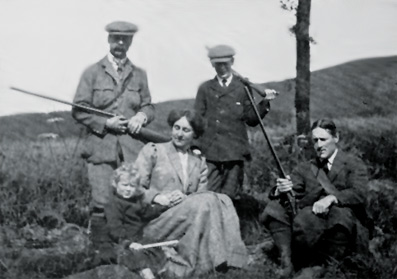


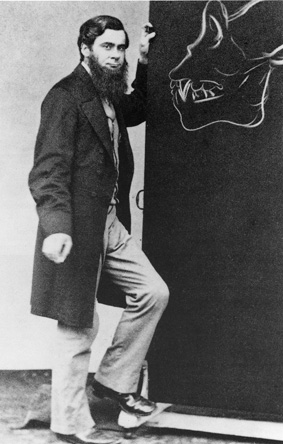

Founding figure: Thomas Henry Huxley
The family's modern prominence traces to Thomas Henry Huxley, a leading English scientist of the Victorian era. Trained as a zoologist and comparative anatomist, he became famous as a vigorous defender and populariser of evolutionary ideas after the publication of Charles Darwin's work. Huxley combined original research with public lecturing and institutional reform, helping professionalize biological sciences and shape science education in Britain. He was a prominent advocate for scientific rigor and for the social value of scientific knowledge.
20th‑century descendants
Later generations expanded the family's range. Among Thomas's descendants were several well‑known grandsons who achieved distinction in diverse fields. Aldous Huxley wrote novels and essays that explored modernity, psychology and perception, most famously Brave New World and the reflective essay collection that includes The Doors of Perception. Julian Huxley became a leading evolutionary biologist and synthesizer of 20th‑century evolutionary thought, advancing broader public understanding of evolution and serving as an international cultural figure. He was also deeply involved in founding and directing international scientific cooperation, including an early leadership role at UNESCO. Andrew Huxley pursued medical and physiological research, earning top honours including a Nobel Prize and later recognition such as appointment to the Order of Merit.
Characteristics and fields of activity
Members of the Huxley family are notable for several recurring characteristics: strong engagement with scientific research and its public communication; interdisciplinary interests spanning biology, medicine, literature and philosophy; and participation in institutional leadership. Their careers include laboratory research, academic teaching, popular writing, and roles in policy or administration that connected scientific expertise with public affairs. This combination of research accomplishment and public visibility helped make the Huxleys a recognizable intellectual lineage.
Legacy, influence and distinctions
The family’s influence is multi‑faceted. Scientifically, their work contributed to the consolidation of evolutionary biology and to physiological understanding of nerve and muscle function. Culturally, Aldous Huxley’s fiction shaped 20th‑century discussions about technology, utopia and consciousness. Institutionally, family members were active in the creation and governance of scientific bodies and international organisations, helping to extend scientific perspectives into education and policy. Distinctions among members include major awards, leadership posts and wide public recognition; taken together, these achievements illustrate an uncommon cross‑section of science and the humanities within a single family.
Notable family members
- Thomas Henry Huxley – Victorian zoologist and public scientist
- Aldous Huxley – novelist and essayist (e.g., Brave New World)
- Julian Huxley – evolutionary biologist and international cultural figure (evolution, UNESCO)
- Andrew Huxley – physiologist and Nobel laureate (Order of Merit)
For readers seeking more detail, specialized biographies and histories of Victorian science, 20th‑century biology and modern literature offer fuller accounts of individual lives and of how the Huxley family intersected with broader intellectual currents. The family's story illustrates how scientific research, literary creativity and public engagement can coexist and reinforce one another across generations.
Questions and answers
Q: Who was the oldest male in the Huxley family?
A: Thomas Henry Huxley (THH) was the oldest male in the family.
Q: What did THH do for a living?
A: THH was a zoologist and comparative anatomist.
Q: What books did Aldous Huxley write?
A: Aldous Huxley wrote the books Brave New World and Doors of Perception.
Q: What did Julian Huxley study and write about?
A: Julian Huxley studied evolution and wrote Evolution: The New Synthesis.
Q: What award did Andrew Huxley win?
A: Andrew Huxley won a Nobel Prize in Physiology.
Q: For what organisation was Julian appointed to be director of?
A: Julian Huxley was appointed as the first director of UNESCO.
Q: Which two members of the family served as President of the Royal Society, a century apart?
A Thomas and Andrew both served as President of the Royal Society, a century apart.
Related articles
Author
AlegsaOnline.com Huxley family: British scientific, literary and public-service dynasty Leandro Alegsa
URL: https://en.alegsaonline.com/art/46021