
Húsavík — northern Icelandic town famed for whale watching and fishing
Húsavík is a small northern Icelandic town known for whale watching, fishing, early Viking settlement, and local museums. This article covers its geography, history, economy, attractions and transport access.
Overview
Húsavík is a coastal town on the northern shore of Iceland, situated on the broad bay of Skjálfandi. It functions as a local service centre for surrounding farms and settlements and as a base for visitors exploring Iceland's north. The town is often described in guides and official material; for recent population figures see local demographic reports.
Image gallery
7 Images




Geography and climate
The town sits beside a wide, sheltered bay and is surrounded by low hills and farmland. The coastal position moderates temperatures compared with inland highlands; weather tends to be changeable, influenced by maritime systems. Local authorities and meteorological services provide regional climate summaries and practical information for visitors via regional maps and guides.
History and settlement
Húsavík appears in accounts of Iceland’s settlement era. Around the ninth century a Scandinavian mariner often named Garðar Svavarsson visited the northern coast, established a short-term settlement and overwintered. Sources describe how he left in spring, leaving a small group who remained to establish a permanent farm. These events link Húsavík to the wider wave of Norse and Scandinavian colonisation; readers can consult material on early explorers and saga-era narratives at accounts of early Scandinavian explorers.
Demographics and community
Húsavík is a small community with a population in the low thousands. Its role as a municipal centre includes services such as schools, a community centre and small businesses that support year-round residents as well as seasonal visitors. Local demographic detail and municipal planning notes are available through regional population and planning resources.
Economy
The local economy combines traditional maritime activity with contemporary nature tourism. A working harbour and small fleet sustain a fishing industry that supplies local processing and export channels; information on fisheries and maritime practice is published by regional authorities and industry bodies at fishing and maritime economy. Tourism—particularly whale watching—has grown in recent decades and now supports boat operators, guides, accommodation and hospitality services; see regional tourism resources for visitor guidance.
Whale watching, museum and research
Húsavík is widely known as a whale-watching centre. Regular excursions depart from the harbour to observe baleen whales, toothed whales and other marine mammals. The town also hosts a dedicated whale museum that presents natural history, local research and conservation work. Scientific monitoring and conservation projects operating in northern waters contribute data used by researchers and are described in specialist resources at industry and research overviews.
Culture, landmarks and events
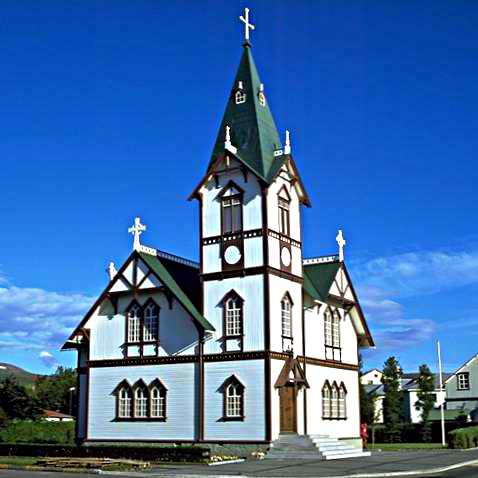
The town maintains cultural venues including a small museum, galleries and a traditional wooden church that reflects local architectural heritage. Annual festivals and events celebrate music, maritime life and regional culture; information about cultural programming and festival dates is available through local visitor services and online resources at tourism resources and municipal pages.
Transport and access
Húsavík is accessible by road from other northern towns and by regional air services that operate seasonally. Visitor facilities include a harbour for excursion vessels and local coach connections. Practical travel advice and route maps for the area can be consulted at regional transport and maps.
Conservation and modern significance
Because of its marine environment, Húsavík plays a role in conservation work and public education about marine mammals and coastal ecosystems. Partnerships between local operators, museums and researchers help promote sustainable tourism practices and monitoring of wildlife populations. Further information about conservation efforts and community initiatives is available via environmental and industry links at local industry and conservation and marine economy.
Further information
- Overview of Iceland
- Maps and regional context for northern Iceland
- Population and demographic sources
- Local industry and research overview
- Tourism and visitor information
- Fishing and maritime economy
- Accounts of early Scandinavian explorers
- Archaeological and settlement notes
- Seasonal history and winter records
- Spring and annual cycles in settlement stories
- Origins of local farms and homesteads
Questions and answers
Q: Where is Húsavík located?
A: Húsavík is a town located in northern Iceland.
Q: What is the population of Húsavík?
A: The population of Húsavík is 2,237 people.
Q: What are the main industries in Húsavík?
A: The main industries in Húsavík are tourism and fishing.
Q: Who was Garðar Svavarsson?
A: Garðar Svavarsson was a Swedish viking who arrived on the northern coast of Iceland around 850 AD.
Q: What did Garðar Svavarsson do when he arrived on the northern coast of Iceland?
A: Garðar Svavarsson built a settlement and prepared to stay for the winter.
Q: What happened after Garðar Svavarsson left?
A: After Garðar Svavarsson left, he left two slaves behind who went on to make a farm in the settlement.
Q: When did Garðar Svavarsson arrive in Iceland?
A: Garðar Svavarsson arrived on the northern coast of Iceland around 850 AD.
Related articles
Author
AlegsaOnline.com Húsavík — northern Icelandic town famed for whale watching and fishing Leandro Alegsa
URL: https://en.alegsaonline.com/art/45991
Sources
- lonelyplanet.com : "Húsavík"
- books.google.com : The History of Iceland