
Hurdle race
A sprint or long-distance track event in which athletes run and clear a series of evenly spaced barriers; includes 100/110 m sprints, 400 m long hurdles, indoor variants, technique and competition rules.
Overview
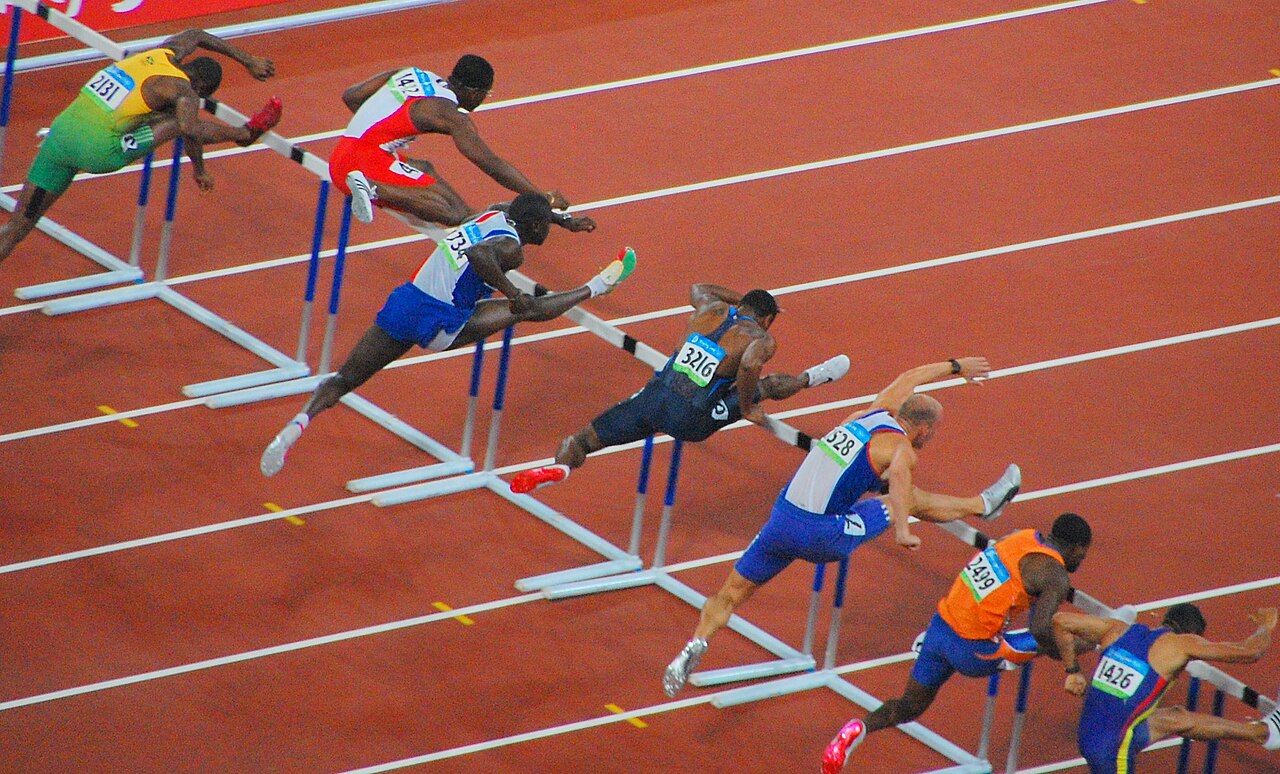
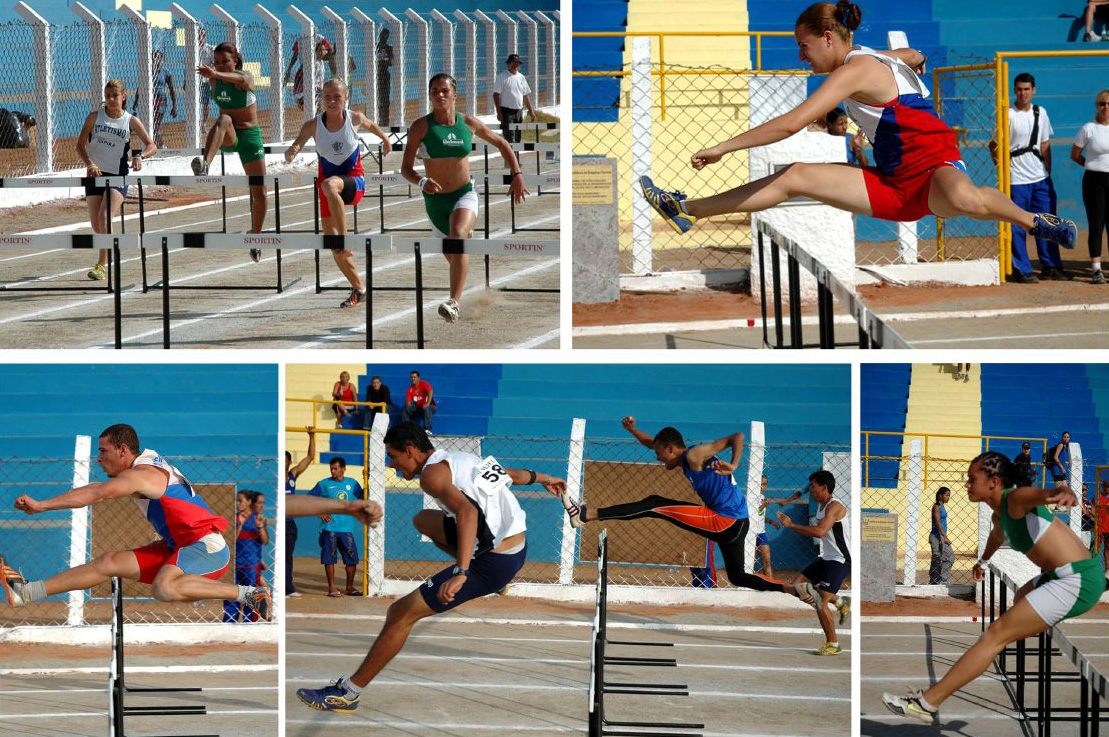
A hurdle race is a track and field discipline in which competitors sprint and clear a set number of low barriers — hurdles — placed at regular intervals along a straight or oval track. Hurdling combines speed, rhythm and jumping technique; success requires fast sprinting between obstacles and efficient clearance to preserve momentum.
Image gallery
10 Images





Standard formats
- Short sprint hurdles: the classic outdoor sprint is contested over a short distance with ten hurdles; men and women run different sprint distances and hurdle heights. Indoor sprint hurdling commonly uses a shorter straight (often 60 metres).
- Long hurdles: the 400-metre hurdle race is one lap of the track with ten hurdles and demands both speed endurance and technical consistency.
- Variations: nonstandard distances are run at lower levels or indoors, and combined events include hurdle races as one component (for example, in men's and women's combined track competitions).
Characteristics and techniques
Hurls are fixed barriers that are designed to tip over if struck; knocking one down is not usually grounds for disqualification unless done deliberately to gain an advantage. Athletes use a lead leg to clear the hurdle and a trail leg that snaps through to land quickly. Sprint hurdlers commonly use a three-step pattern between hurdles, while long-hurdle athletes adopt spacing and stride patterns suited to sustaining speed for a full lap.
History and development
Hurdling grew out of early cross-country and track contests that required clearing obstacles. It became standardized during the late 19th and early 20th centuries as modern athletics organized rules for distances, hurdle counts and heights. Women's sprint hurdle distances evolved historically; international organizers standardized events to create parity with men's competitions.
Competition and rules
Major international competitions, including the Olympic Games, feature the established hurdle events. Rules govern hurdle construction, placement and athlete conduct; false starts, lane infractions and deliberate obstruction carry penalties. Indoor meets and junior competitions sometimes use modified distances and heights.
Importance and notable facts
Hurdling tests a blend of explosive power, technique and tactical pacing, making it a distinctive and spectator-friendly part of track and field. For comparisons of event types and distances see hurdle distances and formats, and for major championships and historical records consult resources on Olympic and international athletics.
Questions and answers
Q: What is a hurdle race?
A: A hurdle race is a type of track and field race that involves running over hurdles.
Q: What are the two types of hurdle races?
A: The two types of hurdle races are sprint hurdle races and long hurdle races.
Q: What is the standard distance for men in the sprint hurdle race?
A: The standard distance for men in the sprint hurdle race is 110 meters.
Q: What is the standard distance for women in the sprint hurdle race?
A: The standard distance for women in the sprint hurdle race is 100 meters.
Q: How long is the long hurdle race?
A: The long hurdle race is 400 meters for both men and women.
Q: How many hurdles are there in each hurdle race?
A: Each hurdle race is run over ten hurdles.
Q: Are hurdle races Olympic events?
A: Yes, all sprint and long hurdle races are Olympic events.
Related articles
Author
AlegsaOnline.com Hurdle race Leandro Alegsa
URL: https://en.alegsaonline.com/art/45807
Sources
- youtube.com : Slow motion 110m Hurdles race