
Human sacrifice: practices, reasons, and historical decline
An overview of human sacrifice across societies: definitions, ritual forms, historical occurrences, social meanings, archaeological evidence, and its near disappearance under modern law and norms.
Human sacrifice is the intentional killing of a person as an offering to a deity or other supernatural force. The term covers a wide range of practices and beliefs rather than a single ritual: in some societies the victim was presented to secure fertility, victory in war, or favourable weather; in others the act served political, funerary, or social purposes. Scholars study these practices with caution, relying on archaeology, written records, and comparative anthropology to reduce misinterpretation.
Image gallery
10 Images


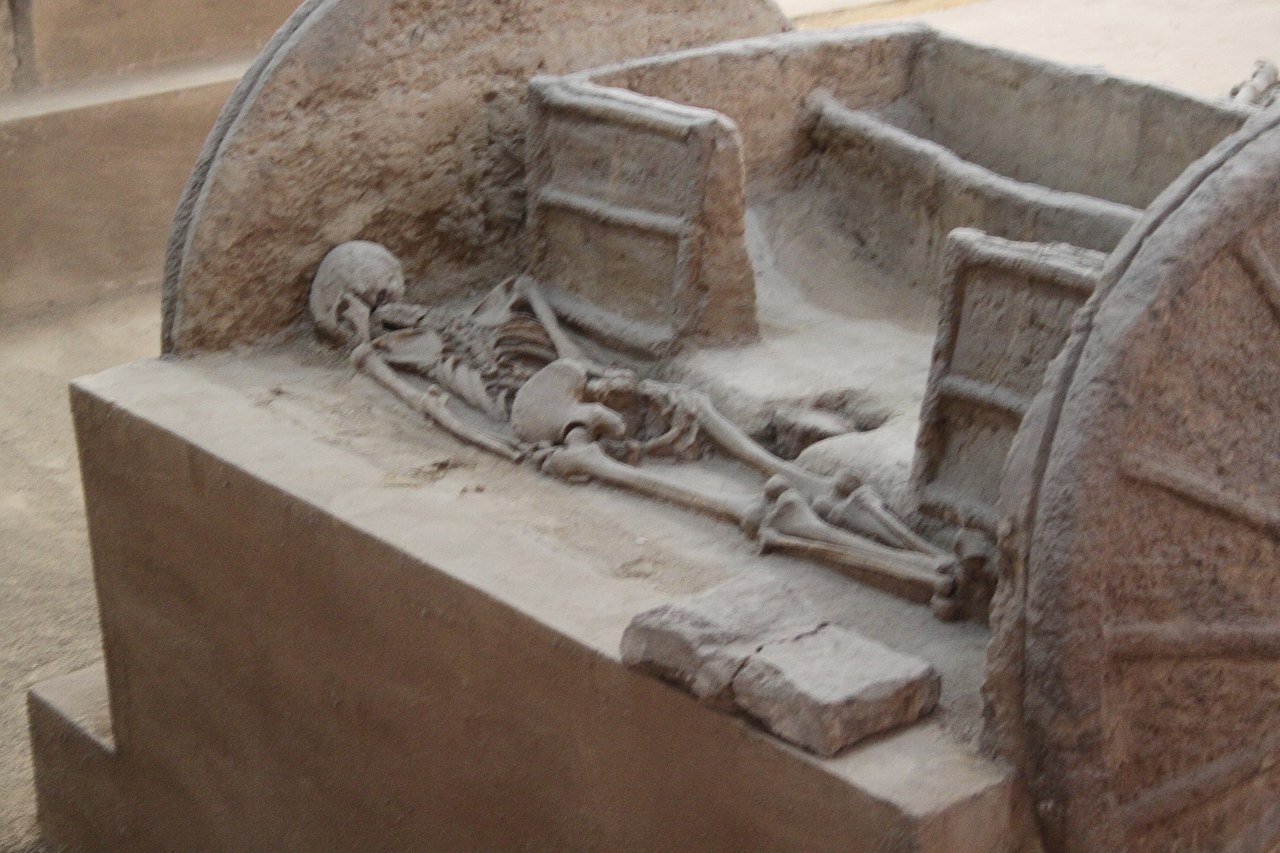


Forms and contexts
Methods and contexts varied greatly. Some sacrifices were formal rituals carried out in public with elaborate ceremonial objects; others were private or occasional acts. Common purposes included:
- Appeasing or honouring gods, ancestors, or spirits to gain protection, rain, harvests, or success in conflict.
- Funerary rites, in which retainers or captives were killed to accompany a ruler or elite person in the afterlife.
- Political demonstrations of power, intimidation, or the sanctification of rulership.
- Punitive or judicial killings sometimes framed in religious language.
Descriptions of specific techniques—such as ritual killing, dismemberment, immurement, or burning—differ by region and period. Historical narratives and archaeological finds indicate that victims could include prisoners of war, slaves, criminals, children, or persons chosen for symbolic reasons. Accounts of ritual killing appear in many ancient sources and in modern ethnographic records when traditional ceremonies persisted into recent centuries. See also discussions of ritual methods in sources on ritual killing and on traditions that invoked spirits.
Geographic and historical overview
Human sacrifice has been documented on several continents. In parts of Mesoamerica and elsewhere in the Americas, archaeological and ethnohistoric evidence indicates ritual deaths associated with temple rites and warfare. In the ancient Near East, Europe, Africa, and Asia there are both textual records and material traces that scholars interpret as sacrificial. Practices and their frequency changed over time: what appears in one era or cultural context may be absent or transformed in another. For example, references to Roman practices include punishments such as the burial of Vestal Virgins in extreme cases, a distinct phenomenon often discussed in legal and religious studies; see Vestal Virgins in historical sources.
Interpretation and significance
Scholars propose several overlapping explanations: religious logic (communication with supernatural beings), social cohesion (reinforcing group identity and hierarchy), political utility (legitimising leaders), and symbolic substitution (using a human to represent or transfer danger). Interpretation is sensitive to context; archaeologists combine burial data, iconography, and contemporary accounts to avoid projecting modern assumptions onto the past. Comparative studies caution against labeling all such practices as morally equivalent or simple survivals of «primitive» belief systems.
Decline and modern status
From late antiquity into the modern era, human sacrifice largely disappeared as organized religions, political institutions, and ethical norms changed. In most contemporary societies it is legally proscribed and widely condemned by religious authorities. Nevertheless, isolated incidents and ritual killings have been reported in recent times in areas where traditional beliefs intersect with social stressors; governments and international organisations treat these as criminal matters and human-rights concerns. Modern scholarship and public education have contributed to the near-universal delegitimisation of human sacrifice in official religious and civic life.
Why it matters today
Studying human sacrifice helps historians, archaeologists, and anthropologists understand how communities constructed meaning, managed fear and uncertainty, and organised power. It also highlights the challenges of interpreting fragmentary evidence and the ethical responsibility of researchers to present balanced accounts. For further reading consult general surveys and specific case studies on ancient ritual practices and the archaeology of sacrifice, as well as reliable online resources linked under general topics such as ancient cultures, ritual practice (ritual killing), spirit belief systems (spirits), and classical Roman religious institutions (Vestal Virgins).
Questions and answers
Q: What is human sacrifice?
A: Human sacrifice is the act of killing a human being as an offering to a deity or other supernatural power.
Q: How did different cultures practice human sacrifice?
A: Different cultures practiced human sacrifice in different ways. Some, such as the Mayans and Aztecs, are notorious for their ritual killings, while others have looked down on the practice as primitive. Victims were ritually killed in a manner that was supposed to please or appease gods or spirits.
Q: Who were victims of human sacrifice?
A: Victims of human sacrifice ranged from prisoners to infants to Vestal Virgins whose stomachs were cut open with a dull stone knife and their hearts were burned.
Q: Is human sacrifice still common today?
A: Human sacrifice has become less common around the world and sacrifices are now very rare. Most religions condemn the practice and present-day laws generally treat it as a criminal matter. Nonetheless it is still occasionally seen today, especially in the least developed areas of the world where traditional beliefs persist.
Q: Are there any religious groups that condone human sacrifice?
A: Most religions condemn the practice of human sacrifice and do not condone it in any way.
Q: What type of punishment does modern law impose on those who commit acts of human sacrifice?
A: Modern laws generally treat acts of human sacrifices as criminal matters and impose punishments accordingly.
Q: Are there any special rituals associated with ancient forms of human sacrifices?
A: Yes, victims were ritually killed in a manner that was supposed to please or appease gods or spirits in ancient forms of sacrificial practices.
Related articles
Author
AlegsaOnline.com Human sacrifice: practices, reasons, and historical decline Leandro Alegsa
URL: https://en.alegsaonline.com/art/45666
Sources
- kronia.com : kronia.com/library/journals/sacrfice.txt