
Huayangosaurus — an early stegosaur from Middle Jurassic China
A small, primitive stegosaurian dinosaur from the Middle Jurassic Lower Shaximiao Formation of Sichuan, China, important for understanding early stegosaur anatomy and evolution.
Huayangosaurus is a genus of stegosaurian dinosaur from the Middle Jurassic rocks of what is now Sichuan Province, China. It lived roughly 165 million years ago and was considerably smaller than later stegosaurs: adult individuals reached about 4.5 metres in length. The genus name refers to an older regional name for Sichuan and ties the animal to the fossil-bearing Lower Shaximiao Formation, a unit that has produced a diverse assemblage of Jurassic vertebrates.
Image gallery
7 Images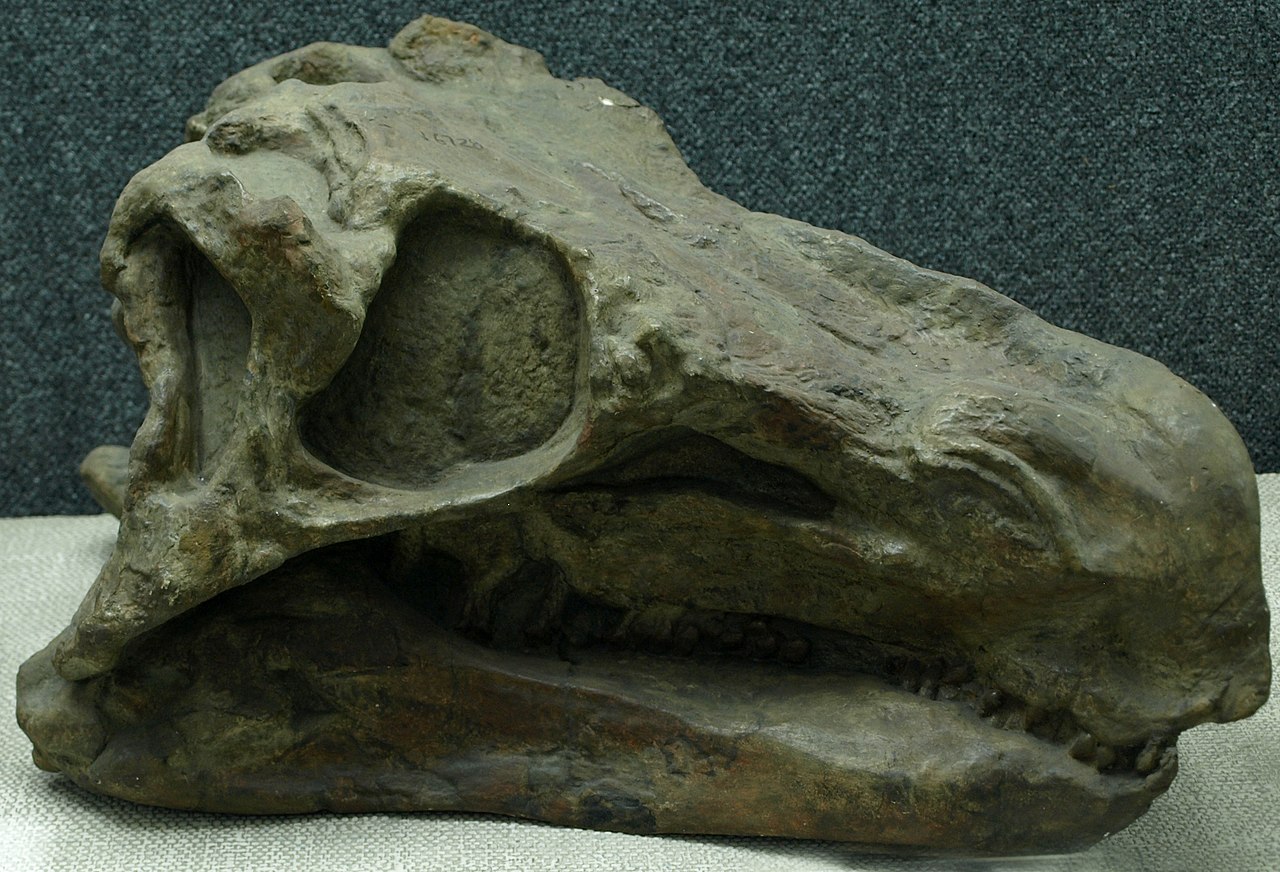




Key characteristics
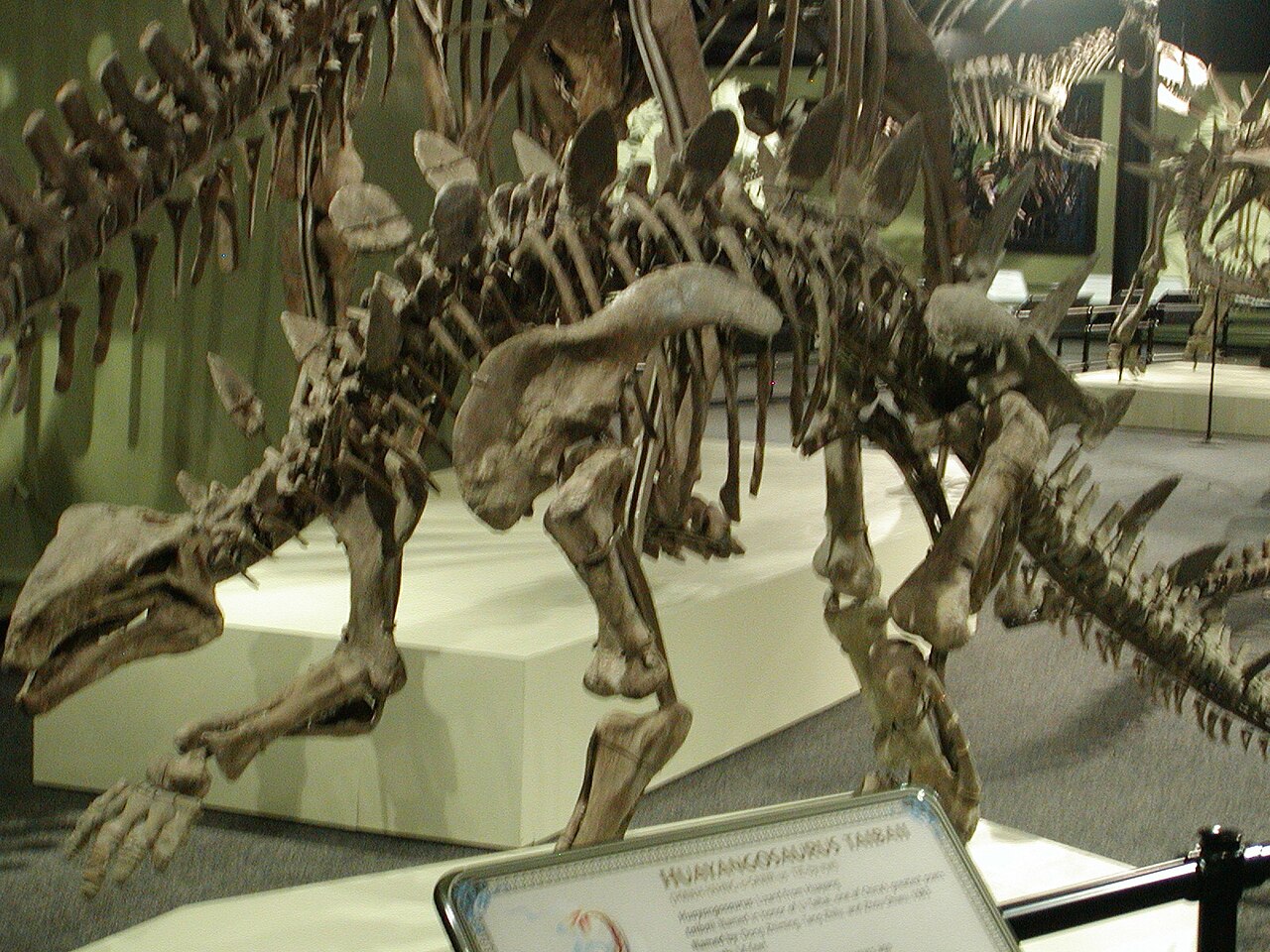
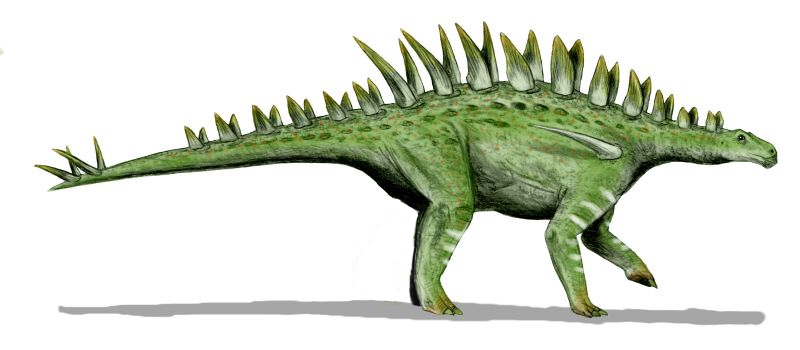
Huayangosaurus displays a mixture of features typical of stegosaurs and more primitive traits. It was a quadrupedal herbivore with two parallel rows of dermal armor along its back and tail. Unlike the broad, tall plates of later stegosaurs such as Stegosaurus, its armor elements tend to be smaller and spike-like. Another primitive feature is the presence of teeth toward the front of the jaws, a condition lost in many later stegosaurs. Its limbs were robust and the body relatively low to the ground, consistent with a heavy, armored herbivore adapted for slow locomotion and low browsing.
Discovery and geological context
Fossils of Huayangosaurus come from the Lower Shaximiao Formation, a Middle Jurassic sedimentary sequence known for river and floodplain deposits. The formation has yielded a range of dinosaurs and other vertebrates that shared a seasonally wet environment. In the same faunal assemblage are several sauropods and other herbivores, as well as theropod predators, indicating a complex ecosystem of large and small animals.
Evolutionary importance
As one of the earliest and most basal members of the Stegosauria, Huayangosaurus is important for reconstructing the early evolution of the group. Its retained front teeth and comparatively modest dermal armour illustrate a transitional body plan between more primitive ornithischians and the highly specialized stegosaurs that appeared later in the Jurassic and Cretaceous. The genus, described in the late 20th century, provides evidence that stegosaurs were already diversifying in Asia before some of their better-known relatives appeared elsewhere.
Palaeobiology and behaviour
Huayangosaurus was almost certainly a herbivore that fed on low-growing vegetation such as ferns and other understory plants. The functional significance of its plates and spikes remains debated: proposals include defence against predators, visual display for species recognition or sexual selection, and a role in thermoregulatory physiology. As with many extinct animals, direct evidence for behaviour is limited, so reconstructions combine anatomical study with comparisons to living animals and other fossil taxa.
Specimens and research
The genus is known from relatively well-preserved skeletal material, including cranial and postcranial elements, which has allowed detailed study of its anatomy. Type and referred specimens are curated in Chinese scientific institutions and have been the subject of descriptive and comparative research that places Huayangosaurus near the base of the stegosaur family tree.
Further reading and resources
- Taxonomic overview and fossil record
- Anatomical descriptions and skeletal reconstructions
- Geology of the Lower Shaximiao Formation
- Palaeontology in Sichuan Province
- Regional history: the name Huayang
- Comparisons with later stegosaurs such as Stegosaurus
- Biogeography of Middle Jurassic dinosaurs
- Contemporary sauropods from the same formation
- Coexisting ornithischians and small herbivores
- Theropod predators that shared its habitat
Questions and answers
Q: What is Huayangosaurus?
A: Huayangosaurus is a type of stegosaurian dinosaur that lived during the Middle Jurassic period in China.
Q: Why is it called Huayangosaurus?
A: It is called Huayangosaurus because the name comes from "Huayang", which is a name of the Sichuan province in China.
Q: When did Huayangosaurus live?
A: Huayangosaurus lived about 165 million years ago during the Middle Jurassic period.
Q: How does Huayangosaurus compare to Stegosaurus?
A: Huayangosaurus existed about 20 million years before Stegosaurus and was much smaller at only 4.5 meters long.
Q: What other dinosaurs were contemporaries of Huayangosaurus in its habitat?
A: The sauropods Shunosaurus, Datousaurus, Omeisaurus, and Protognathosaurus, the ornithopod Xiaosaurus, and the carnivorous Gasosaurus were other dinosaurs that shared the local landscape with Huayangosaurus.
Q: Where was Huayangosaurus found?
A: Huayangosaurus was found in the Lower Shaximiao Formation in China.
Q: What kind of dinosaur is Huayangosaurus?
A: Huayangosaurus is a stegosaurian dinosaur.
Related articles
Author
AlegsaOnline.com Huayangosaurus — an early stegosaur from Middle Jurassic China Leandro Alegsa
URL: https://en.alegsaonline.com/art/45502