
Hoverfly (Syrphidae) — biology, mimicry, and ecological roles
Hoverflies (family Syrphidae) are flower-visiting flies known for hovering flight, wasp-like coloration, diverse larval diets, pollination, and use as biological control agents.
Overview
Hoverflies, members of the fly family Syrphidae, are a common and widespread group of insects often seen visiting blossoms. Many species are quick and agile in flight and are famous for the ability to hover in place while probing for nectar. Because adults frequent flowers, they are frequently called "flower flies." Scientists have described roughly six thousand species in some two hundred genera, and the group occurs on most continents outside Antarctica.
Image gallery
10 Images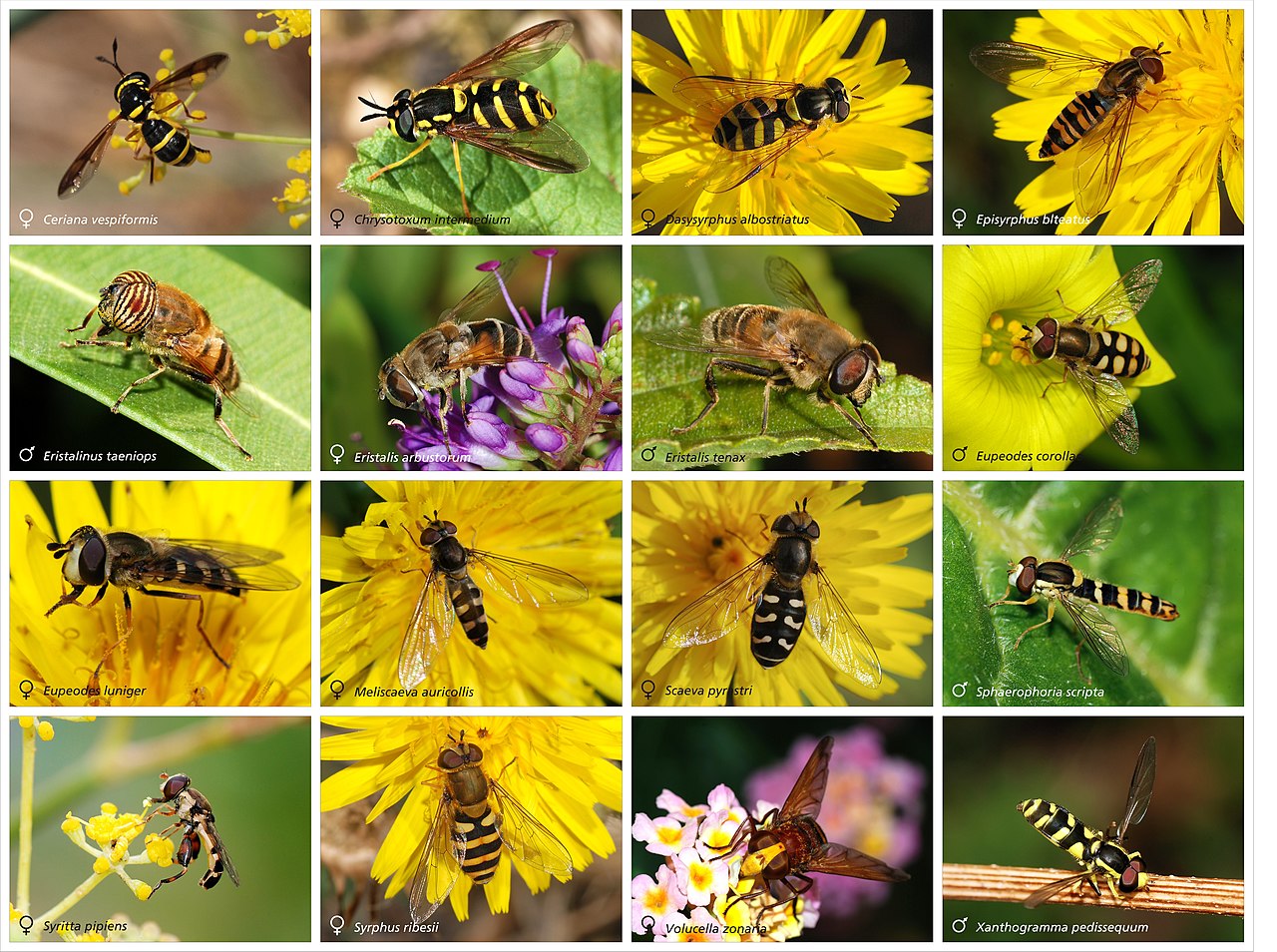


Appearance and mimicry
Hoverflies vary in size and color but are often mistaken for wasps or bees because many species bear bold yellow-and-black bands. This resemblance is a classic example of Batesian mimicry: a harmless organism resembling a harmful one to gain protection from predators. To observers the mimicry can be convincing—birds and other predators may avoid a hoverfly because it resembles stinging wasps. Despite this, hoverflies are generally harmless to people; they lack a sting and do not pose the same threat as many hymenopterans. Their bright patterns are a form of warning or colouration that communicates risk to visually hunting predators.
Life cycle and feeding habits
The life cycle of a hoverfly includes egg, larval, pupal and adult stages. Adult hoverflies typically visit flowers to feed on pollen and nectar, gaining energy for flight and breeding. Larvae (sometimes called maggots) show exceptional dietary diversity: some species are scavengers or saprotrophs feeding on decaying plant and animal material in soil, rot holes or aquatic habitats; others are active insectivores that prey on soft-bodied pests such as aphids. The range of larval diets across different species contributes to their ecological importance.
Ecological roles and human uses
Hoverflies play two especially valuable roles in ecosystems and agriculture. First, as adults they serve as effective pollinators of many wildflowers and crops, transferring pollen while feeding. Second, predatory larvae act as natural enemies of plant-sucking insects and can reduce pest populations in gardens and fields. Because aphids and other sap-sucking pests damage crops and ornamentals, hoverflies are recognized as important natural enemies and are sometimes incorporated into integrated pest management and biological control programs. Their presence supports both biodiversity and agricultural resilience.
Identification and notable habits
Field identification relies on size, wing venation, eye position and body patterning. Many people first notice hoverflies by their characteristic flight—parents and children commonly see them hovering above flowers or leaves. Some flowering plants have evolved signals that specifically attract hoverflies; for example, certain orchids mimic the alarm odors released by aphid colonies to lure hoverflies for pollination.
Summary and distinctions
Hoverflies are a diverse, harmless, and ecologically beneficial family of flies. Their adult diets center on nectar and pollen, while larval diets vary widely across species, from saprotrophic feeding in wet or decaying habitats to predation on aphids and other pests. Because they resemble stinging insects, hoverflies illustrate an adaptive survival strategy but remain an important ally for pollination and pest suppression. For further reading and identification resources consult specialist keys and regional guides available online and in entomological literature covering pest impacts and conservation approaches such as support for pollinators and biological control.
- Life stages: egg → larva (larvae / maggots) → pupa → adult
- Common adult diet: nectar and pollen
- Common larval roles: saprotroph, aquatic detritivore and predator of plant pests
- Conservation note: preserving flower-rich habitats benefits hoverflies and their services
For images, identification charts and regional checklists see specialized resources: Syrphidae references, pollinator guides and applied entomology texts that describe the use of hoverflies in sustainable agriculture and garden-friendly pest management strategies.
Questions and answers
Q: What is the scientific name of hoverflies?
A: The scientific name of hoverflies is Syrphidae.
Q: How do hoverflies protect themselves from predators?
A: Hoverflies mimic wasp stripes, and are usually smaller than wasps. Thus to a bird they may look scarcely worth eating, and dangerous. This is an example of Batesian mimicry, where the hoverfly looks like something dangerous or which tastes disgusting, but in reality it is harmless.
Q: What do adult hoverflies feed on?
A: Adult syrphid flies mainly feed on nectar and pollen.
Q: What do larvae (maggots) eat?
A: Larvae (maggots) can eat a wide range of foods depending on the species; some are saprotrophs that eat decaying plant and animal matter in the soil or in ponds and streams, while others are insectivores that prey on aphids, thrips, and other plant-sucking insects.
Q: How many species have been described so far?
A: About 6,000 species in 200 genera have been described so far.
Q: Where can hoverflies be found?
A: Hoverflies can be found throughout the world except Antarctica.
Related articles
Author
AlegsaOnline.com Hoverfly (Syrphidae) — biology, mimicry, and ecological roles Leandro Alegsa
URL: https://en.alegsaonline.com/art/45391