
Housefly (Musca domestica)
Overview of the common housefly, Musca domestica: appearance, life cycle, role in human environments, health risks, ecological role and practical control measures.
The housefly, Musca domestica, is the most familiar of the fly species that live alongside people. It is widely distributed across temperate and tropical regions and is strongly synanthropic — meaning it thrives in human-altered environments. Adults are commonly seen around homes, farms, markets and waste sites where food and breeding substrates are available. Because of its close association with people and domestic animals, the housefly is often cited in discussions about sanitation, nuisance pests and public health. For more information on its general biology see housefly overview and taxonomic notes at Musca domestica resources.
Adult houseflies are small, agile insects with a compact body, large compound eyes, a single pair of functional wings and characteristic sponge-like mouthparts adapted for feeding on liquid or semi-liquid materials. They pick up fluids by regurgitating digestive juices onto solid food to dissolve it, then sucking up the result. Their fine hairs and sticky pads on feet let them walk on smooth vertical surfaces and pick up microorganisms from surfaces they visit. While different descriptions emphasize varying details, common traits and behaviors are well documented; sources on public health risks discuss these features in context, for example vector characteristics and pest status in agriculture. Their role as potential carriers of pathogens is addressed in many health guidelines (disease transmission).
Image gallery
10 Images




Life cycle and reproduction
The housefly life cycle is a classic example of complete metamorphosis: egg, larva, pupa and adult. Females lay eggs in batches on or near decaying organic material such as garbage, animal remains or feces. Over their life span, females can lay many eggs in several batches, so populations can grow rapidly in suitable conditions. Eggs hatch into legless larvae commonly called maggots; these feed on the substrate and pass through successive growth stages (instars) before seeking drier sites to pupate. At the end of the third instar, maggots migrate to a cooler, drier place and transform into reddish-brown pupae. After pupation, adult flies emerge and begin the reproductive and dispersal phase of the life cycle. Temperature and moisture strongly influence the timing of each stage; details about eggs and reproductive capacity are summarized in entomological guides (egg laying, larval stage, instars, pupal stage, metamorphosis).
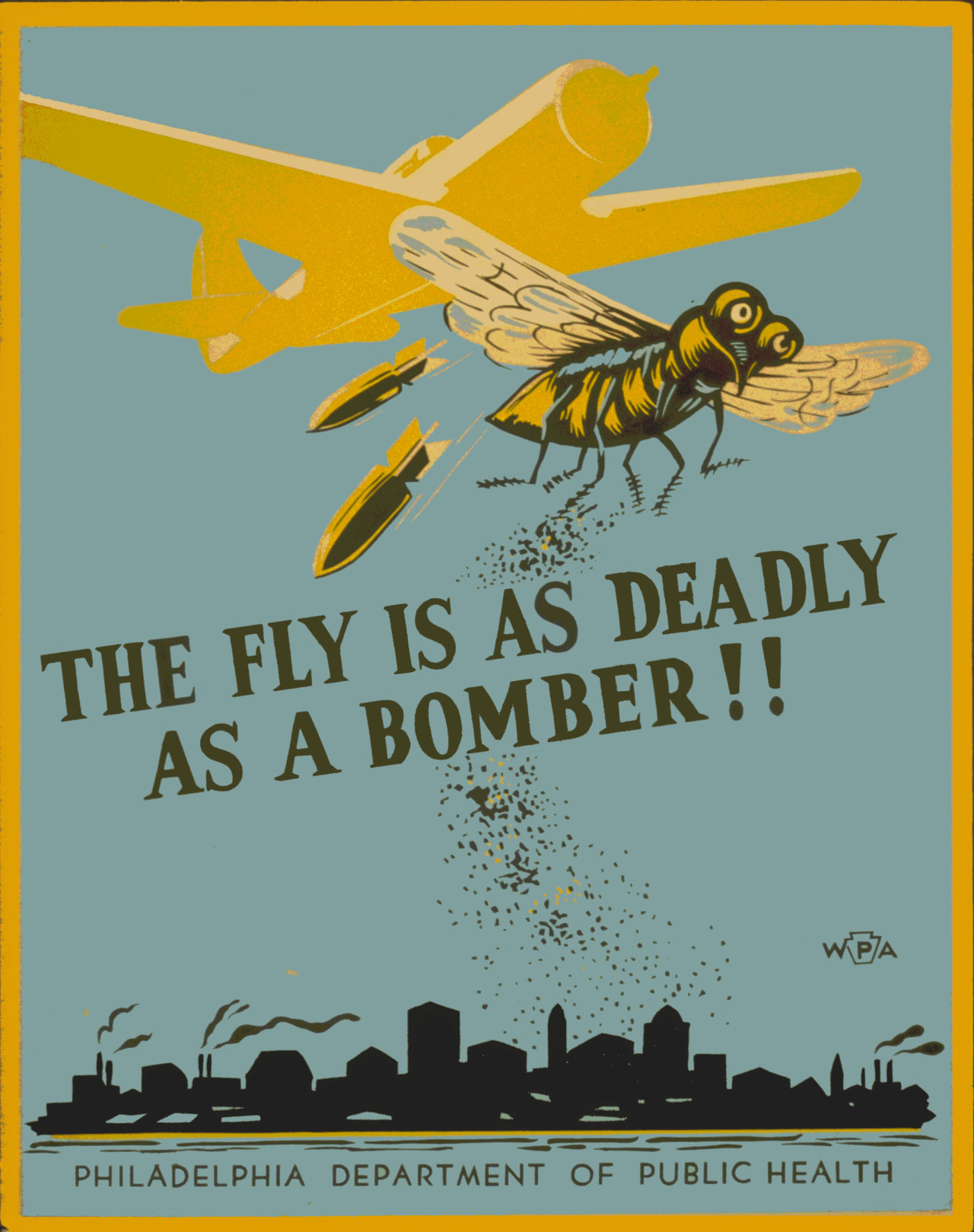
Behaviorally, houseflies are opportunistic feeders and scavengers. They visit a wide variety of materials to feed, including decaying plant and animal matter, human food, and animal wastes. Because they move frequently between filth and food, they can mechanically transfer bacteria, viruses, protozoa and other agents on their bodies, legs and in regurgitated droplets. This capacity makes them a concern in household and farm settings, where they may contribute to the spread of diarrheal diseases and other infections, especially where sanitation is poor or where livestock waste is abundant. Discussions of these risks and mitigation strategies appear in public health literature and integrated pest management guidance (disease vectors).
Ecological role and human significance
Although often regarded only as pests, houseflies play ecological roles as decomposers: their larvae accelerate the breakdown of organic material and recycle nutrients. They are also prey for many predators, including birds, spiders and predatory insects. From a human perspective their significance is mixed: they contribute to decomposition but also can be economic nuisances on farms and in food-handling facilities and a source of concern for household hygiene. Practical guidance about avoiding fly-borne problems appears in agricultural and public health publications (farm pest guidance).
Control and prevention
- Sanitation: remove or manage waste, compost and animal manures to deny breeding sites.
- Physical barriers: screens, sealed bins and well-fitted doors reduce indoor entry.
- Traps and baits: sticky traps, UV light traps and baited devices can reduce local numbers.
- Biological and chemical methods: in some settings biological control agents or approved insecticides are used selectively as part of integrated pest management.
- Education and monitoring: regular inspection and prompt corrective action limit population growth.
Effective management emphasizes prevention and sanitation rather than sole reliance on chemical control. For practical tips and further reading, consult resources that address both environmental management and specific control tools (general measures, health-focused guidance). Additional technical or regulatory information is available from agricultural extension services and public health authorities (agricultural resources, reproduction and lifecycle).
Questions and answers
Q: What is a housefly?
A: A housefly is a common fly found in houses, farms, stables, and ranches, and is always found near humans.
Q: What is the Latin name for the housefly?
A: The Latin name for the housefly is Musca domestica.
Q: What are the dangers of houseflies?
A: Houseflies not only are a nuisance but also carry disease-causing organisms, making them a public health concern.
Q: How many eggs can a female housefly lay in its life?
A: A female housefly can lay about 9,000 eggs in its life, in several batches of about 75 to 150.
Q: Where are the eggs of houseflies usually laid?
A: The eggs of houseflies are usually laid on or near meat, often dead animals.
Q: What is the life cycle of a housefly?
A: The life cycle of a housefly is from egg to larva (maggot) to pupa to adult fly, a process known as complete metamorphosis.
Q: What is the function of an adult housefly?
A: The function of an adult housefly is to reproduce.
Related articles
Author
AlegsaOnline.com Housefly (Musca domestica) Leandro Alegsa
URL: https://en.alegsaonline.com/art/45354
Sources
- the-piedpiper.co.uk : "Housefly"
- hydeparkmedia.com : "Buzz off! The housefly has made a pest of himself for 25 million years"
- species.wikimedia.org : Musca domestica