
Horsehead Nebula (Barnard 33): dark cloud in the Orion Molecular Cloud Complex
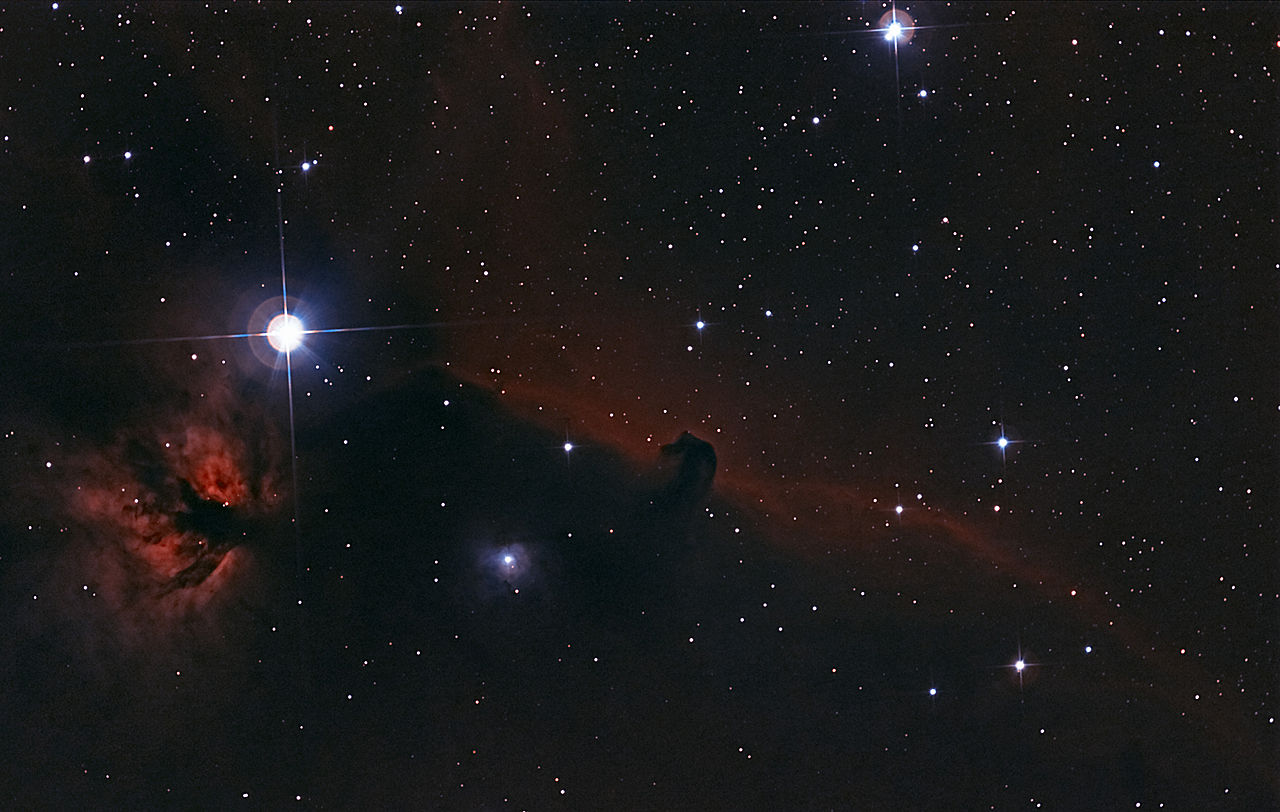
The Horsehead Nebula (Barnard 33) is a dark molecular cloud in Orion, silhouetted against emission nebula IC 434. It lies near Alnitak and forms part of the Orion Molecular Cloud Complex.
Overview
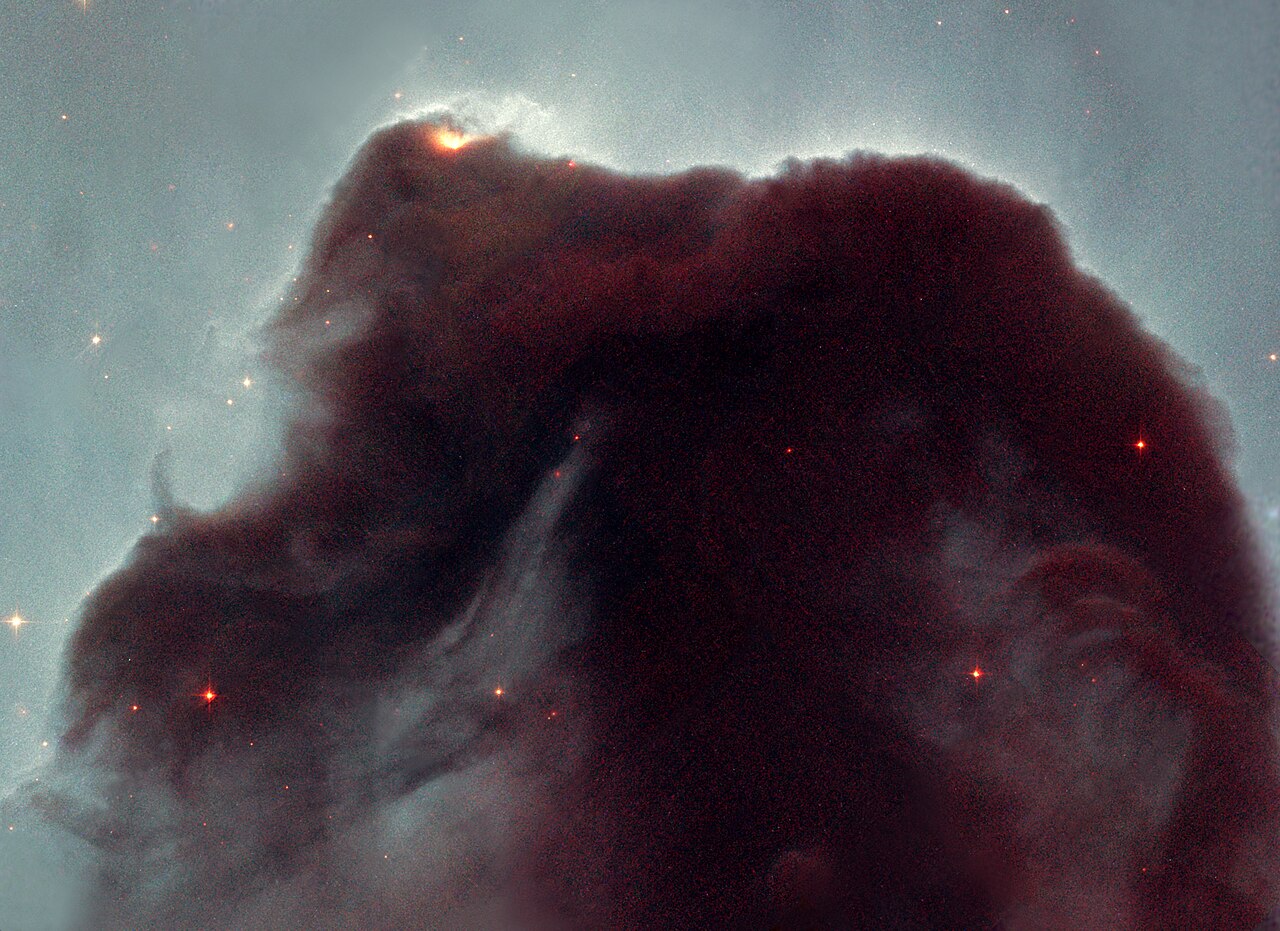
The Horsehead Nebula, cataloged as Barnard 33, is a dark nebula visible as a striking silhouette against a brighter emission nebula in the constellation Orion. Its familiar horse-head outline results from a dense concentration of interstellar dust and gas blocking light from the glowing background. This object is a well-known feature of the Orion Molecular Cloud Complex and lies close to the bright star Alnitak in Orion's Belt. Amateur and professional images often highlight the sharp contrast between the dusty silhouette and the reddish glow behind it.
Image gallery
10 Images




Physical characteristics
The nebula is composed primarily of cold molecular gas and dust which absorb and scatter background light. It appears dark because it is denser and cooler than the ionized gas that produces the emission glow of the background nebula (cataloged as IC 434). Stellar ultraviolet radiation from nearby hot stars shapes and erodes the dark cloud, producing the well-defined ridge and the bright rim at the nebula's edge. The Horsehead is a small portion of a much larger molecular complex that hosts ongoing star formation.
Location and context
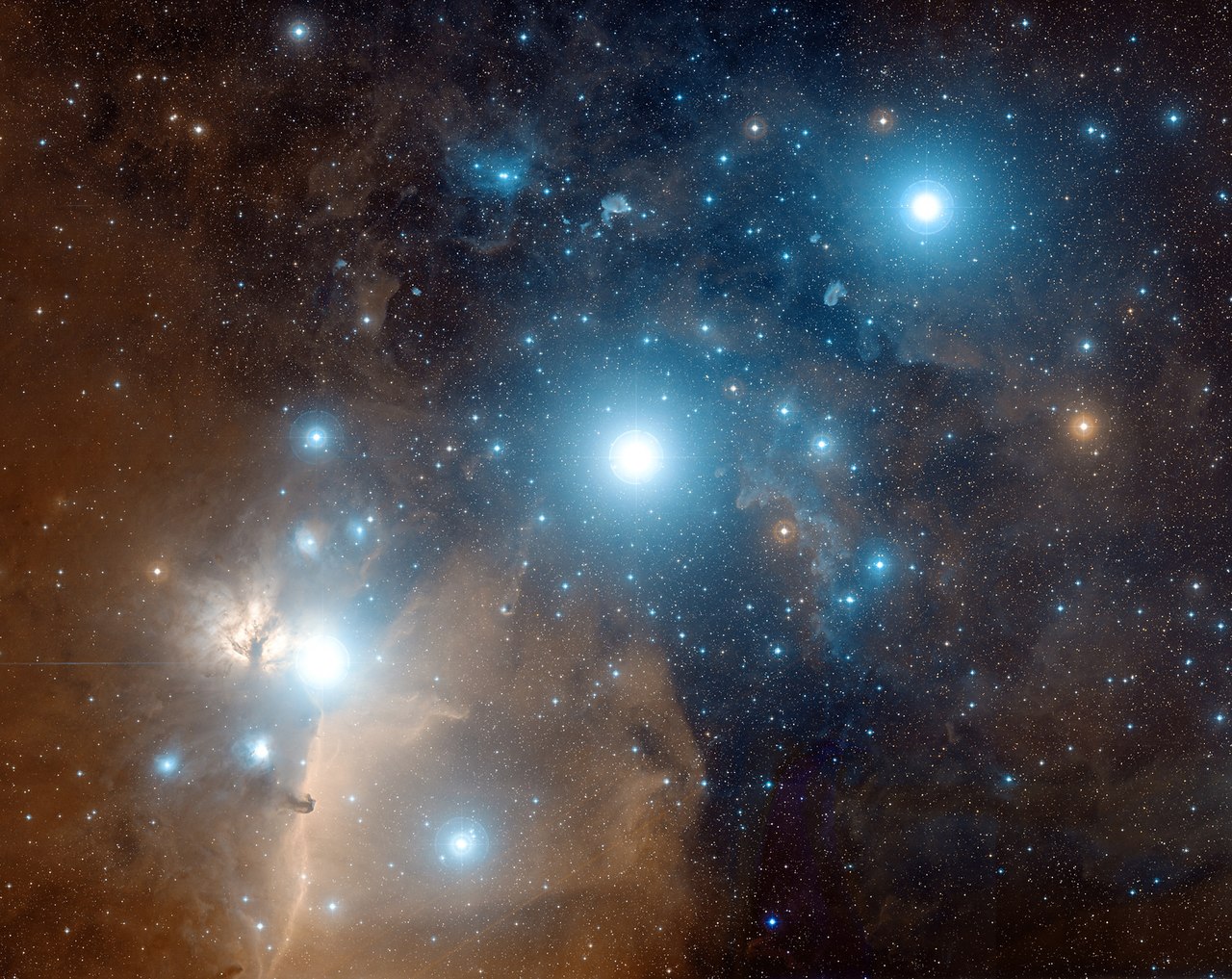
The Horsehead is located in Orion, a rich star-forming region that includes many famous objects. It is often described with reference to the nearby star Alnitak; this proximity helps observers and photographers find the nebula in the sky. As part of the Orion Molecular Cloud Complex, the Horsehead shares the same vast reservoir of gas and dust that produces nebulae, clusters, and young stars across the region. For background reading on the object type and region see dark nebula, Orion, and the Orion Molecular Cloud Complex.
History and observation
The Horsehead silhouette became widely known after it appeared on photographic plates in the late 19th century and received catalog attention in surveys of dark nebulae. It was later included in Edward Emerson Barnard's catalog as Barnard 33. Advances in optical and infrared imaging have revealed additional structure: the dark ridge hides pockets of denser material and nascent stars visible only at longer wavelengths. Observers often use the nearby reference star Alnitak to locate the nebula; more detail about that star can be found at Alnitak.
Importance and notable facts
- Type: Dark molecular cloud seen in silhouette.
- Context: Part of the Orion Molecular Cloud Complex and adjacent to emission nebula IC 434.
- Visibility: A popular target in astrophotography because of its distinctive shape and contrast.
- Scientific interest: Studies of the Horsehead probe the interaction of starlight with cold interstellar material and the processes that trigger star formation.
Because of its accessible location and iconic appearance the Horsehead Nebula serves both as an object of scientific study and a cultural symbol in astronomy, appearing frequently in images and outreach material that illustrate how dust and gas sculpt the night sky.
Further information and image resources are available through general references to dark nebulae, regional guides to Orion, and specialized summaries of the Orion Molecular Cloud Complex. For star charts and observing tips consult sources that discuss Alnitak and Orion's Belt.
Questions and answers
Q: What is the Horsehead nebula?
A: The Horsehead nebula, also known as Barnard 33, is a dark nebula located in the constellation Orion.
Q: What is the Horsehead nebula a part of?
A: The Horsehead nebula is part of the much larger Orion complex.
Q: Where is the Horsehead nebula located in relation to the star Alnitak?
A: The Horsehead nebula is located just to the south of the star Alnitak.
Q: Which star in Orion's Belt is the farthest east?
A: Alnitak is the farthest east on Orion's Belt.
Q: What is the Orion Molecular Cloud Complex?
A: The Orion Molecular Cloud Complex is a much larger complex that the Horsehead nebula is a smaller part of.
Q: What type of nebula is the Horsehead nebula?
A: The Horsehead nebula is a dark nebula.
Q: What constellation is the Horsehead nebula located in?
A: The Horsehead nebula is located in the constellation Orion.
Related articles
Author
AlegsaOnline.com Horsehead Nebula (Barnard 33): dark cloud in the Orion Molecular Cloud Complex Leandro Alegsa
URL: https://en.alegsaonline.com/art/45165
Sources
- astro.nineplanets.org : "Horsehead Nebula"
- noao.edu : "The Horsehead Nebula"
- noao.edu : "The Horsehead Nebula/IC434"
- ui.adsabs.harvard.edu : 2002SurSc.500..793M
- doi.org : 10.1016/S0039-6028(01)01555-2
- worldcat.org : 0039-6028
- apod.nasa.gov : "Astronomy Picture of the Day, 21 July 2009"