
Horizontal gene transfer: mechanisms, evolution, and significance
Horizontal gene transfer is the non‑inheritance movement of genetic material between organisms. This article explains mechanisms, examples, evolutionary roles, detection methods, and practical implications.
Horizontal gene transfer (HGT), also called lateral gene transfer, describes the movement of genetic material between organisms other than by descent from parent to offspring. Unlike vertical inheritance, which passes genes down the lineage, HGT transfers DNA or RNA across species boundaries or between unrelated individuals. This process is widespread in microbes and has important consequences for evolution, ecology, medicine and biotechnology. For introductions and summaries see overview sources.
Image gallery
1 Image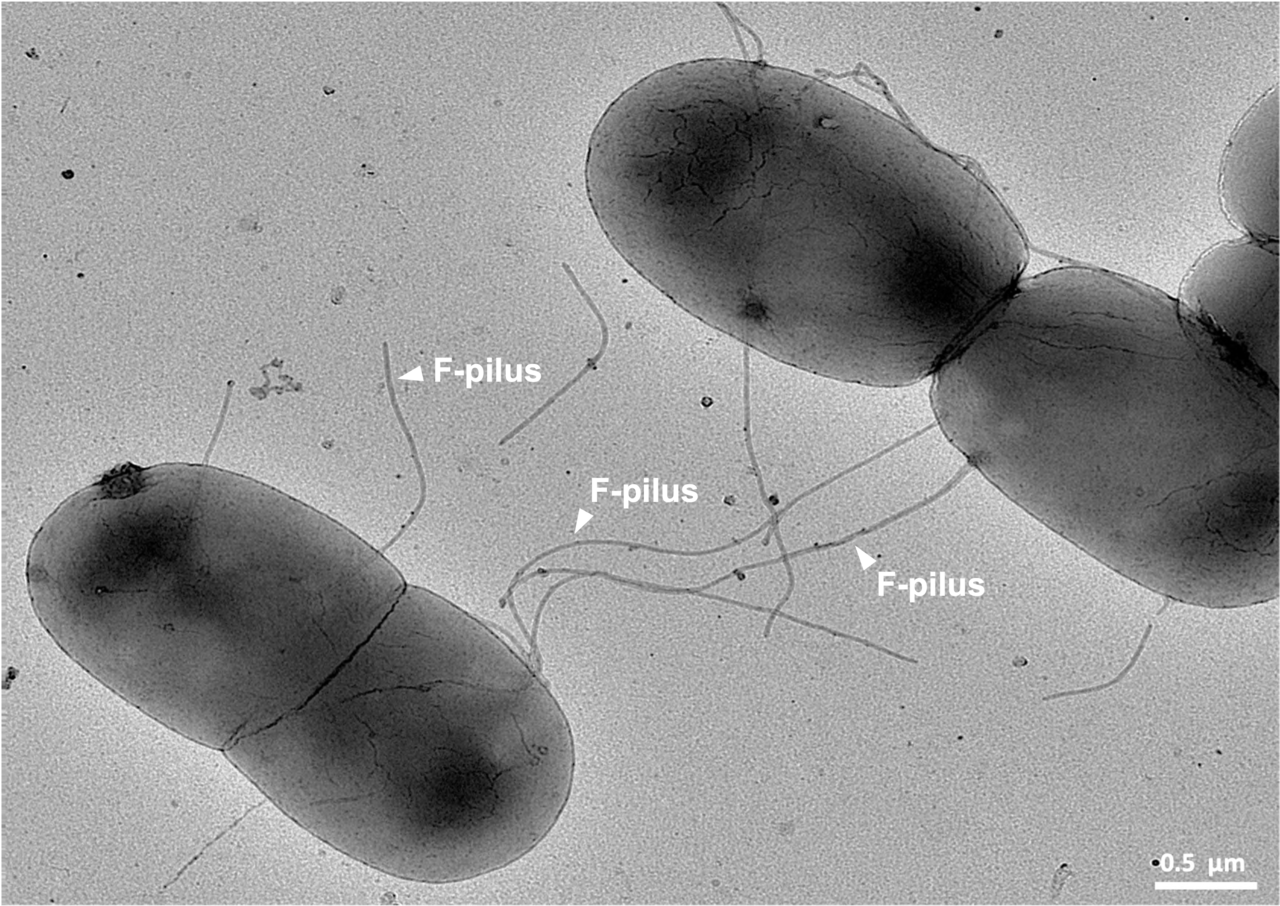
Core mechanisms
Microbial HGT occurs by several well‑characterized routes. The principal mechanisms are:
- Transformation — uptake of free DNA released into the environment by dead or lysed cells.
- Transduction — transfer mediated by viruses (bacteriophages) that package host genetic fragments and introduce them into new cells.
- Conjugation — direct cell‑to‑cell transfer of DNA, often via plasmids or conjugative elements that form physical connections between cells.
Mobile genetic elements such as plasmids, transposons, integrons and genomic islands facilitate HGT by carrying functional genes and recombination systems. Some transfers involve whole chromosomes or large genome fragments; others move small gene cassettes, regulatory sequences or single genes. Further information about genetic elements and mobility can be found at related references.
Occurrence and evolutionary role
HGT is particularly common among bacteria and archaea, where it can rapidly spread metabolic capacities, virulence factors and antibiotic resistance. In microbial communities, HGT reshapes gene networks and creates adaptive novelty faster than mutation alone. HGT has also played a role in eukaryotic evolution: the origin of organelles such as mitochondria and chloroplasts involved ancient endosymbiotic gene transfers, and more recent transfers between microbes and multicellular hosts have been documented. Researchers discuss evolutionary consequences and case studies at evolutionary resources.
Detection and evidence
Scientists infer HGT in genomes by looking for signals that conflict with expected inheritance patterns. Common approaches include:
- Phylogenetic incongruence — a gene tree that disagrees with a species tree suggests horizontal movement.
- Sequence composition analysis — abrupt differences in GC content, codon usage or oligonucleotide frequencies can mark foreign DNA.
- Presence of mobility genes, flanking repeats or insertion sequences that indicate recent transfer.
Combining methods and using robust sampling reduces false positives. Databases and computational tools help detect candidate transfers; see tool collections at resource hubs.
Practical importance and examples
HGT has direct applied consequences. The rapid spread of antibiotic resistance genes among pathogenic bacteria is a major public‑health concern, driven largely by plasmid‑mediated conjugation. HGT also underlies the acquisition of metabolic pathways that enable bacteria to exploit new ecological niches, degrade pollutants, or form symbiotic relationships. In biotechnology, controlled horizontal transfer underpins genetic engineering techniques: introducing genes by transformation, transduction or conjugation is central to cloning, synthetic biology and some gene‑therapy strategies; see methodological guides at method resources and ethical discussions at policy pages.
Distinctions and notable facts
Key distinctions include the difference between natural HGT and deliberate genetic modification, and between short‑term gene acquisition (which may be lost) and stable integration into the host genome. While HGT is most visible in microbes, transfer events between distant taxa occur and can have outsized effects. Historic debates about the prevalence of HGT in shaping genomes continue; consensus recognizes it as a fundamental, though variable, force in evolution. For broader context and further reading use additional materials.
Summary: Horizontal gene transfer moves genetic material laterally across organisms by transformation, transduction, conjugation and mobile elements. It accelerates adaptation, influences microbial communities, affects human health, and is harnessed in biotechnology. Detecting HGT relies on phylogenetic and compositional evidence, and its study bridges molecular biology, ecology and evolutionary theory.
Questions and answers
Q: What is horizontal gene transfer?
A: Horizontal gene transfer is a process where an organism acquires genetic material from another organism that is not its offspring.
Q: How is horizontal gene transfer different from vertical transfer?
A: Vertical transfer occurs when an organism gets genetic material from its ancestor, while horizontal gene transfer occurs when an organism acquires genetic material from another organism that is not its offspring.
Q: What has most of the thinking in genetics focused on?
A: Most of the thinking in genetics has focused on vertical transfer.
Q: Why is horizontal gene transfer a significant phenomenon?
A: Horizontal gene transfer is a significant phenomenon because amongst single-celled organisms, it may be the dominant form of genetic transfer.
Q: What is artificial horizontal gene transfer?
A: Artificial horizontal gene transfer is a type of genetic engineering that involves the deliberate transfer of genetic material from one organism to another.
Q: Can horizontal gene transfer occur between organisms of different species?
A: Yes, horizontal gene transfer can occur between organisms of different species.
Q: Do all organisms experience horizontal gene transfer?
A: No, only some organisms experience horizontal gene transfer, particularly single-celled organisms.
Related articles
Author
AlegsaOnline.com Horizontal gene transfer: mechanisms, evolution, and significance Leandro Alegsa
URL: https://en.alegsaonline.com/art/45111
Sources
- ncbi.nlm.nih.gov : ncbi.nlm.nih.gov/pubmed/10464188
- pubmed.ncbi.nlm.nih.gov : 13681921
- dcn.davis.ca.us : "Cross-species gene transfer; implications for a new theory of evolution"
- doi.org : 10.1016/S0022-5193(85)80291-5
- pubmed.ncbi.nlm.nih.gov : 2984477
- pnas.org : "Horizontal gene transfer among genomes: the complexity hypothesis"
- doi.org : 10.1073/pnas.96.7.3801
- ncbi.nlm.nih.gov : 22375
- pubmed.ncbi.nlm.nih.gov : 10097118
- sdsc.edu : "The ring of life provides evidence for a genome fusion origin of eukaryotes"
- doi.org : 10.1038/nature02848
- pubmed.ncbi.nlm.nih.gov : 15356622
- ncbi.nlm.nih.gov : "Do orthologous gene phylogenies really support tree-thinking?"
- doi.org : 10.1186/1471-2148-5-33