
Anopheles: mosquitoes, malaria vectors, and public health significance
Anopheles is a genus of mosquitoes that includes primary vectors of human malaria and other pathogens. This article summarizes their biology, diversity, role in disease transmission, and control measures.
Overview
Anopheles is a genus of mosquitoes (family Culicidae) that is best known for species that transmit human malaria. There are about 460 described species worldwide, and a subset of these are capable of transmitting human malaria parasites. Several species groups include primary vectors responsible for most transmission in endemic areas.
Image gallery
10 Images


Characteristics and life cycle
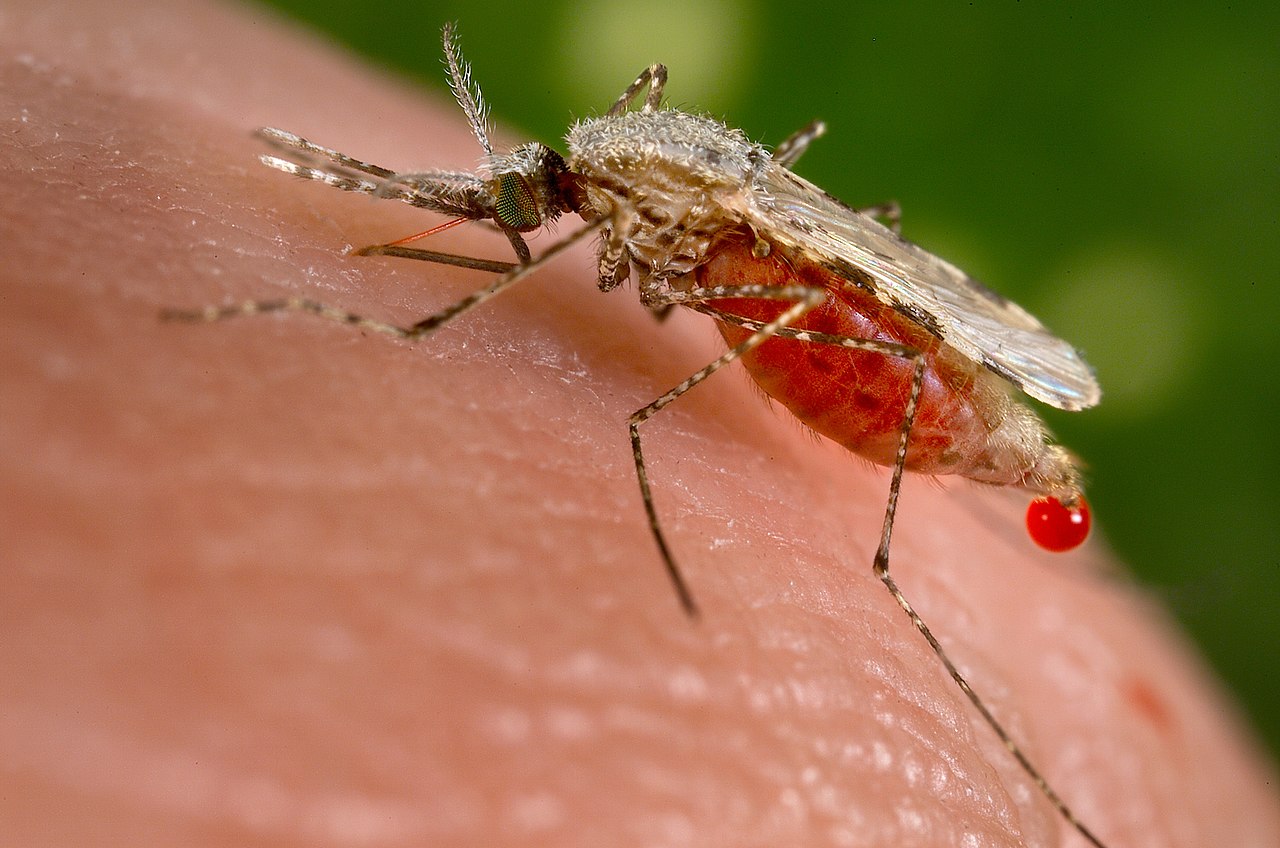
Adults are typically slender, with long legs and palps that in many species are as long as the proboscis. Female Anopheles mosquitoes require a blood meal to develop eggs. Like other mosquitoes, they undergo a four-stage life cycle: egg, larva, pupa and adult. Eggs are usually laid on water or on damp substrates, and larvae are aquatic, breathing at the surface. Most Anopheles species prefer clean, sunlit freshwater for breeding, although habitat preferences vary by species.
Species diversity and taxonomy
The genus contains roughly 460 species. Of these, over 100 have been reported to be capable of transmitting human malaria, but only about 30–40 species are commonly implicated as significant vectors of the human-infecting Plasmodium parasites in nature. Many important vectors belong to cryptic species complexes, such as the Anopheles gambiae complex and the Anopheles funestus group, where closely related forms differ in behavior and vector competence.
Role in disease transmission
Several Anopheles species are primary vectors of human malaria, transmitting Plasmodium species including Plasmodium falciparum and others that cause significant illness. Beyond malaria, some Anopheles can transmit other pathogens: for example, they may act as vectors for canine heartworm (Dirofilaria immitis), certain filarial worms, and viral agents such as the O'nyong'nyong virus (ONNV). Observations of co-occurring conditions in people with malaria have led to cautious and inconclusive suggestions of other associations (see discussion), but such links remain uncertain and are not established causal relationships.
Public health importance and control
Because Anopheles mosquitoes are the primary vectors of malaria, they are central to global malaria control and elimination efforts. Common interventions include:
- Insecticide-treated nets (ITNs) and long-lasting insecticidal nets (LLINs).
- Indoor residual spraying (IRS) of insecticides on walls.
- Larval source management: draining, larviciding, or environmental modification to reduce breeding sites.
- Biological controls and targeted genetic or sterile-insect techniques under research.
Effectiveness of measures depends on local species behavior (for example, whether mosquitoes bite indoors or outdoors, or rest indoors after feeding), insecticide resistance patterns, and ecological conditions.
Distinctions and notable facts
Not all mosquito genera transmit the same pathogens. Other genera such as Aedes and Culex are important for viruses (dengue, Zika, West Nile) and other diseases, but they are not primary malaria vectors. The term "vector" is used for organisms that carry and transmit pathogens; in discussions of malaria this term commonly appears (vector).
For more technical or public-health oriented resources, see links below for further reading:
- Malaria and anopheline vectors
- Endemic areas and epidemiology
- Taxonomy and species lists (general reference)
This article provides a concise account of the genus Anopheles, emphasizing its biological traits, diversity, significance as disease vectors and the public-health measures used to control them. For applied control and regional guidance, local public health authorities and specialized entomological resources are recommended.
Questions and answers
Q: What is Anopheles?
A: Anopheles is a genus of mosquito that consists of about 460 species.
Q: How many Anopheles species can transmit human malaria?
A: Over 100 species of Anopheles mosquitoes can transmit human malaria.
Q: How many Anopheles species commonly transmit parasites of the genus Plasmodium?
A: Only 30-40 Anopheles species commonly transmit parasites of the genus Plasmodium.
Q: What is the most dangerous malarial parasite species that Anopheles gambiae transmits to humans?
A: Anopheles gambiae transmits the most dangerous malarial parasite species (to humans) - Plasmodium falciparum.
Q: Other than malaria, what diseases can Anopheles mosquitoes transmit?
A: Anopheles mosquitoes can transmit diseases such as canine heartworm Dirofilaria immitis, filariasis, and viruses that cause diseases like O'nyong'nyong fever.
Q: Can other mosquito genera besides Anopheles transmit diseases?
A: Yes, mosquitoes in other genera (Aedes, Culex, Culiseta, Haemagogus, and Ochlerotatus) can also be vectors of disease agents.
Q: Can malaria cause brain tumors in sufferers?
A: There have been some cases where brain tumors have occurred in malaria sufferers, which suggests that Anopheles mosquitoes might transmit a virus or other agent that could cause a brain tumor.
Related articles
Author
AlegsaOnline.com Anopheles: mosquitoes, malaria vectors, and public health significance Leandro Alegsa
URL: https://en.alegsaonline.com/art/4499
Sources
- stevenlehrer.com : stevenlehrer.com/images/medhypinpress09.pdf