
Homo floresiensis — the 'hobbit' of Flores Island
Homo floresiensis is a small-bodied hominin discovered on Flores, Indonesia. Known for its tiny stature and small braincase, it has reshaped views of human diversity and island evolution.
Overview
Homo floresiensis is an extinct hominin first reported in the early 21st century after remains were excavated on the island of Flores in eastern Indonesia. Its notable traits — very small adult body size and a disproportionately small braincase — led discoverers and the public to nickname the fossils the “hobbits.” Scientists debate its exact position in the genus Homo, but most agree it represents a distinct population with important implications for human evolution and adaptation.
Image gallery
10 Images


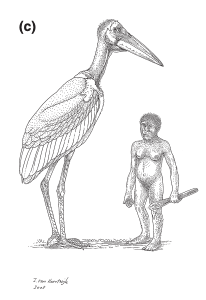
Key characteristics
- Markedly small stature and light skeletal build compared with modern humans.
- Small cranial capacity relative to modern Homo, yet with some features resembling earlier hominins.
- Postcranial anatomy indicating bipedal locomotion but with primitive traits in the shoulder and wrist.
- Associated stone tools and faunal remains that suggest active hunting and tool use.
Discovery and dating
Fossils from at least nine individuals were recovered from a cave site on Flores during excavations reported in the mid-2000s; the best-known specimen is often cited by its field code. The remains and nearby archaeological layers have been dated using multiple methods, indicating the population survived on Flores until tens of thousands of years ago. The site and its context have been the focus of continuing fieldwork and analysis to refine chronology and behavior.
Behavior and ecology
Despite a small brain, the Flores population is associated with stone tools and butchery marks on animal bones, including endemic dwarf elephants and other island fauna. This evidence points to coordinated activities, resource exploitation, and cultural behavior beyond what might be expected from brain size alone. The island setting likely shaped diet, predator–prey relationships, and mobility patterns.
Scientific interpretations and debate
- Some researchers argue the fossils represent a distinct species that evolved smaller body size through island dwarfism or long-term isolation; see discussions of its species status.
- Others have suggested pathological explanations (for example, developmental disorders) for the small size, though most assessments consider the evidence for a population rather than isolated anomalies.
- Debates continue over affinities to other hominins, the timing of colonization of Flores, and how similar traits evolved.
Importance and notable facts
H. floresiensis has been influential because it expanded views of late Pleistocene diversity in the genus Homo, showing that small-bodied, morphologically unusual populations persisted in island settings. The finds from Liang Bua cave and related sites have prompted new research into island biogeography, evolutionary mechanisms like dwarfism, and the adaptability of early human relatives. Primary reports describe the skeletal material and its context; for summaries of the bones themselves see field reports on the skeletal remains and regional surveys of Flores.
Questions and answers
Q: What is Homo floresiensis?
A: Homo floresiensis is a probable species in the genus Homo, which humans belong to.
Q: Where were the remains of Homo floresiensis found?
A: The remains of Homo floresiensis were found on the island of Flores in Indonesia in 2004.
Q: What parts of the skeletons of Homo floresiensis were found?
A: Parts of the skeletons of nine individuals were found, including one complete cranium (the head).
Q: What are the most important identifying features of Homo floresiensis?
A: The most important and obvious identifying features of Homo floresiensis are its small body, and a small size of the brain inside the skull.
Q: Why have the discoverers of Homo floresiensis called members of the species "hobbits"?
A: The discoverers of Homo floresiensis have called members of the species "hobbits" after J.R.R. Tolkien's fictional race of roughly the same height.
Q: When were the remains of Homo floresiensis found?
A: The remains of Homo floresiensis were found in 2004.
Q: How many individuals' remains were found of Homo floresiensis?
A: Parts of the skeletons of nine individuals were found of Homo floresiensis.
Related articles
Author
AlegsaOnline.com Homo floresiensis — the 'hobbit' of Flores Island Leandro Alegsa
URL: https://en.alegsaonline.com/art/44928
Sources
- species.wikimedia.org : Homo floresiensis
- commons.wikimedia.org : Homo floresiensis