
Homo ergaster — an early African human ancestor
Homo ergaster was an early Pleistocene hominin from eastern and southern Africa often seen as the African form of H. erectus and an important ancestor of later Homo species.
Overview
Homo ergaster is an extinct hominin that lived in Africa during the early Pleistocene, roughly between 1.8 and 1.3 million years ago. It is commonly treated as one of the earliest clearly recognisable members of the genus Homo. Fossils attributed to this species come mainly from sites in eastern and southern Africa, and its appearance in the fossil record coincides with major environmental shifts of the early Pleistocene. Scientists debate its exact relationship to other hominins, but many consider it ancestral to Asian Homo erectus and to later hominins that eventually gave rise to Homo sapiens.
Image gallery
10 Images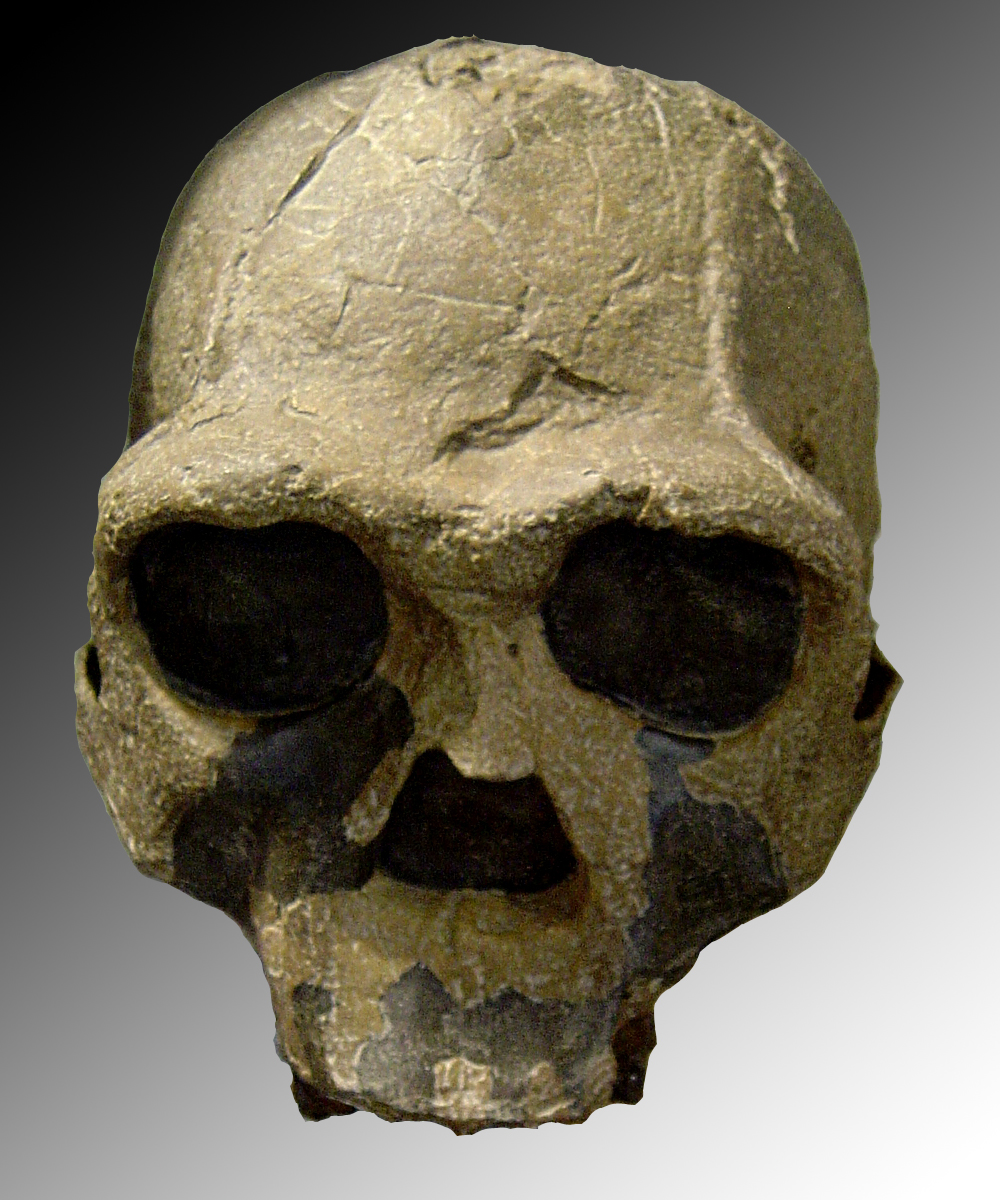


Physical characteristics and lifestyle
H. ergaster shows a combination of primitive and more modern features. Compared with earlier Homo and Australopithecus, it had a taller, more slender body with limb proportions better suited to long-distance walking and running. The skull and face are less projecting than more primitive species, with smaller teeth and reduced jaw size, while the brain size is larger than in earlier hominins but smaller than in later Homo species. Sexual dimorphism appears reduced relative to some predecessors, suggesting changes in social structure, although the degree of dimorphism remains debated.
Tools, behaviour and culture
Stone tool evidence associates H. ergaster with the early Acheulean tradition; the species name itself, meaning "workman," refers to these flaked bifaces and hand axes. The emergence of more symmetrical and standardized tools suggests advances in planning, motor skills and possibly communication. Evidence for controlled use of fire and organized shelters in association with H. ergaster is limited and remains a subject of ongoing research and cautious interpretation.
Evolutionary role and classification
H. ergaster occupies a pivotal position in human evolution. Some researchers treat it as the African variant of Homo erectus, while others argue for keeping the two taxa separate. In most scenarios it is placed as a direct ancestor or close relative of several later species, including Homo heidelbergensis and ultimately Homo sapiens. Its spread and adaptations likely contributed to the later dispersal of Homo out of Africa.
Environment and significance
The time of H. ergaster corresponded with cooling trends and the onset of the ice ages, which altered African landscapes by reducing dense rainforests and expanding open woodland and savannah. These changing environments may have favored hominins with efficient bipedal locomotion and flexible diets. As a result, H. ergaster is often highlighted as a key species in understanding how early humans adapted to more open habitats and developed technological skills.
Notable fossils and distinguishing features
- Well-known fossil specimens often attributed to H. ergaster include relatively complete skeletons and skulls from East Africa that illustrate its body proportions and cranial anatomy.
- Distinctive features include a thinner cranial bone, a more modern limb ratio, and stone tools such as Acheulean hand axes associated with its sites (Acheulean).
- Because of ongoing debates over naming and boundaries, many summaries note that H. ergaster and African H. erectus may represent a single evolving lineage rather than sharply separated species.
For further summaries and museum or field site information, consult specialist sources and recent reviews of early Pleistocene hominins and stone tool industries (genus overview, chronology, Asian connections, descendant taxa, human lineage, tool industry, regional finds, climate context, habitat change).
Questions and answers
Q: What is Homo ergaster?
A: Homo ergaster, also called "African Homo erectus", is an extinct chronospecies of Homo which lived in eastern and southern Africa during the early Pleistocene, between 1.8 million and 1.3 million years ago.
Q: How long ago did Homo ergaster live?
A: Homo ergaster lived between 1.8 million and 1.3 million years ago during the early Pleistocene period.
Q: Is there disagreement on the classification of H.ergaster?
A: Yes, there is still disagreement on the subject of the classification and ancestry of H. ergaster.
Q: What species are believed to be descended from H.ergaster?
A: It is widely accepted that Asian Homo erectus, Homo neanderthalensis, Homo heidelbergensis, and hence Homo sapiens are all descended from H.ergaster .
Q: Are there fossils of H.erectus in Asia?
A: Yes, there are Asian fossils of H. erectus which was the first human species to spread from Africa .
Q: What does 'ergaster' mean?
A: The name 'ergaster' means "workman" in reference to the Acheulean hand axe industry developed by this species .
Q: How did climate change affect Hom oergster's environment?
A: Climate change during this period would have shrunk rainforests in Africa while expanding savannahs and open forests which were well suited for Hom oergster's survival .
Related articles
Author
AlegsaOnline.com Homo ergaster — an early African human ancestor Leandro Alegsa
URL: https://en.alegsaonline.com/art/44927
Sources
- doi.org : 10.1038/nature05986
- pubmed.ncbi.nlm.nih.gov : 17687323
- dx.doi.org : 10.1002/ajpa.10399