
Holodomor: the 1932–33 famine in Soviet Ukraine
Holodomor was a catastrophic 1932–33 famine in Soviet Ukraine. This article summarizes its causes, course, contested death toll and intent, mechanisms of repression, and its historical and cultural legacy.
Overview
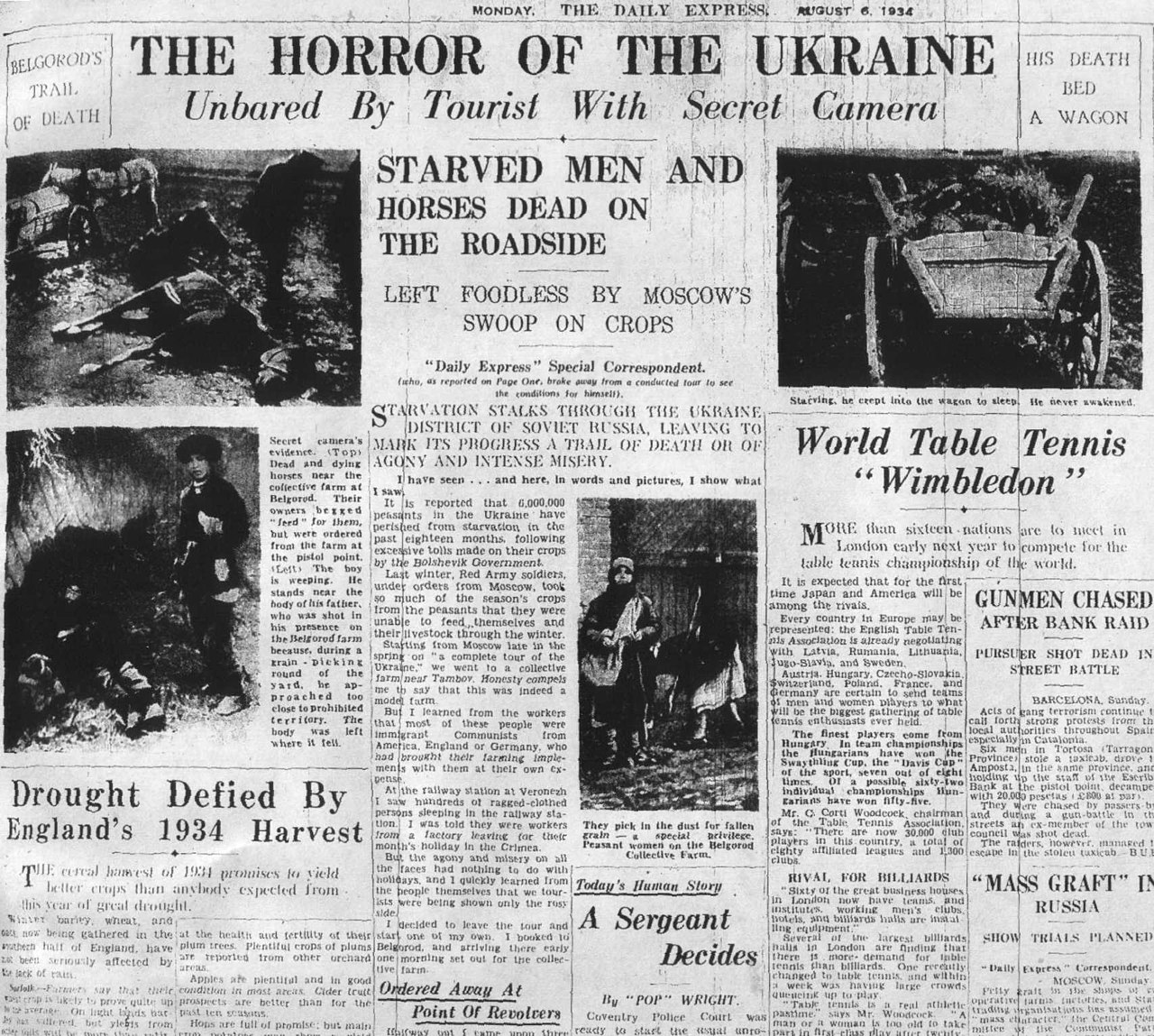
The Holodomor is the commonly used name for the severe famine that struck Ukraine in 1932–1933. The word in Ukrainian, Голодомор, is often translated in English as a compound referring to death by hunger or the extermination by starvation; some renderings emphasize the idea of killing by hunger as a deliberate act (translation note). Historians agree the disaster was not a natural crop failure alone but involved large-scale state actions and policies that produced and worsened the famine (man-made famine).
Image gallery
10 Images




Political and economic background
The famine occurred when Ukraine was a republic within the Soviet Union. In the late 1920s and early 1930s the government under Joseph Stalin pushed rapid industrialization and a program of agricultural transformation known as collectivization. Peasant communities and individual farmers were pressured or compelled to join collective farms and turn over grain to the state. Measures included forced requisitions and quotas, arrests and deportations of wealthier peasants sometimes labeled as kulaks, and suppression of dissent (peasants, repression, industrialization).
Mechanisms and course of the famine
Policies that contributed to food shortages included strict grain seizures (grain seizures), high procurement quotas, and penalties for failing to meet targets. Authorities enacted measures that restricted movement, making it difficult for hungry rural residents to leave affected areas in search of food. In some districts it became illegal to collect leftover grain from fields or to scavenge — a prohibition sometimes referred to as a law against gleaning. The state also confiscated food from starving households and combined famine control with broader campaigns against perceived political opposition (state-owned farm systems).
Scale, estimates and debate over intent
Estimates of excess deaths during the famine vary. Sources cite ranges rather than a single figure; many estimates place the death toll in the millions, though figures differ by methodology and source (death toll estimates). A central historiographical and political controversy is whether the famine should be labeled a deliberate genocide. Supporters of that view argue that targeted requisitions, the denial of relief to Ukrainian areas and measures that suppressed Ukrainian cultural or political expression show intent to attack Ukrainian nationalism or the peasantry (man-made aspects, Soviet policies). Critics and other scholars contend the famine resulted from coercive economic transformation, mismanagement and rapid industrialization policies, rather than a specifically planned program to eradicate Ukrainians; they urge caution when comparing the event to the Holocaust (comparisons).
Evidence, research and recognition
Research draws on archival documents, local records, eyewitness testimony and demographic analysis. Access to some archives and records has changed over time, affecting interpretation (policy archives, economic records). Debates over terminology and responsibility involve historians, legal scholars and politicians (scholars and politicians). Several national legislatures and international bodies have formally recognized the Holodomor as an act of genocide, while others describe it as a crime against humanity or a tragic consequence of state policies (genocide designation, intent debates). The process of recognition has shaped contemporary memory and diplomacy (political debates).
Legacy and commemoration
The Holodomor has an important place in Ukrainian collective memory and identity. Memorials, museums and annual days of remembrance exist in Ukraine and in Ukrainian communities abroad. Survivors' accounts and family histories continue to be studied and commemorated (ideological context, collective farm records). Scholarly work also addresses issues of denial, silence and the international response (field testimony, legal inquiries). Understanding the Holodomor involves both the empirical study of famine mechanisms and a careful assessment of political intent; it remains a subject of active research, public education and international discussion (leadership, authority, famine studies).
Further reading and perspectives
- Context in Soviet history
- Biographical studies of leaders
- Analyses of grain requisition and procurement
- Regional histories of Ukraine
- Social impacts on rural communities
Because research continues and interpretations evolve with new evidence, readers are encouraged to consult multiple sources and recent scholarship when studying the Holodomor and its place in 20th-century history (human cost, agricultural policy, state practice, academic debate, national memory).
Questions and answers
Q: What is the Holodomor?
A: The Holodomor was a man-made famine that happened in Ukraine in 1932 and 1933 when it was part of the Soviet Union. About seven million people starved to death during this time.
Q: Who was the leader of the Soviet Union at this time?
A: Joseph Stalin was the leader and dictator of the Soviet Union, which was a communist country, during this time.
Q: What did Stalin do to farmers in the Soviet Union?
A: Stalin made farmers change their farming methods and tried to make them work harder for government-owned farms for less money.
Q: How did Stalin respond to the famine in Ukraine?
A: Instead of helping people in Ukraine, Stalin's government took food away from them and made it illegal to pick up food from fields. They also tried to stop people from moving around looking for food.
Q: Is there debate over whether or not what happened during this time can be considered genocide?
A: Yes, some scholars argue that what happened during this time can be considered genocide due to its attack on Ukrainian nationalism while others say it was an unexpected consequence of rapid industrialization started by Stalin that brought radical economic changes but wasn't done on purpose.
Related articles
Author
AlegsaOnline.com Holodomor: the 1932–33 famine in Soviet Ukraine Leandro Alegsa
URL: https://en.alegsaonline.com/art/44807
Sources
- faminegenocide.com : "Famine - Genocide in Ukraine 1932 - 1933"
- weeklystandard.com : "Remember the Holodomor"
- cybercossack.com : "Thanks to US for Holdomor Memorial"
- eng.maidanua.org : "Will Holodomor receive the same status as the Holocaust?"
- world.maidan.org.ua : "Maidan" Alliance
- washingtonpost.com : "Aftermath of a Soviet Famine"
- ukrainianstudies.uottawa.ca : "The Great Famine Debate Goes On..."
- day.kiev.ua : Part 1
- day.kiev.ua : Part 2
- day.kiev.ua : Part 3
- day.kiev.ua : Part 4
- zerkalo-nedeli.com : Russian version
- zn.kiev.ua : Ukrainian version · web.archive.org
- commons.wikimedia.org : Commons