
Hollandaise sauce
A warm, classic French emulsion of egg yolks and butter, seasoned with lemon or vinegar and spices. A mother sauce used for Eggs Benedict, vegetables, fish and many derivatives; requires gentle heat and technique.
Overview
Hollandaise is a warm, emulsified sauce made from egg yolks and butter. It is pale yellow, smooth and creamy, with a rich, buttery mouthfeel and a gentle acidity from lemon juice or a mild vinegar. In classical French cuisine it is recognised as one of the five mother sauces and is the foundation for several well‑known children sauces.
Image gallery
3 Images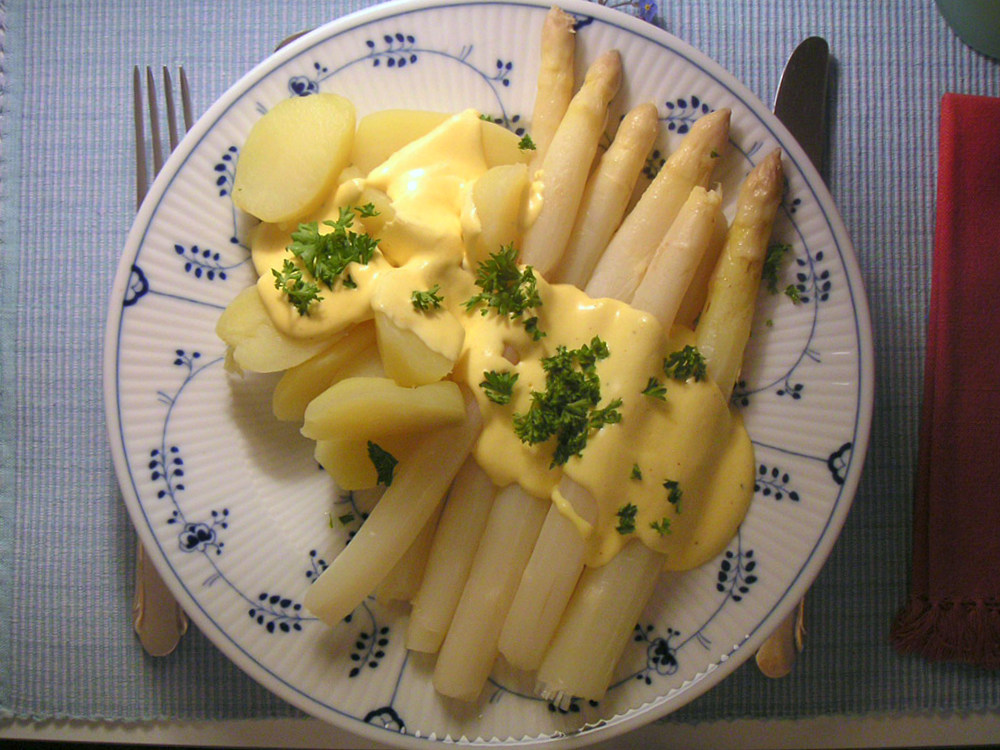


Ingredients and characteristics
The basic components are simple but each affects the final texture and stability:
- Egg yolks — provide emulsifying lecithin and body.
- Butter — clarified or whole butter supplies fat, gloss and flavour; clarify if you want a cleaner emulsion and longer shelf life.
- Acid — lemon juice or a mild vinegar balances the richness and brightens flavour.
- Seasoning — salt and a pinch of white or cayenne pepper to taste; some recipes add a dash of hot sauce or mustard.
A correctly made Hollandaise should coat the back of a spoon, be free of visible separation and served warm but not hot; excessive heat will coagulate the eggs and cause curdling.
Preparation and technique
Traditional technique uses a bain‑marie (a heatproof bowl set over simmering water) while whisking the yolks as warm butter is added gradually to form a stable emulsion. Modern shortcuts include using a blender or an immersion blender to speed the process and reduce the risk of breaking. Controlling temperature and adding the fat slowly are key to success. For background on emulsions and the science involved, see emulsification resources and notes on handling butter at butter information.
Variations and derivatives
Hollandaise serves as the base for many derivative sauces produced by substituting or adding flavouring agents:
- Béarnaise — made with a reduction of white wine, vinegar, shallots and fresh tarragon.
- Mousseline — Hollandaise lightened by folding in softly whipped cream.
- Maltaise — finished with orange or blood orange zest and juice for a bright citrus note.
- Choron — a tomato‑flavoured Hollandaise often used with grilled meats or fish.
Food safety and storage
Because Hollandaise contains cooked egg yolks, there is a food safety consideration: the eggs are heated but not to full pasteurisation in many traditional preparations. To reduce risk, use pasteurised eggs or ensure the sauce reaches a safe temperature without overheating and curdling. Serve Hollandaise immediately when possible; if held, keep it warm (not hot) for only a short period, and refrigerate any leftovers promptly. Reheating is delicate—gentle warming while whisking is advised but quality declines after refrigeration.
Uses, serving and pairing
Hollandaise is classically paired with poached eggs in Eggs Benedict, and is commonly served over steamed asparagus and other spring vegetables, poached or grilled fish, and some roasted meats. It also complements mild, starchy foods such as new potatoes. Serve it warm and fresh; a squeeze of lemon and a final seasoning adjustment just before serving will keep the balance bright.
Troubleshooting and tips
Common problems include a sauce that is too thin, too thick, or that separates. If a Hollandaise begins to separate, a frequently recommended recovery method is to whisk a small amount of hot water or a fresh, slightly warmed yolk in a clean bowl and then very slowly whisk the broken sauce back in to rebuild the emulsion. Avoid high direct heat, add fat slowly, and if using a blender, pulse and monitor temperature. For seasoning and preservation guidance consult culinary references and safety notes at food safety sources.
For further reading on technique and variations see practical tutorials and recipes at emulsification resources and ingredient guides at butter information. Additional notes on spice choices appear in general seasoning guides cayenne and pepper notes.
Questions and answers
Q: What is Hollandaise sauce made of?
A: Hollandaise sauce is made of an emulsion of egg yolk and butter.
Q: What are the common seasonings added to Hollandaise sauce?
A: Lemon juice, salt, and a little white pepper or cayenne pepper are often added as seasoning to Hollandaise sauce.
Q: How does Hollandaise sauce look and taste?
A: Hollandaise sauce is light yellow and opaque, smooth and creamy. It tastes rich and buttery with a mild tang added by the seasonings, but not so strong as to overpower mildly flavored foods.
Q: What is Hollandaise sauce well-known for?
A: Hollandaise sauce is well known as a key ingredient of Eggs Benedict.
Q: With what kind of vegetables is Hollandaise sauce often paired?
A: Hollandaise sauce is often paired with vegetables such as steamed asparagus.
Q: What is the significance of Hollandaise sauce in French haute cuisine?
A: Hollandaise sauce is one of the five mother sauces in French haute cuisine, which means it is considered one of the foundational sauces that forms the basis for many other sauces and dishes.
Q: Can Hollandaise sauce be made without butter?
A: No, Hollandaise sauce is made with egg yolk and butter, and the butter is an essential component for the taste and texture of the sauce.
Related articles
Author
AlegsaOnline.com Hollandaise sauce Leandro Alegsa
URL: https://en.alegsaonline.com/art/44752