
Hochvogel: prominent peak of the Allgäu Alps
Hochvogel is a 2,592 m mountain on the Germany–Austria border in the Allgäu Alps, known for its steep limestone flanks, classic climbing routes, 19th‑century exploration, and a 1945 wartime aircraft crash.
Overview
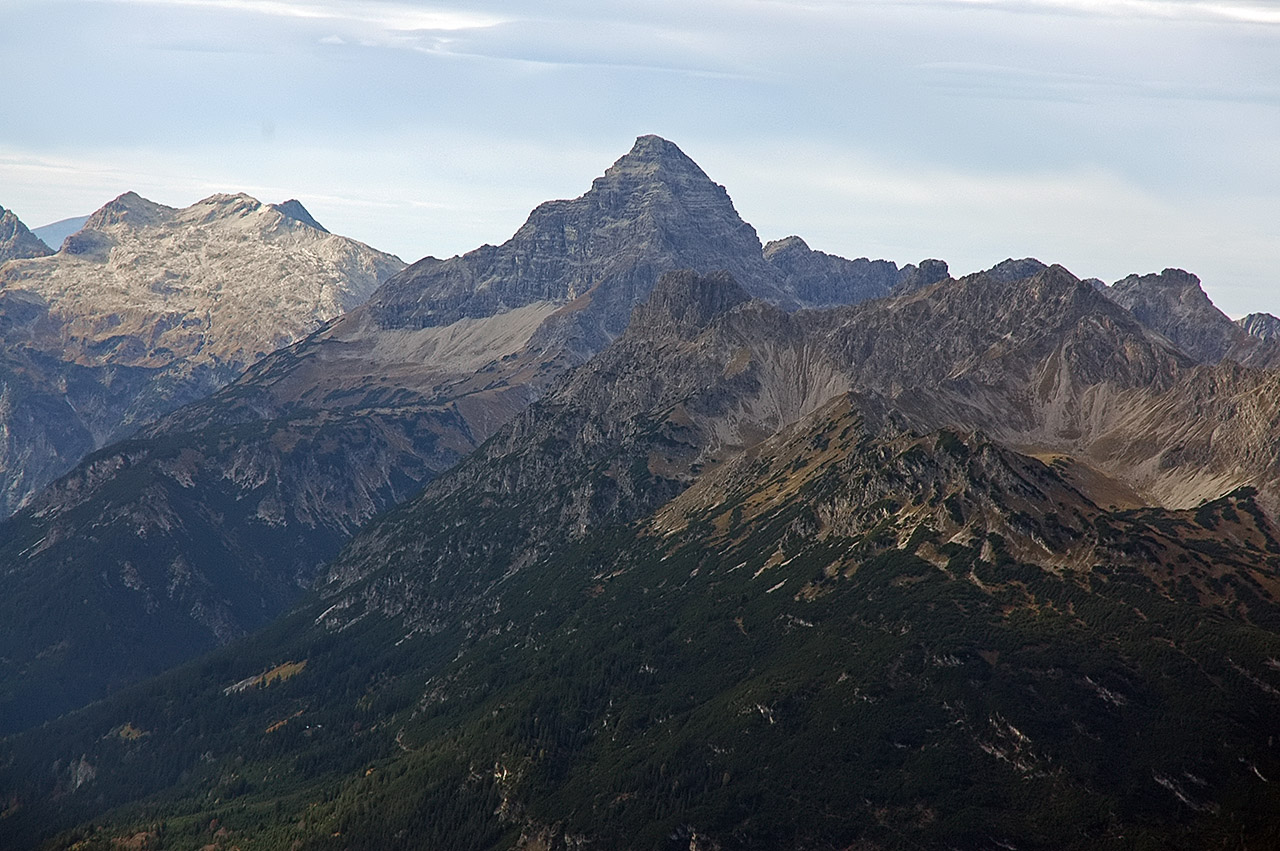
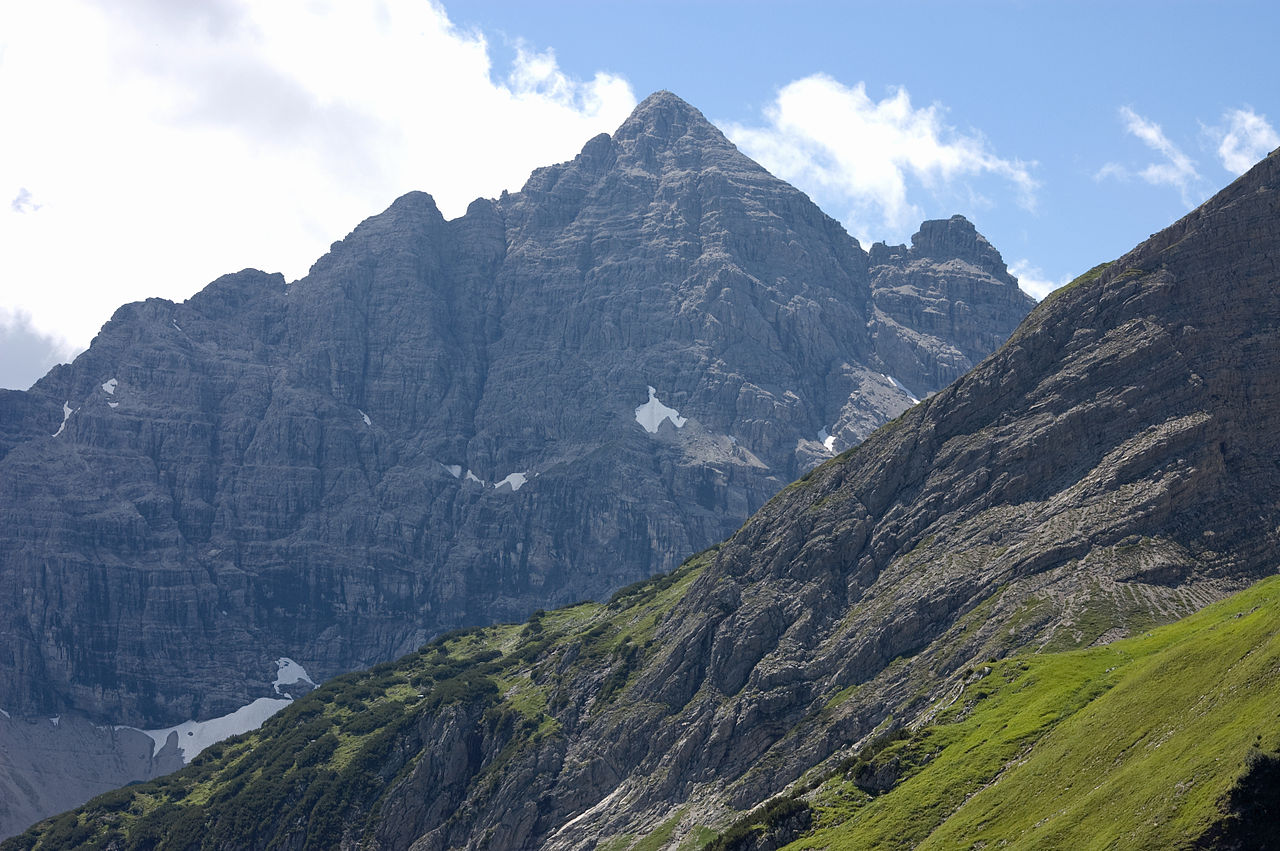
The Hochvogel rises to 2,592 metres and stands as one of the best‑known peaks of the Allgäu Alps. Its summit ridge lies on the international boundary between Germany and Austria, making the mountain a distinctive landmark in the northern Limestone Alps. The peak is recognizable for its steep faces and broad silhouette when viewed from surrounding valleys.
Image gallery
7 Images



Geography and geology
Located in an area of folded alpine limestone and dolomite, Hochvogel exemplifies the rugged karst terrain common to the Allgäu range. The rock types and steep relief produce dramatic cliffs and sharp ridgelines, which influence local weather patterns and the distribution of alpine flora. Glacial and periglacial processes have shaped its slopes, leaving scree fields and narrow gullies that are typical for high limestone peaks.
Routes and climbing
Hochvogel can be reached by marked mountain trails and by more demanding climbing routes. Traditionally, climbers follow waymarked paths from both the German and Austrian sides; the mountain is also the objective of several harder alpine routes on its steeper faces. Access from valley trailheads is assisted by a network of mountain paths and alpine huts that serve as bases for ascents.
- Normal approaches: Two commonly used waymarked routes provide the standard means of reaching the summit for experienced hikers and climbers.
- Technical climbs: More exposed and technically difficult lines exist and are attempted by climbers equipped for rock and alpine terrain.
History and notable events
Interest in Hochvogel grew during the 19th century when alpinists and explorers documented new routes and climbs. The mountaineer Hermann von Barth is associated with early exploration of the peak and is reputed to have spent a night on the summit in 1869, an episode often mentioned in accounts of alpine pioneering. In the 20th century the mountain was the scene of a tragic wartime accident: on 14 December 1945 an American Flying Fortress crashed on the western slopes of Hochvogel.
Importance and visitation
Today Hochvogel attracts hikers, climbers and photographers drawn to its dramatic profile and panoramic summit views. As part of a sensitive alpine environment, the area benefits from mountain rescue services and informal conservation measures; visitors are encouraged to follow marked trails and local guidance. For further regional information see the Allgäu Alps resource: Allgäu Alps.
Questions and answers
Q: How high is the Hochvogel mountain?
A: The Hochvogel is 2,592 metres (8,504 ft) high.
Q: Where does the border between Germany and Austria run?
A: The border between Germany and Austria runs over the summit of the Hochvogel mountain.
Q: How many marked routes are there to climb the summit?
A: There are two marked routes to climb the summit of the Hochvogel mountain.
Q: Who stayed overnight at the summit in 1869?
A: Hermann von Barth stayed overnight at the summit of the Hochvogel mountain in 1869.
Q: When did an American Flying Fortress crash near the Hochvogel mountain?
A: On December 14, 1945, an American Flying Fortress crashed on the west of the Hochvogel mountain.
Q: What is one of the most interesting climbs up the Hochvogel?
A: According to the text, one of the most interesting climbs up the Hochvogel mountain is by Hermann von Barth.
Q: In which mountain range is the Hochvogel located?
A: The Hochvogel is located in the Allgäu Alps.
Related articles
Author
AlegsaOnline.com Hochvogel: prominent peak of the Allgäu Alps Leandro Alegsa
URL: https://en.alegsaonline.com/art/44613
Sources
- books.google.com : Die Erschliessung der Ostalpen