
Third generation of video game consoles (the 8‑bit era and the NES revival)
The third generation (mid‑1980s) saw the rise of 8‑bit home consoles, the market recovery led by Nintendo's Famicom/NES, new technical standards and business practices, and the shift of dominance to Japanese companies.
Overview
The third generation of video game consoles began in the early to mid‑1980s and is most often associated with the shift from single‑screen arcade-style ports to larger scrolling worlds, improved audio, and more standardized cartridge formats. It is widely credited with helping to recover the home videogame market after the 1983 crash and with establishing many business and technical practices that shaped the industry. Key systems that define this generation include the Nintendo Family Computer (Famicom) / Nintendo Entertainment System and Sega's SG-1000 family.
Image gallery
10 Images


Technical characteristics
Consoles of this generation were primarily built around 8‑bit microprocessors, offering a distinct jump in color, sprite handling and sound compared with earlier machines. Developers used hardware tricks to implement smooth scrolling and more complex on‑screen action. Memory and cartridge capacity steadily increased, and manufacturers introduced lockout and licensing systems to control quality and third‑party publishing—most famously Nintendo's licensing program and its lockout mechanism.
Notable consoles and timeline
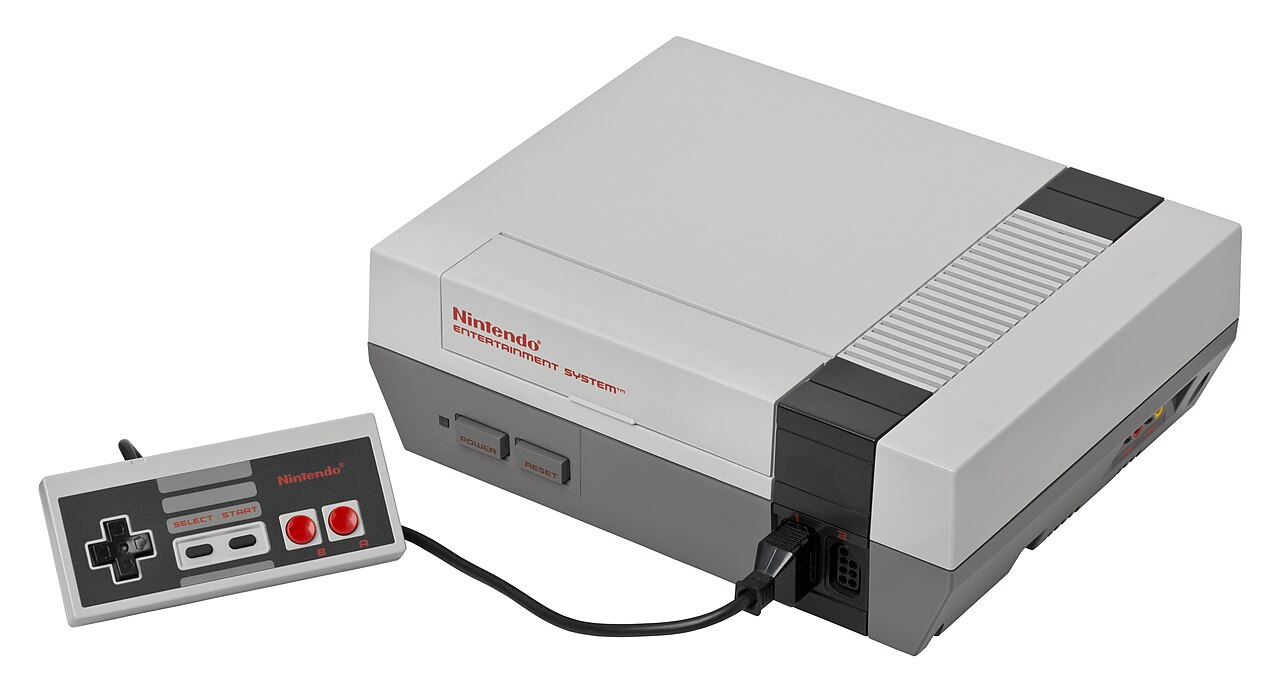
- Nintendo Famicom / NES – launched in Japan in 1983 as the Famicom and later released in other regions as the NES; its software library and strict licensing practices played a major role in revitalizing the home market. Nintendo Entertainment System
- Sega SG‑1000 and Master System – Sega entered the home market with the SG‑1000 and later promoted the Master System as a technical rival in several regions. Sega systems
- Atari 7800 – Atari returned with the 7800 as an effort to compete during this era; it arrived amid a crowded and rapidly changing market. Atari 7800
Historical impact and regional shifts
The North American video game crash of 1983 left retailer and consumer confidence low. When the Famicom debuted in Japan on July 15, 1983, and the NES arrived later in North America, Nintendo's combination of strong first‑party titles, a recognizable controller design and an enforced third‑party licensing program restored trust in the industry. The result was a notable shift in global leadership for console design and software from many U.S. companies to predominantly Japanese firms. North American markets and United States retail recovered while Japanese publishers expanded rapidly; this transition is often cited when discussing the era's commercial rebalancing. Japan became the creative and manufacturing center for many home systems.
Games and cultural importance
Some of the most enduring franchises began or were defined during this generation: platform and adventure titles that showcased level design, exploration and tighter controls. Games such as Super Mario Bros. and early entries in adventure and action series demonstrated how home systems could deliver experiences distinct from arcades. The popularity of these games helped sustain cartridge sales and foster a growing hobbyist and competitive scene.
Transition and legacy
The third generation is typically dated through the late 1980s; as technological progress accelerated, 16‑bit systems emerged and are commonly regarded as the next (fourth) generation. Nonetheless, the third generation's influence on licensing, quality control, controller conventions and game design set standards that persisted for decades. Its best‑selling system held that position until later platforms demonstrated the next big market shift. For perspective on later changes, see coverage of the industry developments that followed, including the rise of the PlayStation.
For more detailed timelines and model comparisons, consult resources that focus on platform hardware, market statistics and the changing roles of publishers and retailers in the 1980s. United States and Sega histories, as well as specific system pages like the NES and Atari 7800, provide further reading about this pivotal period. Japan remains a central topic when tracing the origins of many influential titles and companies.
Questions and answers
Q: When did the third generation of video game consoles begin?
A: The third generation of video game consoles began on July 15, 1983.
Q: What were the consoles that started the third generation?
A: The consoles that started the third generation were the Nintendo Family Computer (NES) and Sega SG-1000.
Q: What was the impact of third generation on the video game industry?
A: The third generation helped end the North American video crash of 1983, and resulted in a shift from the United States to Japan as the leading country for home video games.
Q: How did the display of video games change in third generation?
A: In the third generation, the displays changed from single-screen (or flip-screen) graphics to scrolling graphics.
Q: What were the best-selling consoles of third generation?
A: The best-selling consoles of third generation were the NES/Famicom, followed by the Sega Master System and the Atari 7800.
Q: Which console remained the best-selling home console until 1996?
A: The NES/Famicom system remained the best-selling home console until the PlayStation in 1996.
Q: What were the types of processors used by consoles in third generation?
A: Some of the consoles in the third generation used 8-bit processors, while systems like the Mega Drive/Genesis used 16-bit processors.
Related articles
Author
AlegsaOnline.com Third generation of video game consoles (the 8‑bit era and the NES revival) Leandro Alegsa
URL: https://en.alegsaonline.com/art/44517
Sources
- books.google.com : The video game explosion: a history from PONG to Playstation and beyond
- uk.retro.ign.com : "IGN Presents the History of SEGA: Coming Home"
- guinnessworldrecords.com : "Best-Selling Video Games" · web.archive.org
- ownt.com : "All Time Top 20 Best Selling Games"
- retrocopy.com : "-Sega Emulation Overview - another overview" · webcitation.org
- nintendo.co.jp : nintendo.co.jp
- nintendo.com : "NES" · web.archive.org
- i250.photobucket.com : The Encyclopedia of Game Machines
- retro.ign.com : "Genesis vs. SNES: By the Numbers"
- books.google.com : "Amusement"
- books.google.com : [[Game Over (book)|Game Over]]