
History of Indonesia: From Prehistory to the Reformasi Era
Survey of Indonesia's history: prehistoric settlement, Austronesian expansion, classical kingdoms, Islamisation, European colonisation, 20th-century independence, Suharto era and the Reformasi transition.
The area now comprising the Republic of Indonesia is an extensive maritime region known as the Indonesian archipelago. Its human story stretches deep into prehistory: fossil evidence associated with Homo erectus (often called "Java Man") shows hominins occupied parts of the islands well over a hundred thousand years ago, and archaeological finds indicate long-term habitation by diverse populations adapted to island environments. The archipelago's size, climate variety and position between the Asian and Pacific continents have shaped a very plural history of peoples, languages and polities.
Image gallery
10 Images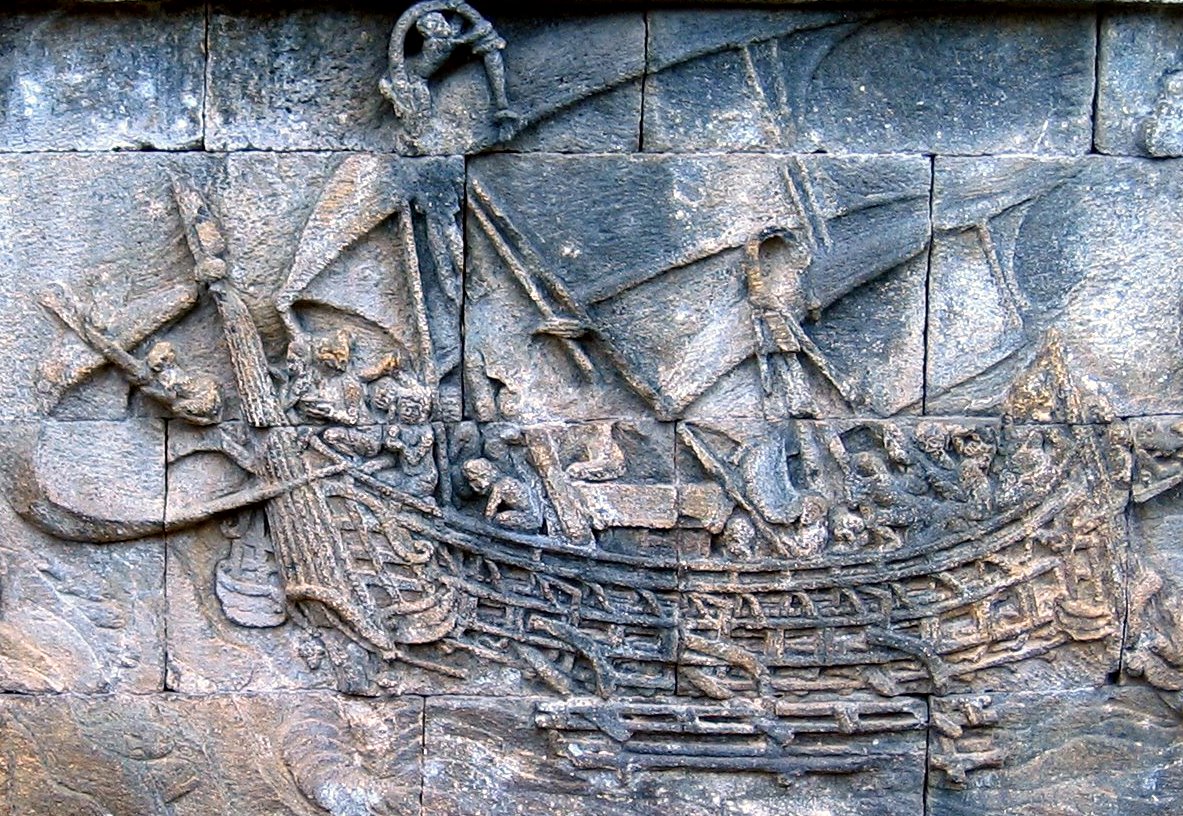



Peopling, agriculture and early polities
After the earliest hunter-gatherer groups, a major transformation occurred with the spread of Austronesian-speaking peoples. Linguistic and archaeological evidence points to an expansion that originated in coastal Taiwan; migrants moved through the Philippines into the islands of present-day Indonesia and beyond, a movement often linked to seafaring and farming innovations associated with Taiwan. In the eastern islands, indigenous Melanesian peoples contributed to local cultural mixtures. The adoption of wet-rice agriculture, beginning centuries before the Common Era in some areas, fostered denser settlements and the emergence of ranked societies and small kingdoms by the early centuries CE.
Classical kingdoms and religious influences
Indonesia's strategic maritime routes encouraged contact with the Indian subcontinent and mainland Southeast Asia. From the first millennium CE, powerful maritime polities arose that controlled trade and cultural exchange. The Srivijaya maritime kingdom dominated portions of Sumatra and the Malay Sea from about the 7th century, serving as a hub for commerce and the spread of Indian-influenced ideas, including Hinduism and Buddhism. Later, on Java the Majapahit kingdom (14th century) presided over a broad cultural sphere; under leaders such as Gajah Mada it is often remembered as a high point of precolonial political organisation and artistic production.
Religion and culture in these eras were syncretic: local belief systems, Indic religions and later Islamic ideas mixed to produce distinct regional traditions visible in architecture, court ceremonies, literature and law. The pattern of coastal polities and inland principalities, each exploiting trade, rice cultivation, or spice production, characterised much of the archipelago's premodern order.
Islamisation and links across the Indian Ocean
From the 13th century onwards Islam made substantial inroads, particularly via merchants and Sufi networks active in port towns. Initial strongholds were in maritime northern Sumatra where Islamic communities established themselves and expanded their influence along coastal routes; historians often point to northern Sumatra as an early entry point (northern Sumatra). Over subsequent centuries Islam became the majority religion in many island regions, notably on Java and Sumatra, though local customs and older beliefs continued to inform practice. This process was gradual and regionally uneven: in eastern islands, animist and Christian traditions persisted and, later, new colonial influences arrived.
European arrival and the struggle for control
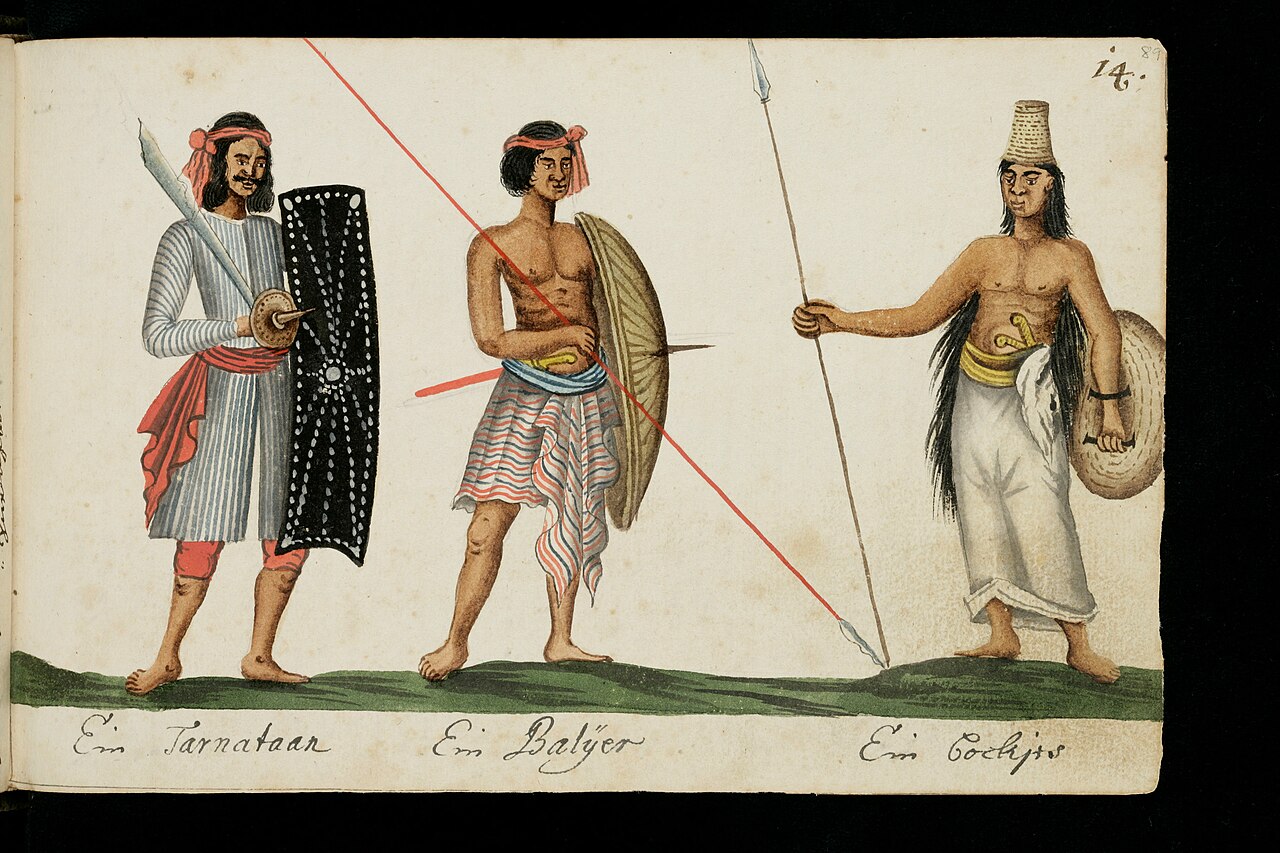
European contact began in the early 16th century when Portuguese mariners seeking valuable spices reached the eastern islands. The lure of nutmeg, cloves and cubeb pepper centred attention on the Maluku islands, often called the Spice Islands (Maluku), and launched competitive colonial ventures. The Dutch established the Vereenigde Oostindische Compagnie or VOC in 1602 and, through a mixture of trade monopolies, alliances and military action, became the dominant European power in many parts of the archipelago. Nevertheless, Dutch rule developed unevenly: full administrative integration of the territory that approximates modern national boundaries did not occur until the late nineteenth and early twentieth centuries when colonial maps moved toward the present borders.
Twentieth century: occupation, independence and new states
World events accelerated change. During the Second World War the Japanese occupation undermined Dutch control and strengthened Indonesian nationalist sentiment. On 17 August 1945, nationalist leaders proclaimed independence; Sukarno emerged as a leading figure (Sukarno) and a four-year diplomatic and armed struggle followed before the Netherlands formally recognised sovereignty in 1949. The early republic experimented with parliamentary governance and later with Sukarno's 'Guided Democracy', a period in which he consolidated power and moved the polity away from liberal democracy toward more centralised control.
In the mid-1960s a political transition brought General Suharto to power; his 'New Order' promoted political stability and encouraged foreign direct investment, leading to rapid economic growth for several decades. This era was also marked by authoritarian measures, suppression of opposition, and extensive patronage networks—features often associated with entrenched corruption. The late 1990s Asian financial crisis hit Indonesia severely, precipitating mass protests and Suharto's resignation in 1998 and launching the Reformasi movement for political reform.
Reform, decentralisation and unresolved challenges
Post-1998 politics introduced democratic reforms: direct presidential elections, a freer press, and a major decentralisation program transferring powers to regional governments. Territorial questions and conflicts came to new settlements; East Timor separated from Indonesia after a 1999 vote, and a negotiated peace agreement resolved the long-running separatist conflict in Aceh in 2005. Contemporary Indonesia remains a sprawling, multiethnic democracy facing challenges that include governance reforms, economic development across unequal regions, religious pluralism, environmental pressures and the legacy of historical inequalities.
- Major eras: Prehistory and early settlement; Austronesian expansion and agricultural states; Srivijaya–Majapahit classical period; Islamic sultanates; European spice-era and colonial rule; National revolution and independence; New Order development; Reformasi democracy.
- Key features: maritime trade networks, linguistic diversity, syncretic religious traditions, and strong regional identities.
- Continuities: importance of seafaring links, the economic centrality of commodities from spices to modern exports, and persistent cultural plurality across islands.
For learners and researchers, the history of Indonesia illustrates how island geography and long-distance maritime connections combine with internal social change to produce complex political formations. It also shows how colonial integration, twentieth-century national movements and late-twentieth-century economic shocks shaped the modern state and its ongoing attempts to balance unity and diversity.
Questions and answers
Q: Who were the first people to inhabit Indonesia?
A: The first people to inhabit Indonesia were Austronesian people, who arrived in 2000 BC.
Q: What type of agriculture was developed in Indonesia?
A: Wet-field rice cultivation was developed as early as the eighth century BC in Indonesia.
Q: When did Hinduism and Buddhism arrive in Indonesia?
A: Hinduism and Buddhism arrived in Indonesia with the powerful Srivijaya naval kingdom which flourished due to trade during the seventh century CE.
Q: When did Islam spread to northern Sumatra?
A: Islam spread to northern Sumatra during the late 13th century.
Q: Who declared Indonesian independence in 1945?
A: Sukarno declared Indonesian independence in August 1945.
Q: Who became president of Indonesia after Suharto resigned?
A: After Suharto resigned, Abdurrahman Wahid became president of Indonesia.
Q: What event caused popular discontent with the New Order government?
A: The Asian Financial Crisis of 1997 and 1998 caused popular discontent with the New Order government.
Related articles
Author
AlegsaOnline.com History of Indonesia: From Prehistory to the Reformasi Era Leandro Alegsa
URL: https://en.alegsaonline.com/art/44469
Sources
- pnas.org : "Evidence on the Age of the Asian Hominidae"
- sciencemag.org : "Dating hominid sites in Indonesia"
- doi.org : 10.1126/science.7992059
- dx.doi.org : "The next great empire"
- links.jstor.org : "Indonesia"
- links.jstor.org : "Independence the Issue"
- globalsecurity.org : "Indonesian War of Independence""
- state.gov : state.gov
- cje.oxfordjournals.org : "Indonesia: from showcase to basket case"
- doi.org : 10.1093/cje/22.6.723
- news.bbc.co.uk : "President Suharto resigns"
- gwu.edu : "Ford and Kissinger Gave Green Light to Indonesia's Invasion of East Timor, 1975: New Documents Detail Conversations with Suharto"
- state.gov : "International Religious Freedom Report"
- trincoll.edu : "Religious Ironies in East Timor"