
Histone (chromatin protein)
Histones are basic nuclear proteins that package eukaryotic DNA into nucleosomes, regulate chromatin structure and gene activity, and are central to epigenetic control and genome maintenance.
Overview: Histones are abundant nuclear proteins found in eukaryotic cell nuclei that compact and organize genomic DNA. They form repeating structural units called nucleosomes, which together with non-histone components make up chromatin. Chromatin is the substance of chromosomes and its dynamic packing controls access to genetic information within chromosomes, for instance during condensation in mitosis.
Image gallery
5 Images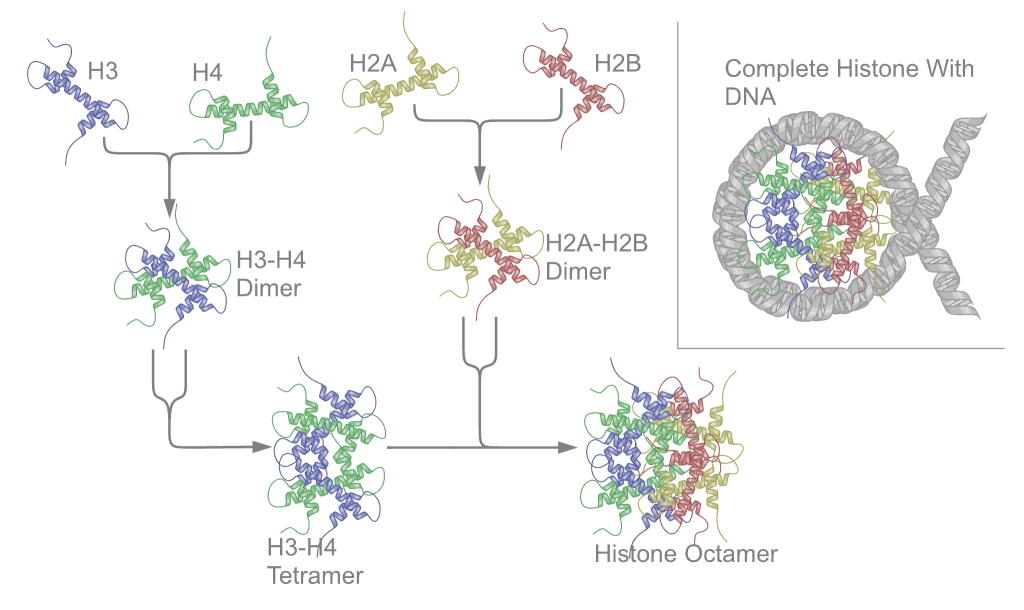



Structure and families
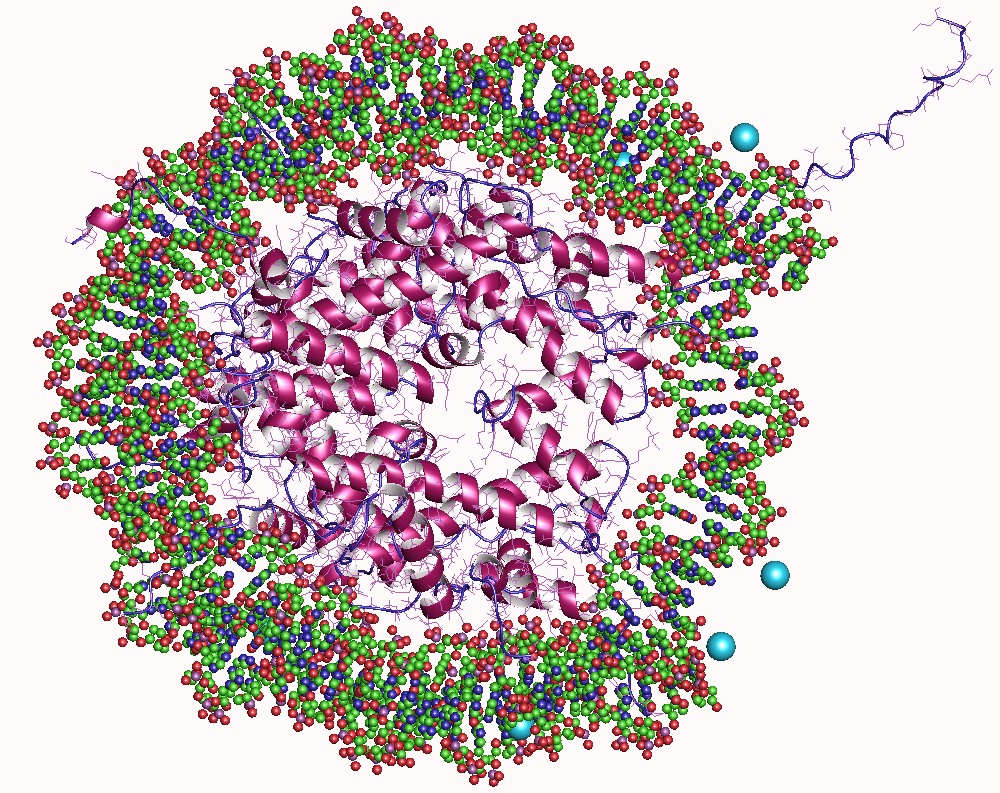
Core histones include H2A, H2B, H3 and H4. Two copies of each assemble into an octamer around which ~147 base pairs of DNA wind to form the nucleosome core. A distinct linker histone, H1, binds DNA between nucleosomes and promotes higher-order folding. Histone proteins are rich in positively charged amino acids (lysine and arginine), enabling tight electrostatic interaction with the acidic DNA backbone.
Modifications and regulation
Histones are subject to many post-translational modifications — acetylation, methylation, phosphorylation, ubiquitination and others — mostly on their flexible N-terminal tails. These chemical marks influence chromatin structure and recruit effector proteins, forming a multilayered regulatory system often referred to as the "histone code." Chromatin remodeling complexes reposition or eject nucleosomes to permit or restrict access to DNA for transcription, replication and repair.
Variants, dynamics and biological roles
Specialized histone variants replace canonical histones at particular genomic regions to alter nucleosome stability or convey unique functions. Examples include H3.3 (linked to active chromatin), H2A.Z (regulatory regions) and CENP-A (centromere identity). Through packaging, modification and exchange, histones regulate gene expression patterns, enable faithful DNA replication, participate in DNA damage responses, and contribute to cellular differentiation and development.
Functions and significance
- Compact long DNA molecules into a manageable, regulated nuclear architecture.
- Control accessibility of promoters and other regulatory elements.
- Provide binding platforms for regulatory proteins and enzymatic complexes.
- Participate in epigenetic inheritance where patterns of modification influence cell identity.
Historical and research context: Histones were first characterized in the late 19th century and have since become central to molecular biology and epigenetics. Modern methods such as chromatin immunoprecipitation, high-throughput sequencing and mass spectrometry are used to map where histones and their modifications occur across genomes and to study their roles in health and disease.
Because of their central regulatory role, changes in histone modification patterns or variant distribution are associated with developmental disorders and cancer, making histones a focus of both basic research and therapeutic interest.
For further general background and resources, see histone protein summaries, cell-type overviews at eukaryotic cell portals, DNA structure references at DNA resources, nucleosome models at nucleosome descriptions, chromatin reviews at chromatin literature, chromosome information at chromosome entries, and cell cycle context at mitosis descriptions.
Questions and answers
Q: What are histones?
A: Histones are proteins found in eukaryotic cell nuclei that package DNA into structural units called nucleosomes.
Q: What is the function of histones?
A: The function of histones is to act as spools around which DNA winds, package DNA into nucleosomes, and play a role in gene regulation.
Q: What would happen without histones?
A: Without histones, the unwound DNA in chromosomes would be very long.
Q: How much DNA is in each human cell?
A: Each human cell has about 1.8 meters of DNA.
Q: How much chromatin does each human cell have?
A: Each human cell has about 90 millimeters of chromatin.
Q: What happens during mitosis?
A: During mitosis, chromatin is duplicated and condensed, resulting in about 120 micrometers of chromosomes.
Q: What is the role of histones in chromosomes?
A: Histones are the chief protein components of chromatin, the active component of chromosomes.
Related articles
Author
AlegsaOnline.com Histone (chromatin protein) Leandro Alegsa
URL: https://en.alegsaonline.com/art/44435
Sources
- doi.org : 10.1016/S0959-437X(02)00282-4
- pubmed.ncbi.nlm.nih.gov : 11893489
- doi.org : 10.1038/47412
- pubmed.ncbi.nlm.nih.gov : 10638745
- doi.org : 10.1126/science.1063127
- pubmed.ncbi.nlm.nih.gov : 11498575
- doi.org : 10.1139/o07-057
- pubmed.ncbi.nlm.nih.gov : 17713579
- doi.org : 10.1016/j.cell.2007.05.009
- pubmed.ncbi.nlm.nih.gov : 17512414
- ncbi.nlm.nih.gov : "DOT1L/KMT4 recruitment and H3K79 methylation are ubiquitously coupled with gene transcription in mammalian cells"
- doi.org : 10.1128/MCB.02076-07
- pubmed.ncbi.nlm.nih.gov : 18285465
- ncbi.nlm.nih.gov : "Determination of enriched histone modifications in non-genic portions of the human genome"