
Hilbert's problems
A guided overview of the 23 mathematical problems David Hilbert presented in 1900, their scope, notable resolutions and undecidability results, and their long-term influence on mathematical research.
Overview
At the International Congress of Mathematicians in Paris in 1900 the German mathematician David Hilbert set out a list of twenty-three problems that he regarded as central to the future development of mathematics. Hilbert proposed them in a lecture that became one of the most influential programmatic documents of modern mathematics. The problems range across number theory, algebra, geometry, analysis and the foundations of mathematics; they were intended to stimulate research and to clarify the limits and methods of mathematical reasoning.
Image gallery
2 Images
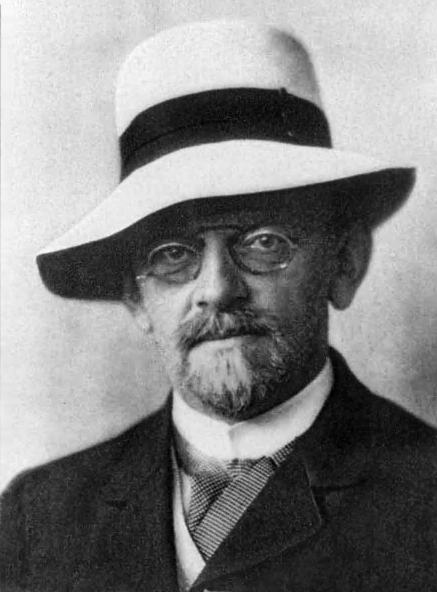
Nature and organization of the problems
Hilbert's problems were not a formal research agenda but a collection of challenging questions: some precise conjectures, some broad programmatic goals, and some requests to axiomatize or justify methods then in use. Together they illustrate the diversity of mathematical thought at the turn of the 20th century: from concrete questions about polyhedra and Diophantine equations to foundational issues about the axioms of arithmetic and the continuum. After Hilbert's death a note in his papers revealed an additional concern about criteria for simplicity of proofs; this item is often referred to today as the "24th problem."
Selected problems and outcomes
- Continuum Hypothesis (Hilbert's first): central to set theory; Kurt Gödel and Paul Cohen showed its truth or falsity cannot be decided from the usual axioms of set theory (it is independent of ZF).
- Diophantine equations (Hilbert's tenth): the question whether there is a general procedure to decide solvability of polynomial equations with integer coefficients was answered in the negative by Yuri Matiyasevich, building on work by Martin Davis, Hilary Putnam and Julia Robinson.
- Polyhedral decomposition (Hilbert's third): Max Dehn produced an invariant that showed not all polyhedra with the same volume are decomposable into each other; this gave an early and complete solution.
- Problems in analysis and group theory: Hilbert's fifth problem, on whether continuous groups are necessarily Lie groups, was settled in the mid-20th century by contributions of several mathematicians.
- Problems remaining open or only partially resolved: some items—most famously problems about the Riemann zeta function and the distribution of primes—remain unresolved or are the subject of ongoing research.
History, foundations and influence
Hilbert's presentation did more than produce specific theorems: it shaped the priorities and language of 20th-century mathematics. His appeal for rigorous axiomatization influenced work on the logical foundations of mathematics and on formal systems. The tension between Hilbert's program (a hope for a complete finitistic foundation) and Gödel's incompleteness theorems became a defining episode of mathematical logic: Gödel's results showed there are inherent limitations to what can be proved within a single formal system of arithmetic.
Legacy and modern echoes
The stature of Hilbert's list inspired later initiatives to pose grand challenges. In 2000 the Clay Mathematics Institute issued the Millennium Prize Problems, a modern counterpart that names several major open questions and offers monetary prizes for solutions. While the specific items differ, the idea of focusing attention on a short list of deep problems remains an effective mechanism for driving research. For biographical context on Hilbert and the Paris lecture see biographical and historical resources.
Whether solved, reformulated or shown undecidable, the problems Hilbert proposed continue to illuminate the methods and limits of mathematical thought. They exemplify how carefully posed questions can energize fields for generations and how answers—both positive and negative—can reshape entire branches of mathematics.
Questions and answers
Q: Who published a list of 23 unsolved mathematical problems in 1900?
A: David Hilbert published a list of 23 unsolved mathematical problems in 1900.
Q: Was Hilbert's 24th problem part of the original list?
A: No, Hilbert's 24th problem was found in Hilbert's writings after his death.
Q: What is Hilbert's 24th problem about?
A: Hilbert's 24th problem is about finding criteria to show that a solution to a problem is the simplest possible.
Q: Were all 23 problems on Hilbert's list solved by 2012?
A: No, three of the 23 problems on Hilbert's list were unresolved in 2012.
Q: Were any of the problems on Hilbert's list too vague to be resolved?
A: Yes, three of the problems on Hilbert's list were too vague to be resolved.
Q: How many of the problems on Hilbert's list could be partially solved?
A: Six of the problems on Hilbert's list could be partially solved.
Q: Did the Clay Mathematics Institute create a similar list to Hilbert's problems?
A: Yes, the Clay Mathematics Institute created a similar list called the Millennium Prize Problems in 2000.
Related articles
Author
AlegsaOnline.com Hilbert's problems Leandro Alegsa
URL: https://en.alegsaonline.com/art/44188
Sources
- emis.de : Shreeram S. Abhyankar: Hilbert's Thirteenth Problem
- iop.org : A. G. Vitushkin: On Hilbert's thirteenth problem and related questions
- maa.org : Hilbert’s twenty-fourth problem
- encyclopediaofmath.org : Encyclopedia of Mathematics