
Highland cattle
Hardy Scottish cattle with long horns and a double coat. Raised mainly for beef, suited to wet, windy climates, used in conservation grazing, small-scale farming and cultural heritage worldwide.
Overview
The Highland is a traditional Scottish cattle breed known for its long horns and shaggy, double-layered coat. In Scottish Gaelic it is called Bò Ghàidhealach and in Scots the animal is commonly referred to as the Heilan coo. Developed for life on rough upland pasture, Highland cattle are prized for their hardiness, maternal instincts and the distinctive quality of their beef.
Image gallery
10 Images



Physical characteristics
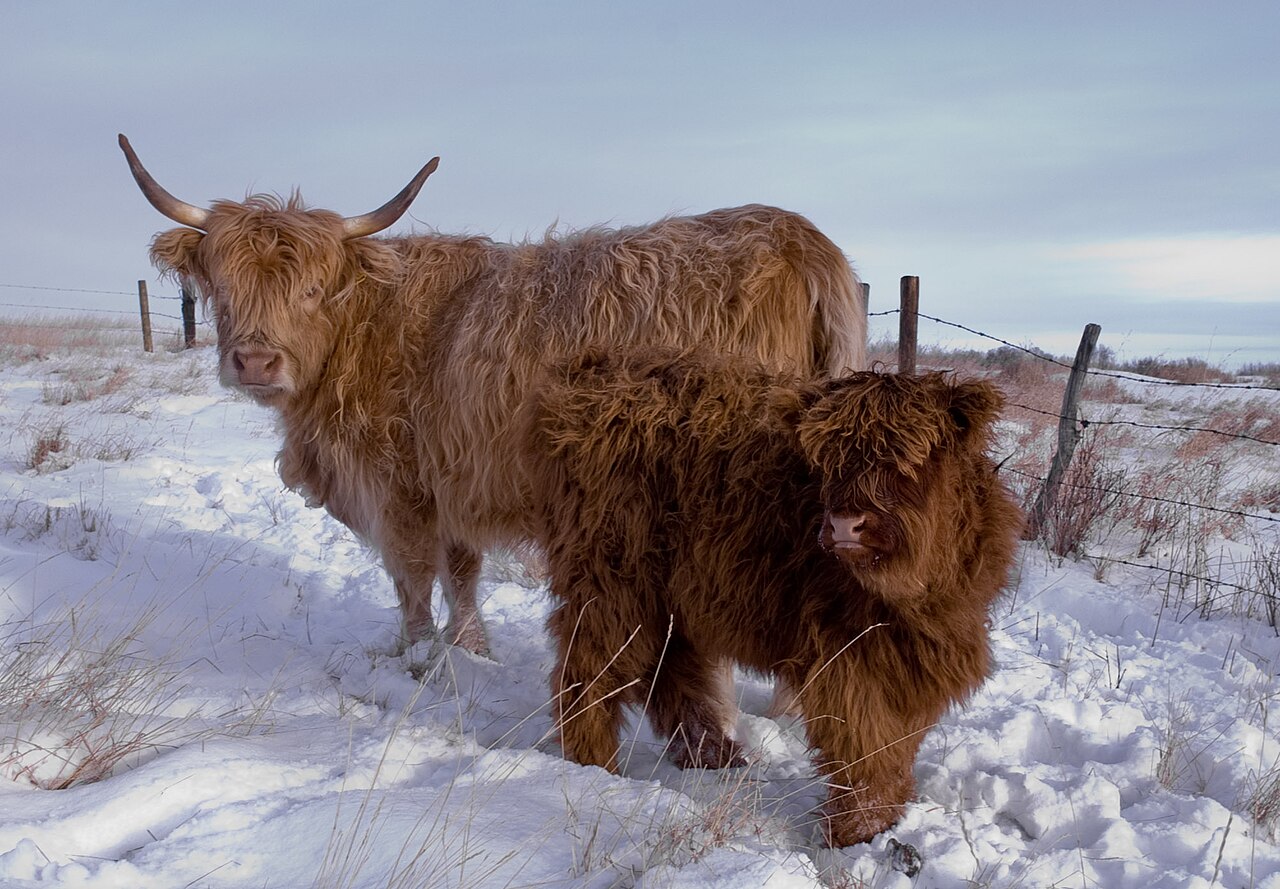
Highland cattle are immediately recognizable by two main traits: the long, often outward-and-upward curving horns present in both sexes, and the double coat. The outer hair is long, oily and water-shedding, while the inner undercoat is soft and insulating. Together these layers trap air and provide protection from cold, wind and rain. Coat colours include red, black, brindle, yellow, dun, silver and white, and colour can be used in part to trace bloodlines.
- Coat: long outer guard hairs with a dense undercoat (double coat) that aids survival in high rainfall and strong winds.
- Horns: grow in both sexes and vary in shape and size by sex and bloodline (horn morphology).
- Size: bulls may reach substantial weights while cows are lighter and efficient foragers; mature weights often reflect traditional upland types.
Size, milk and meat
While not primarily a dairy breed, Highland cows produce milk with relatively high butterfat, which supports calf growth in marginal conditions. The breed is raised mainly for beef. Highland beef is valued for its leanness, flavor and tenderness; it is often marketed as a premium, niche product and may have lower fat content and a favorable nutritional profile compared with some conventional beef types (beef, cholesterol).
History and distribution
Highland cattle originated in the Scottish Highlands and the islands of the Outer Hebrides and have a long history in the region, with references to similar cattle dating back many centuries. Their form was refined by generations of farmers and, from the 18th and 19th centuries onwards, by organized breeding and herd books. The breed has since been exported worldwide and is kept on small farms, estates and conservation projects in many countries (Highlands, Outer Hebrides).
Behavior, management and breeding
Highlands are noted for a generally placid temperament and good maternal ability. They are well suited to low-input systems: animals foraging on rough pasture require less supplementary feeding than many modern, intensive breeds. Calving is often straightforward and cows are protective mothers. The breed matures more slowly than some commercial types, which is balanced by lower maintenance needs and longevity. Responsible breeding focuses on conformation, maternal traits and adaptation to local conditions rather than purely on rapid growth.
Uses and conservation
Beyond beef production, Highland cattle are used in conservation grazing to manage heaths, moorland and coastal grasslands. Their browsing and grazing behaviour helps maintain biodiversity in certain habitats. They are also kept for heritage conservation, agri-tourism and educational purposes due to their striking appearance and cultural associations with Scotland.
Care considerations
- Housing: hardy enough to overwinter outdoors in many climates, though shelter is beneficial during severe weather.
- Nutrition: adapted to poor forage; supplementary feed may be required in prolonged snow or drought.
- Health: routine herd health measures apply; strong constitution reduces some management costs but vigilance for parasites and common cattle conditions is still necessary.
Cultural and economic importance
Highland cattle are a symbol of Scottish rural life and feature in regional tourism and cultural representation. Economically they serve niche markets for speciality beef and for smallholders seeking low-input livestock. Breed societies and local agricultural authorities provide guidance for breeders and promote breed standards and recording.
For more information on names, breed classification, husbandry and markets consult breed organizations and regional advisory sources: Gaelic name and culture, breed classifications, traditional names, horn morphology, coat adaptations, meat markets, regional origins, island derivation, nutritional notes.

Questions and answers
Q: What is the Highland cattle?
A: The Highland cattle is a Scottish cattle breed with long horns and long, wavy, woolly coats.
Q: Why are Highland cattle well suited for conditions in the Highlands?
A: Highland cattle are well suited for conditions in the Highlands because they have long, oily outer hair that covers a downy undercoat.
Q: What is the primary use of Highland cattle?
A: The primary use of Highland cattle is for their meat.
Q: Where did the Highland cattle originate from?
A: The Highland cattle originated in the Scottish Highlands and the Outer Hebrides.
Q: When were Highland cattle first mentioned?
A: Highland cattle were first mentioned in the 6th century AD.
Q: What is the weight range for Highland bulls and cows?
A: Bulls can weigh up to 800 kilograms (1,800 pounds) and cows can weigh up to 500 kilograms (1,100 pounds).
Q: Are Highland cattle's milk and meat of good quality?
A: Yes, Highland cattle's milk generally has a high butterfat content, and their meat is of the highest quality, and it is lower in cholesterol than other varieties of beef.
Tags
Related articles
Author
AlegsaOnline.com Highland cattle Leandro Alegsa
URL: https://en.alegsaonline.com/art/44142
Sources
- britannicrarebreeds.co.uk : "Highland cattle — Britannic Rare Breeds"
- highlandcattlesociety.com : "Highland Cattle Society breed standard"