
High-rise building: design, history, uses and distinguishing features
Overview of high-rise buildings: what they are, how they are built, common materials and functions, historical development, safety concerns and how they differ from mid- and low-rise structures.
A high-rise building is a tall, multistory structure designed to accommodate people and activities vertically rather than horizontally. In general discussion the term links to a broad set of uses: residential apartments, commercial offices, hospitality such as hotels, and ground-level retail. The concept of a high-rise as a distinct category appears where vertical circulation, building systems, and structural demands change the way a building is planned—see a basic definition at reference. Very tall high-rises are commonly called skyscrapers.
Image gallery
10 Images
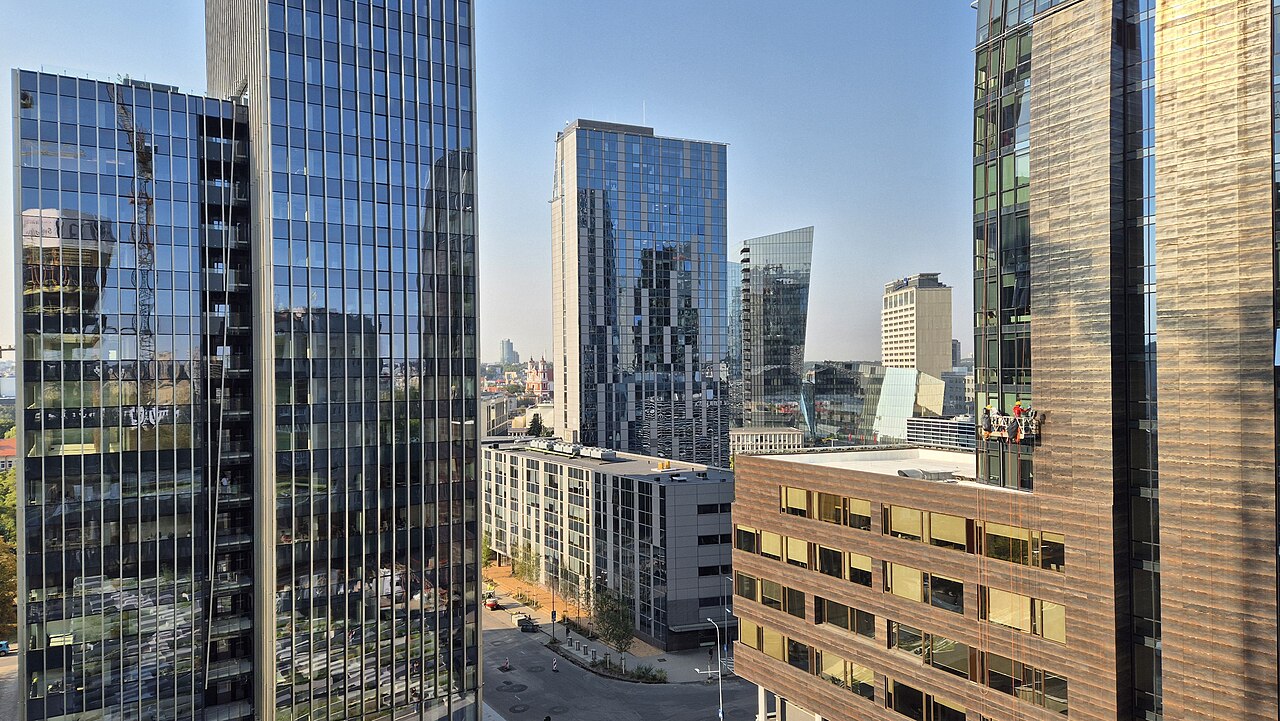


Typical characteristics
High-rise buildings are usually identified by multiple, repeating floors served by mechanical systems and vertical transportation. Key characteristics include:
- Vertical transportation: banks of elevators and stairwells, enabled historically by the invention of the elevator (lift).
- Structural system: either a steel frame or reinforced concrete skeleton that supports gravity and wind loads.
- Service cores: central shafts for elevators, pipes, ducts and emergency egress.
- Envelope and façade systems that resist weather, control solar gain and contribute to the building’s appearance.
Materials and structural parts
Modern high-rises rely on durable materials and coordinated systems. Two common structural materials are reinforced concrete and steel. Concrete is often used for residential towers and for shear walls and cores because of its mass and fire resistance; steel frames remain common in tall commercial towers for their strength-to-weight ratio and speed of erection. Typical parts of a high-rise include deep foundations, a structural core, floor plate framing, façade cladding, mechanical floors and roof plant.
History and development
The emergence of high-rise construction is linked to urban land pressures, improved building materials and mechanical lifts. During the late 19th and early 20th centuries, advances in iron and steel framing, the wider availability of concrete, and the practical elevator made taller commercial and residential buildings feasible in growing cities. Over time, design moved from simple masonry towers to articulated steel or concrete structures with engineered wind resistance and fire safety features.
Uses, examples and social importance
High-rises concentrate people and activity on a small footprint, which supports dense urban cores and mixed uses. Common program types include:
- Residential towers, sometimes called tower blocks or MDUs (multi-dwelling units), which provide many housing units stacked vertically.
- Office towers that group workplaces and use central HVAC and communications systems.
- Mixed-use developments combining housing, offices, retail and hotels in a single structure or podium-tower arrangement.
Because they can centralize transit, utilities and commerce, high-rises play a significant role in city form and real estate markets.
Safety, regulation and distinctions
High-rise design is governed by fire, structural and accessibility codes. Important considerations include emergency egress, sprinkler systems, pressurized stairwells, refuge floors and resilient mechanical systems. In everyday classification, the opposite of a high-rise is a low-rise building, with mid-rise used for structures between those extremes. The informal boundary between a high-rise and a skyscraper varies by region; some sources use a threshold of around fifty stories, while others emphasize height, skyline impact or technical requirements.
For further reading on building types and technical criteria, consult resources and regulations provided by local authorities and building professionals (definition, tall building guidance, vertical transport, concrete technology, steel construction). Additional practical examples and case studies are available through industry publications and municipal planning documents (residential examples, office case studies, hotel projects, retail integration).
Questions and answers
Q: What is a high-rise building?
A: A high-rise building is a tall building which can be used for different purposes, such as an apartment building, office building, hotel or retail.
Q: How are residential high-rise buildings called?
A: Residential high-rise buildings are also called tower blocks or MDUs, which stands for Multi Dwelling Unit.
Q: What is a skyscraper?
A: A skyscraper is a very tall high-rise building.
Q: What made high-rise buildings possible?
A: The invention of the elevator (lift) and the availability of cheaper and more abundant building materials made high-rise buildings possible.
Q: What materials are used for high-rise buildings?
A: Reinforced concrete and steel are the most commonly used materials for high-rise buildings.
Q: What is the difference between a tower block and a skyscraper?
A: There is no clear difference between a tower block and a skyscraper, but a building with fifty or more stories is generally considered a skyscraper.
Q: What is the opposite of a high-rise building?
A: The opposite of a high-rise building is a low-rise building and in the middle are mid-rise buildings.
Related articles
Author
AlegsaOnline.com High-rise building: design, history, uses and distinguishing features Leandro Alegsa
URL: https://en.alegsaonline.com/art/44114
Sources
- books.google.com : Residential Network Cabling
- britannica.com : "skyscraper"