
Hexahedron
A hexahedron is any polyhedron with six faces. This article explains definitions, varieties (convex and concave), typical shapes like the cube and dipyramid, topology, properties, and common uses.
Overview
A hexahedron is any solid in three-dimensional geometry whose surface consists of six polygonal faces. In the broadest sense it is a type of polyhedron. Faces may be triangles, quadrilaterals or mixtures of polygons; the defining feature is simply that there are six of them. A familiar regular example is the cube, whose six faces are congruent squares.
Image gallery
5 Images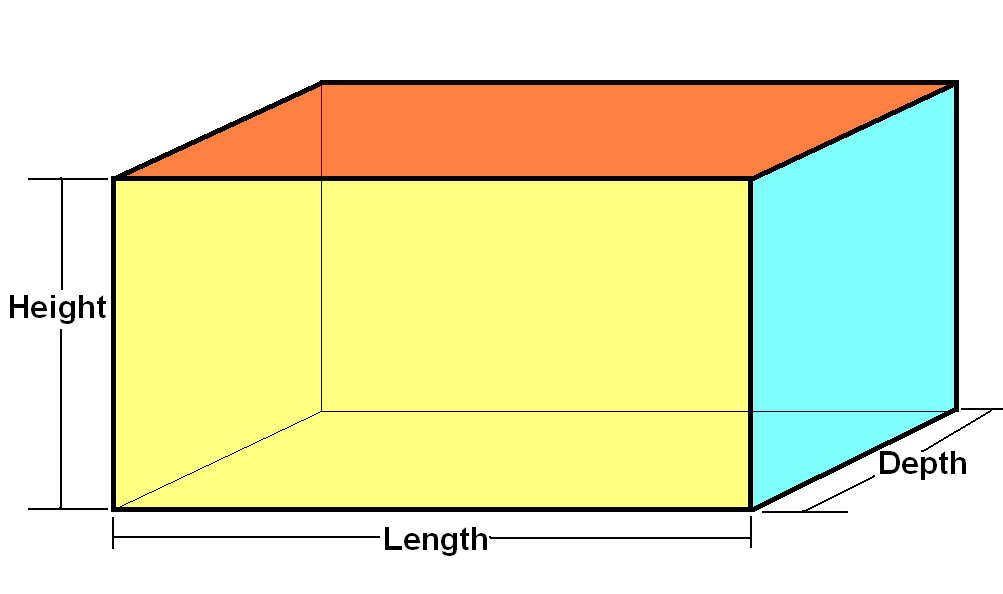



Characteristics and basic geometry
As with other polyhedra, a hexahedron satisfies Euler's formula for convex solids (V − E + F = 2), so for F = 6 the numbers of vertices V and edges E are linked by E = V + 4. The arrangement and shapes of the six faces determine the solid's geometry: faces can meet in different patterns giving a wide range of possible edge lengths and dihedral angles. Some hexahedra are regular or highly symmetric; most are irregular.
Types and topology
Topologically (that is, counting how faces meet rather than the exact geometry) convex hexahedra fall into a small number of distinct classes. There are seven topologically different convex hexahedra; one of these comes in a pair of mirror-image, or chiral, forms. In addition, there are a few hexahedral types that can only be realized as concave solids. Two shapes with the same connectivity of faces and vertices are considered the same topological type even if metric details differ.
Common examples
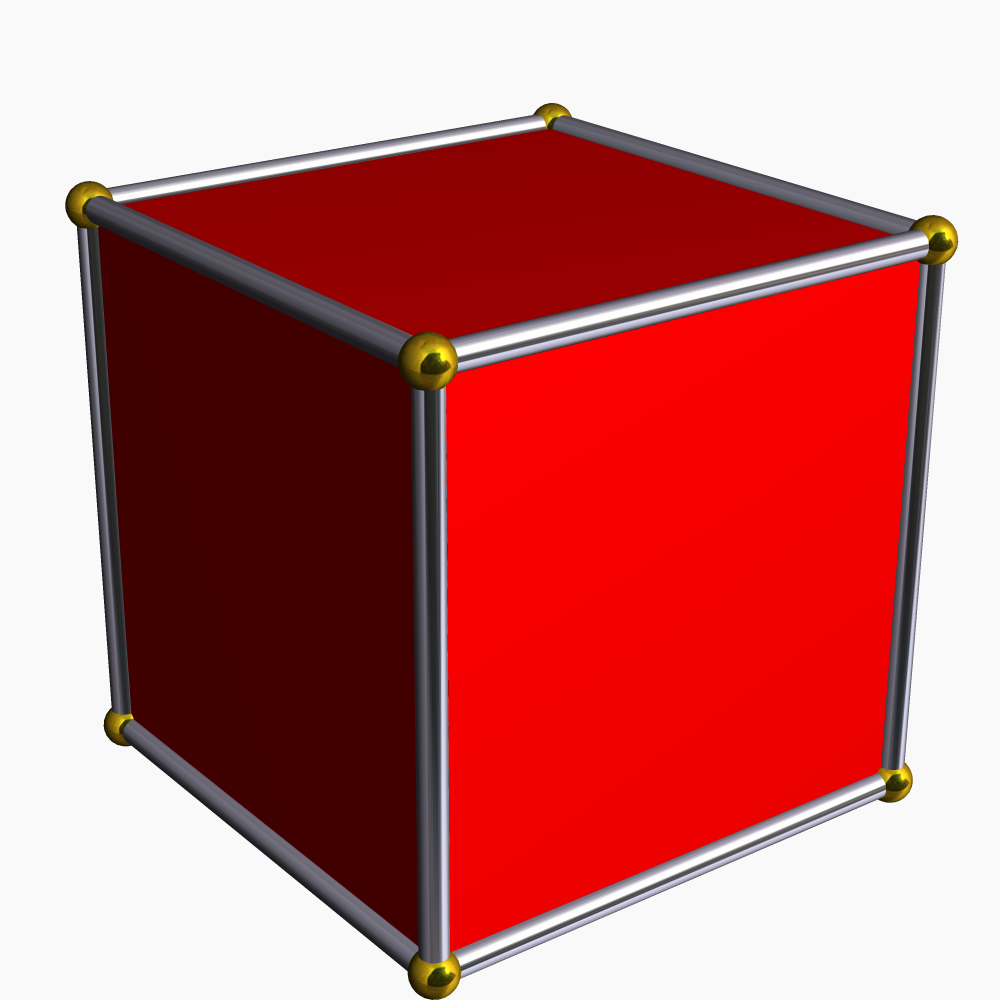
- Cube: a regular hexahedron with six square faces and a high degree of symmetry.
- Cuboid (rectangular prism): faces are rectangles; opposite faces are congruent.
- Parallelepiped: faces are parallelograms; includes the rhombohedron as a special case.
- Triangular dipyramid: a convex hexahedron with six triangular faces; an example where faces need not be quadrilaterals.
History and applications
Hexahedral solids have been studied since antiquity as part of classical geometry and later in solid modeling and crystallography. In practical use, six-faced forms are ubiquitous: boxes, shipping containers, building blocks and dice (the six-faced die is a cube). In engineering and numerical simulation, hexahedral mesh elements are preferred in many finite-element analyses because their shape can provide efficient approximation properties compared with other element types.
Notable facts and distinctions
While everyday attention often focuses on the cube, the class of hexahedra is diverse. Topological classification highlights that many qualitatively different arrangements of faces are possible even with the same face count. Some hexahedra are chiral (distinct from their mirror image), and others require concavity to realize their face connectivity. For further geometric context see general references on polyhedra and solid geometry.
Questions and answers
Q: What is a hexahedron?
A: A hexahedron is a polyhedron with six faces.
Q: Can a cube be considered a hexahedron?
A: Yes, a cube is an example of a regular hexahedron with all its faces being square and three squares around each vertex.
Q: How many topologically distinct convex hexahedra are there?
A: There are seven topologically distinct convex hexahedra.
Q: Is it possible for two polyhedra to be topologically distinct?
A: Yes, two polyhedra can be topologically distinct if they have different arrangements of faces and vertices that cannot be changed simply by changing the lengths of edges or the angles between edges or faces.
Q: How many mirror image forms exist for one of the seven topologically distinct convex hexahedra?
A: One of the seven topologically distinct convex hexahedra exists in two mirror image forms.
Q: Are there any topologically distinct hexahedra that can only be realised as concave figures?
A: Yes, there are three topologically distinct hexahedra that can only be realised as concave figures.
Q: Can one of the topologically distinct convex hexahedra be distorted into one of the topologically distinct concave hexahedra?
A: No, it is impossible to distort one of the topologically distinct convex hexahedra into one of the topologically distinct concave hexahedra without changing the fundamental nature of the polyhedra.
Related articles
Author
AlegsaOnline.com Hexahedron Leandro Alegsa
URL: https://en.alegsaonline.com/art/43997
Sources
- numericana.com : Counting polyhedra