
Heterobranchia — a diverse clade of snails and slugs
Heterobranchia is a major group of gastropod molluscs that includes marine, freshwater and terrestrial snails and slugs. It is morphologically varied and its internal relationships remain incompletely resolved.
Heterobranchia is a large and varied assemblage within the class Gastropoda that brings together many familiar and unusual snails and slugs. Members occur in marine, freshwater and terrestrial habitats and show a wide range of body plans, from coiled-shelled snails to shell-less sea slugs. For a general introduction to their form, see snails and slugs.
Image gallery
6 Images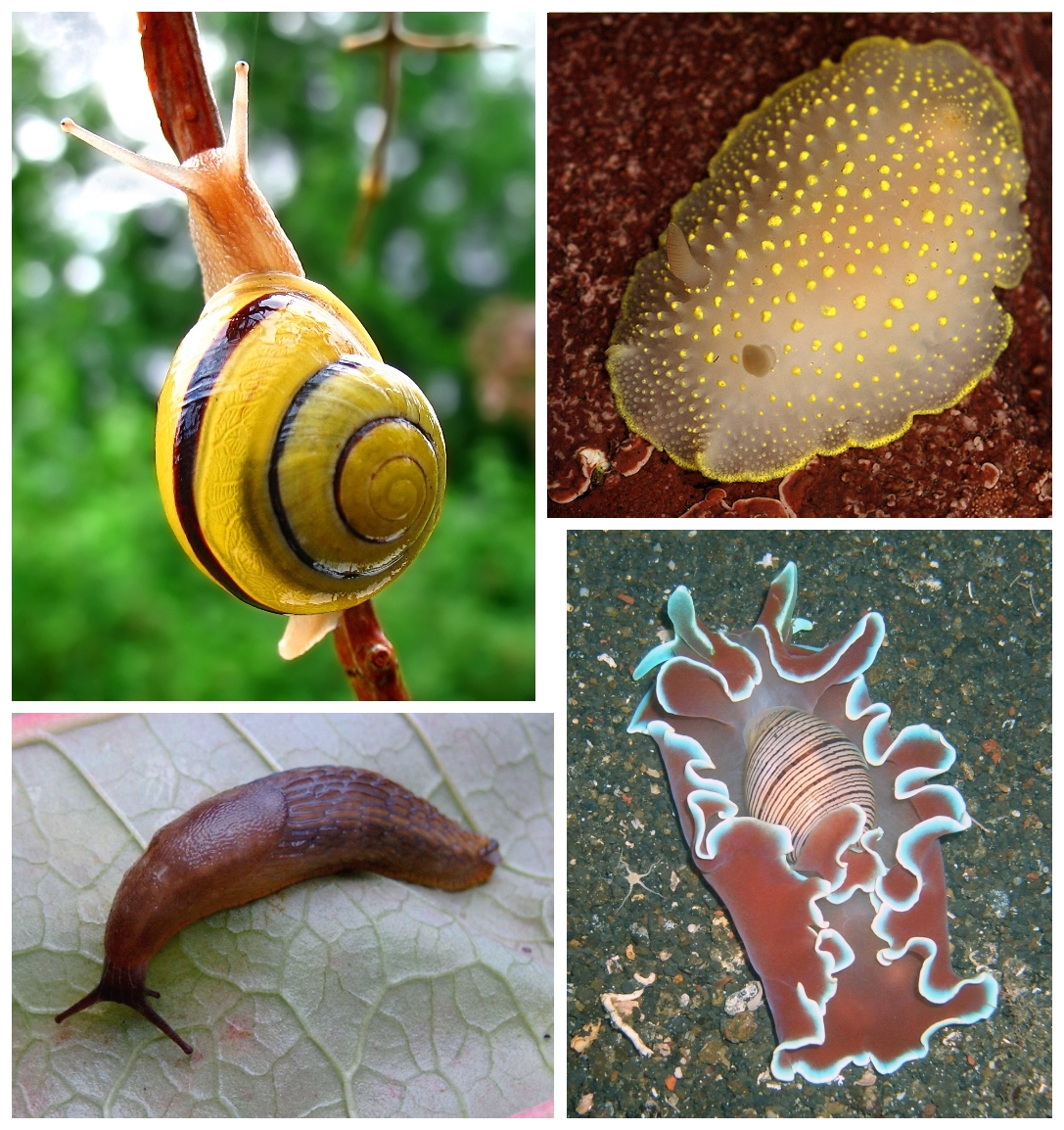


Key characteristics
Heterobranchs are not defined by a single unique trait but by a set of anatomical and developmental features that often differ from other gastropods. Common characteristics include modifications of the respiratory structures (gills, lungs or secondary skin respiration), frequent reduction or loss of the external shell in some lineages, and variations in nervous system arrangement. Many heterobranchs are hermaphroditic, and reproductive anatomy can be complex and diverse.
Major subgroups and phylogeny
Historically, heterobranchs have been grouped into informal units such as the traditional "opisthobranchs" (sea slugs and relatives) and "pulmonates" (land snails and slugs), plus several more basal lineages. Modern molecular studies have reshaped those boundaries and shown that relationships among these groups are complicated and not yet fully resolved. Researchers continue to refine the evolutionary tree using genetic and anatomical data.
Habitats and ecology
Heterobranchs occupy a broad range of environments. Marine forms include colorful nudibranchs and sea hares that often prey on sponges, cnidarians or other invertebrates; many are found on reefs and rocky shores (marine species). Freshwater heterobranchs occur in ponds, streams and lakes and play roles in algal grazing and detritus processing (freshwater forms). Terrestrial pulmonates, familiar as garden snails and slugs, are important herbivores and decomposers (terrestrial species).
Importance and notable facts
- Ecological roles: heterobranchs act as grazers, predators and scavengers and are integral to many food webs.
- Scientific value: some sea slugs have been important in neurobiology and chemical ecology research.
- Diversity: the group displays extreme variation in shell form, coloration and life history strategies.
- Taxonomic uncertainty: ongoing research continues to revise how species and lineages are related.
Because Heterobranchia embraces such varied forms and lifestyles, it is an active focus of evolutionary studies. Understanding their anatomy, behaviour and genetics helps clarify how major transitions—such as colonization of land or loss of the shell—have occurred in gastropods.
Questions and answers
Q: What is Heterobranchia?
A: Heterobranchia is a large group of snails and slugs that includes marine, aquatic and terrestrial gastropod molluscs.
Q: What is the importance of Heterobranchia in gastropod classification?
A: Heterobranchia is one of the main clades of gastropods.
Q: How many informal groups does Heterobranchia have?
A: Heterobranchia has three informal groups.
Q: What is the current state of knowledge on Heterobranchia's classification?
A: Heterobranchia's details are extremely complicated, and not yet quite worked out. Experts say they have "poorly resolved phylogenetic relationships".
Q: What types of environments do Heterobranchia gastropods occupy?
A: Heterobranchia gastropods occupy marine, aquatic, and terrestrial environments.
Q: Is Heterobranchia a well-defined group?
A: No, experts say the phylogenetic relationships within Heterobranchia are poorly resolved, so it is not a well-defined group.
Q: Are slugs and snails part of the same group in Heterobranchia?
A: Yes, slugs and snails are both part of the Heterobranchia group.
Related articles
Author
AlegsaOnline.com Heterobranchia — a diverse clade of snails and slugs Leandro Alegsa
URL: https://en.alegsaonline.com/art/43950
Sources
- vliz.be : vliz.be/en/imis?module=ref&refid=78278
- sciencedirect.com : sciencedirect.com/science/article/pii/S1055790309003765