
Hersal Thomas
Hersal Thomas (1906–1926) was an American blues pianist and composer whose short life helped shape piano blues and early boogie-woogie; later pianists cited him as a key influence.
Overview
Hersal Thomas (September 9, 1906 – June 2, 1926) was an American blues pianist and composer. Though his career was brief, he is remembered for helping to move keyboard styles away from strict ragtime toward a more driving, improvisational approach that anticipated what became known as boogie-woogie. His recorded and performed work left a mark on contemporaries and on several later figures in the tradition.
Image gallery
2 Images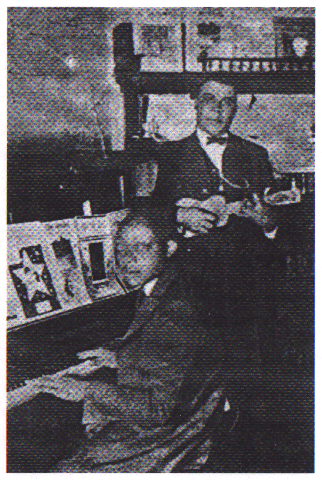

Musical characteristics
Thomas’s playing combined elements that were common to transitional piano styles of the 1910s and 1920s. Features often associated with his approach include a strong, rhythmically emphasized left hand that outlined bass ostinatos and walking lines, paired with a right hand that used blues inflections, syncopation, and inventive single-note or chordal figures. These elements helped bridge ragtime’s formal textures and the looser, more percussive sensibility of early blues pianists.
Career and recordings
Active in the early 1920s, Thomas performed in clubs and venues where piano-based blues, vaudeville numbers, and popular songs intersected. A small number of surviving recordings and contemporary accounts attest to his technical facility and musical imagination. Because he worked at a time when recording opportunities were limited for many African American musicians, the extant recordings are comparatively few but have been cited by students of the style as important early examples of the evolving piano blues idiom.
Influence and notable admirers
Thomas’s style influenced several later pianists who became prominent in boogie-woogie and piano blues. Musicians such as Jimmy Yancey, Albert Ammons, and Meade Lux Lewis acknowledged his importance in shaping the approach that they and others developed. His combination of rhythmic drive and blues phrasing helped establish techniques that showed up in the repertoire of many 20th-century keyboard players.
Legacy
Thomas died very young, at the age of 19, yet his role in the transition from ragtime to blues-informed piano styles is widely noted by historians and performers. His surviving work is studied as an early example of piano blues that points toward boogie-woogie and later jazz-influenced keyboard practices. Reissues and collections of early blues piano recordings often include his performances, and his influence is recognized in histories of American popular and vernacular music.
- Period: early 1920s recordings and performances
- Importance: a bridge between ragtime and boogie-woogie
- Remembered for: rhythmic left-hand patterns and blues-inflected right-hand lines
Questions and answers
Q: Who was Hersal Thomas?
A: Hersal Thomas was an American blues pianist and composer.
Q: When was Hersal Thomas born and when did he die?
A: Hersal Thomas was born on September 9, 1906, and he died on June 2, 1926.
Q: What was Hersal Thomas's impact on music?
A: Hersal Thomas strongly influenced the development of piano blues and boogie woogie. Later pianists like Jimmy Yancey, Albert Ammons, and Meade Lux Lewis named him as an important influence in their own career.
Q: What genre of music did Hersal Thomas excel in?
A: Hersal Thomas excelled in piano blues and boogie woogie.
Q: What other musicians did Hersal Thomas influence?
A: Hersal Thomas influenced later pianists like Jimmy Yancey, Albert Ammons, and Meade Lux Lewis.
Q: How did Hersal Thomas contribute to the development of piano blues and boogie woogie?
A: Hersal Thomas strongly influenced the development of piano blues and boogie woogie with his playing and compositions.
Q: At what age did Hersal Thomas die?
A: Hersal Thomas died at the young age of 19.
Related articles
Author
AlegsaOnline.com Hersal Thomas Leandro Alegsa
URL: https://en.alegsaonline.com/art/43890
Sources
- allmusic.com : All Music Guide