
Herat Province
Herat Province is a historic, agricultural and cultural region in western Afghanistan centered on the city of Herat. It has long served as a crossroads of Persian culture, trade routes, and empires.
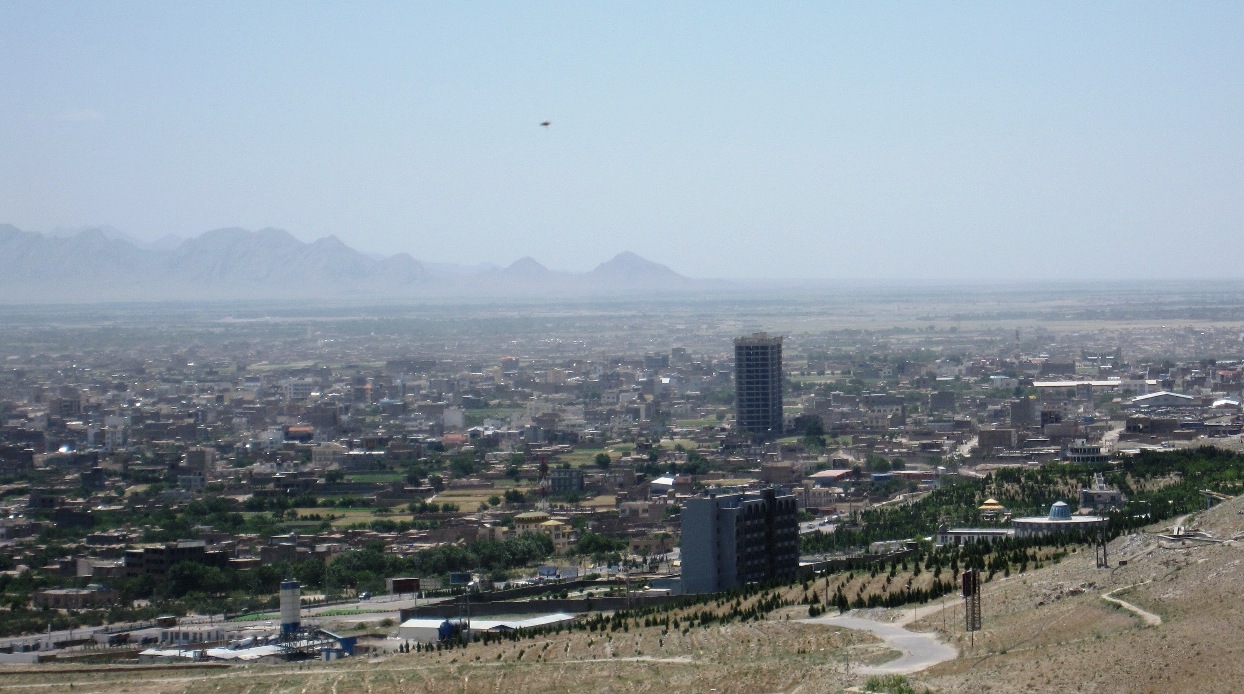
Herat Province lies in the western part of Afghanistan and is anchored by the provincial capital, the city of Herat. The province name appears in local languages — see the Persian and Pashto forms — and it is one of the country's administrative divisions with close historical and economic ties to the rest of Afghanistan. The city of Herat remains the principal urban, cultural and commercial center for the province and surrounding districts.
Image gallery
9 Images



Geography and population
Herat occupies a varied landscape of valleys and low mountains fed by tributaries of the Hari River. The climate is broadly continental to semi‑arid, producing a long growing season in irrigated areas. Most residents speak Dari (a variety of Persian) alongside other regional languages and the province hosts a mix of ethnic groups. Agriculture, fruit orchards and saffron cultivation are important local livelihoods, supported by traditional irrigation and local markets.
History
Historically the region was part of Greater Khorasan, a cultural and political zone of the Iranian world. Over many centuries Herat was governed by a succession of dynasties and rulers, including the Tahirids, Saffarids, Samanids, Ghaznavids and Ghurids, followed by Mongol and Ilkhanid rule. It later became a major center under the Timurids, noted for artistic and literary patronage, and in the early modern era experienced Safavid influence before passing through the Hotaki period under the Hotaki rulers and eventually incorporation into the Durrani state associated with Durrani leadership.
Culture and landmarks
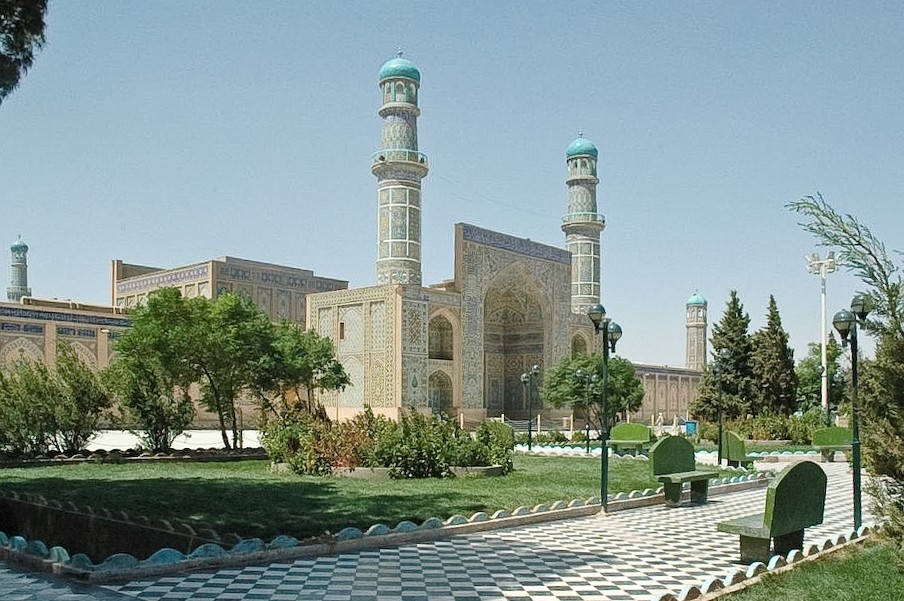
Herat is renowned for its Timurid-era monuments and a long-standing tradition of Persian literature and arts. Notable sites include historic mosques, madrasas and the citadel that testify to the city's medieval prominence. Calligraphy, miniature painting and poetry have flourished here, and local festivals reflect the province's Persianate cultural heritage.
Economy and contemporary importance
The provincial economy combines agriculture, artisanal crafts (carpets, ceramics) and cross-border trade along routes that connect western Afghanistan with neighboring regions. Efforts at reconstruction, education and cultural preservation continue alongside challenges related to infrastructure and security. Herat's strategic location and rich historical legacy make it important for regional commerce and for Afghanistan's cultural identity.
Questions and answers
Q: What is Herat?
A: Herat is one of the 34 provinces of Afghanistan.
Q: Where is Herat located?
A: Herat is located in the southwestern region of Afghanistan.
Q: What is the main city and capital of Herat?
A: The main city and capital of Herat is also named Herat.
Q: What was Herat previously a part of?
A: Herat was previously a part of Greater Khorasan.
Q: Who ruled over Herat in the past?
A: Herat was ruled by the Tahirids, followed by the Saffarids, Samanids, Ghaznavids, Ghurids, Ilkhanates, Timurids, and Saffavids.
Q: When did Herat become a part of the Afghan Hotaki dynasty?
A: Herat became a part of the Afghan Hotaki dynasty in the early-18th century.
Q: Who followed the Afghan Hotaki dynasty in ruling over Herat?
A: The Durrani Empire followed the Afghan Hotaki dynasty in ruling over Herat.
Related articles
Author
AlegsaOnline.com Herat Province Leandro Alegsa
URL: https://en.alegsaonline.com/art/43676
Sources
- mrrd-nabdp.org : "B. Demography and Population"
- fao.org : Afghanistan Geographic & Thematic Layers