
Hephaestus — Greek god of fire, smithing, and craft
Hephaestus, son of Zeus and Hera, is the Greek god of fire, metalworking and craftsmanship; famed as the lame divine smith who forged weapons, tools and mechanical devices for gods and heroes.
Hephaestus (Greek: Ἥφαιστος) is the ancient Greek god most closely associated with fire and the technologies of working metal. He embodies the creative, controlled heat of the forge as well as the broader arts of metalworking, sculpture and metallurgy. In myth he is normally described as the son of Zeus and Hera and serves as the divine blacksmith who produces wondrous objects for gods and mortals alike.
Image gallery
7 Images




Characteristics and symbols
Hephaestus is distinctive among the Olympians for his physical imperfection: many stories portray him as lame or crippled, a trait that emphasizes his role as a working craftsman rather than a distant aristocratic deity. His typical attributes are workshop implements rather than martial accoutrements: a smith's hammer, an anvil and a pair of tongs. The donkey is mentioned in some traditions as an animal associated with him. In Roman religion his counterpart is Vulcan.
Notable myths
Hephaestus appears in a number of well-known myths. One recurring story explains his lameness as the result of being cast from Olympus after quarreling with his mother or father; the fall injures him but also marks the god of skilled labor. He is married to the goddess Aphrodite, and her affair with Ares is a famous theme that highlights contrasts between craft, beauty and passion.
Myths credit Hephaestus with creating many remarkable items: the armor and chariot of heroes, the throne that once ensnared Hera, the mechanical tripods and automated servants of the gods, and other devices that combine artistry and engineering. He also figures in origin tales such as the punishment of Prometheus and the making of Pandora in some literary traditions.
Cult and worship
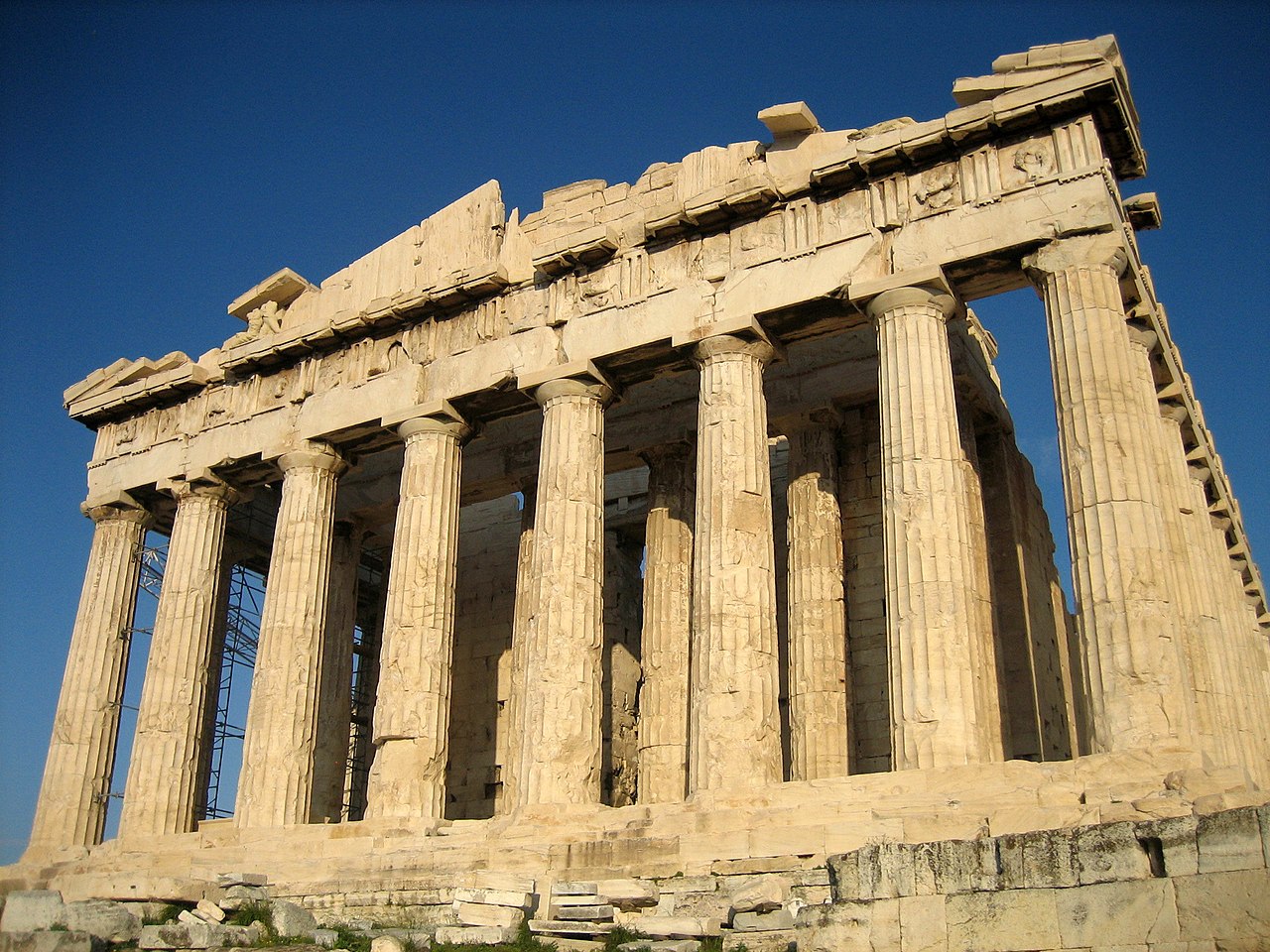
Worship of Hephaestus was often connected to centers of metalworking and volcanic activity. Important sanctuaries and festivals honored him in places with notable craftspeople or workshops; in classical Athens the temple commonly called the Hephaesteion stood near industrial quarters. Island centers with smithing traditions, such as Lemnos, also had strong associations with his cult. Rituals emphasized protection of the forge and the community of artisans.
Iconography and artistic representation
In visual arts Hephaestus is typically shown at work in a forge, sometimes aided by Cyclopes or mechanical assistants. Artists use his lameness, tools and workshop setting to distinguish him from other deities. Literary descriptions and vase-paintings present him with plain clothing and functional implements, reflecting his role as patron of practical skills and invention.
Legacy
Hephaestus remains a powerful symbol of craft, technology and the dignity of labor. As patron of smiths and artisans he represents the creative transformation of raw materials into objects of use and beauty. His figure has influenced later artistic and literary treatments of the maker or inventor and continues to appear in cultural references to craftsmanship and technological creativity.
- Greek name: Ἥφαιστος
- Domains: fire, metalworking, sculpture, metallurgy
- Parents: Zeus and Hera
- Role: divine blacksmith and craftsman
- Spouse: Aphrodite (in many traditions)
- Notable other: Ares (lover of Aphrodite in myth)
- Symbols: hammer, anvil, tongs
- Roman equivalent: Vulcan
Questions and answers
Q: Who is Hephaestus?
A: Hephaestus is the Greek god of fire, metalworking, craftsmen, sculpture, metallurgy, and volcanoes.
Q: Who are Hephaestus' parents?
A: Hephaestus' parents were Zeus and Hera.
Q: What was Hephaestus' occupation among the gods?
A: Hephaestus was the blacksmith of the gods.
Q: Who was Hephaestus married to?
A: Hephaestus was married to the goddess Aphrodite.
Q: Who did Aphrodite cheat on Hephaestus with?
A: Aphrodite cheated on Hephaestus with his brother Ares.
Q: What were Hephaestus' symbols?
A: Hephaestus' symbols were a smith's hammer, an anvil, and a pair of tongs.
Q: Who is Hephaestus' Roman equivalent?
A: Hephaestus' Roman equivalent is the god Vulcan.
Related articles
Author
AlegsaOnline.com Hephaestus — Greek god of fire, smithing, and craft Leandro Alegsa
URL: https://en.alegsaonline.com/art/43657