
Henri Rousseau: Self-taught painter of vivid jungles and naive vision
Henri Rousseau (1844–1910), nicknamed Le Douanier, was a French self-taught post‑Impressionist painter known for boldly colored, dreamlike jungle scenes, still lifes and portraits that influenced many avant‑garde artists.
Overview
Henri Julien Félix Rousseau (21 May 1844 – 2 September 1910) was a French painter whose work bridged popular naive art and the modern avant‑garde. Largely self‑taught, he developed a distinctive visual language: flat planes, intense colors, meticulous detail and an imaginative use of scale that gives ordinary subjects a dreamlike or monumental quality. Known to the public by the nickname Le Douanier (the customs officer), Rousseau worked in modest civil jobs before committing to painting full time in midlife.
Image gallery
10 Images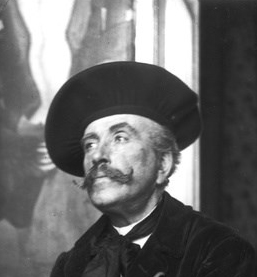


Life and career
Rousseau was born in Laval, in northwestern France. In his early life he held various jobs and undertook short periods of military service; among the occupations recorded for him are musician and civil employee. He is commonly associated with roles such as a toll or customs official — a fact often referenced by his sobriquet — and his painterly career began in earnest around the age of forty. He first showed his work at independent exhibitions in Paris and later participated in newer salons that welcomed experimental art.
Artistic style and subjects
Rousseau’s paintings are characterized by a naïve directness combined with careful, deliberate compositions. He painted portraits, cityscapes, still lifes and a remarkable series of exotic landscapes and jungle scenes. Many of those tropical images were imaginative rather than documentary: he did not travel to tropical countries but drew inspiration from botanical gardens, illustrated books, specimens in museums and decorative arts. His technique often uses clear outlines, simplified perspective and layered planes that flatten depth while preserving a strong sense of atmosphere.
Major works and exhibitions
Several of Rousseau’s canvases became widely admired and remain well known: examples include The Sleeping Gypsy, The Dream, and Tiger in a Tropical Storm (often called Tiger in a Tropical Storm (Surprised!)). He exhibited regularly with independent groups that rejected academic strictures, and his work began to attract attention in the early 20th century. Early critics sometimes mocked his unconventional approach, while younger artists and progressive collectors recognized the originality and imaginative power of his paintings.
Legacy and influence
Although Rousseau had modest commercial success during his life, his reputation grew after his death in 1910. Artists of the next generation — including painters associated with Cubism, Fauvism and Surrealism — admired the clarity, inventiveness and pictorial confidence of his work. His combination of childlike simplicity and sophisticated compositional choices made him a key reference for modern art. Today his paintings are studied both for their technical naiveté and for the way they expand the possibilities of pictorial imagination.
Notable facts and places to learn more
- He began painting seriously in middle age after a career in civil service; contemporaries called him Le Douanier in reference to those duties — see historical accounts of his earlier jobs such as toll or customs collector.
- Rousseau is often described as a leading figure in so‑called naïve or primitive painting and has been praised for combining simplicity with a poetic imagination.
- He exhibited at independent salons in Paris that promoted new artists; further context on those exhibitions can be found through resources like contemporary exhibition histories.
- His work influenced major modernists and avant‑garde movements; summaries of that influence are available via specialist art histories and essays (critical studies).
- For museum collections, catalogues and reproductions of his most famous canvases consult curated resources and institutional pages (collection guides).
Rousseau’s life combined ordinary occupations with an extraordinary visual imagination. Today his paintings continue to intrigue because they invite viewers into carefully constructed worlds where realism and fantasy meet — landscapes that are at once familiar and strangely new.
Questions and answers
Q: Who was Henri Rousseau?
A: Henri Rousseau was a post-Impressionist painter born in Laval, Mayenne.
Q: What did Rousseau do before he started painting?
A: Before he started painting, Rousseau worked a variety of jobs including being a saxophonist and toll collector.
Q: What was Rousseau known as?
A: Rousseau was known as "Le Douanier" or "the customs officer."
Q: Where did Rousseau exhibit his paintings?
A: Rousseau exhibited his paintings at the Salon des Indépendents and the Salon d'Automne.
Q: How is Rousseau's art style described?
A: Rousseau's art style is described as a spontaneous vision of reality combined with an imaginary universe of great plastic and poetical power.
Q: Was Rousseau's style always well-received by critics?
A: No, some critics ridiculed Rousseau's style but he eventually came to be recognized as a self-taught genius.
Q: Did Rousseau's art have an influence on other artists?
A: Yes, Rousseau's work had a great influence on many avant-garde artists.
Related articles
Author
AlegsaOnline.com Henri Rousseau: Self-taught painter of vivid jungles and naive vision Leandro Alegsa
URL: https://en.alegsaonline.com/art/43544
Sources
- nga.gov : Rousseau
- books.google.com : Rousseau
- nytimes.com : "Henri Rousseau: in imaginary jungles, a terrible beauty lurks"