
Hell (afterlife realm)
Hell: a broad term for afterlife places of punishment or separation in many religious and cultural traditions, varied in meaning from literal torment to symbolic absence of the divine.
Hell is a term used across many cultures to describe an afterlife realm associated with suffering, punishment, or separation from the divine. In some systems it is conceived as a concrete place where wrongdoers or the unrighteous go after death; in others it is a symbolic state, a metaphor for alienation, remorse, or social ruin. The concept appears in a wide range of religions and mythologies, and is often discussed with reference to the fate of souls after earthly life.
Image gallery
10 Images


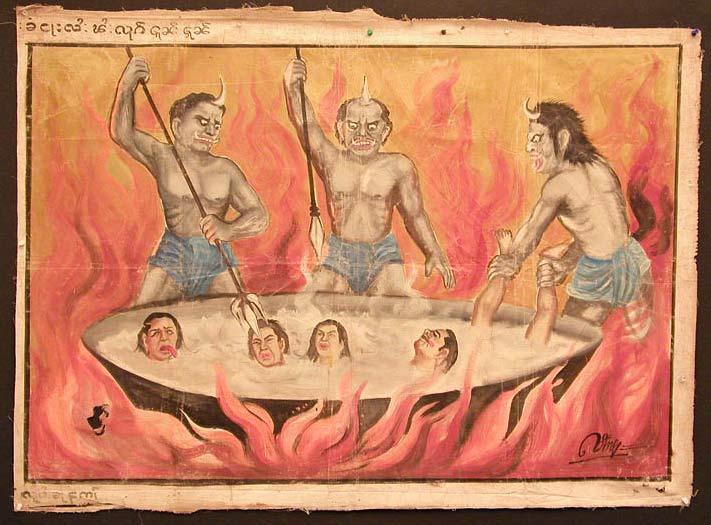


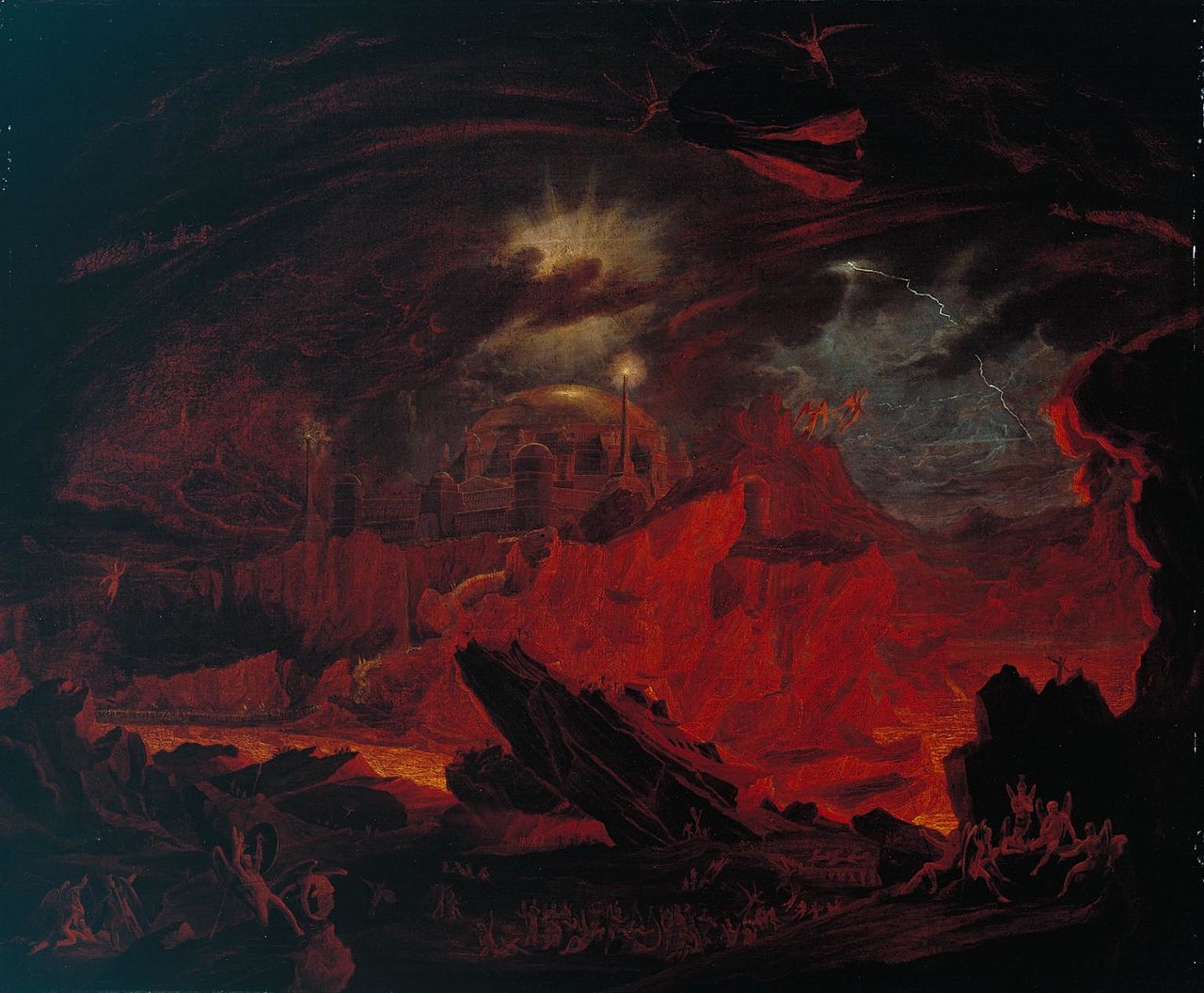
Common motifs and features
Although descriptions vary, a number of recurring images and themes appear in accounts of hell: fire or heat, darkness, confinement, and moral retribution. Some traditions emphasize physical torment, others a spiritual or existential separation from goodness. Leadership of such realms is sometimes attributed to a supreme deity or to lesser supernatural figures; some narratives portray it as controlled by God as part of divine justice, while others locate authority with adversarial beings like Satan. Texts and traditions frequently connect hell with punishment for the wicked, though criteria of wickedness differ by community.
- Punishment and retribution: active suffering as recompense.
- Separation: exclusion from the presence of the divine or from communal life.
- Cosmic order: part of a larger scheme of reward and judgment.
Etymology and scriptural terms
In scriptural studies the English word hell translates several distinct words from ancient languages. Hebrew texts use terms such as Sheol, a term often rendered as "the grave" or the abode of the dead; Greek texts use Hades to denote the underworld; and other texts refer to Gehenna as a place of fiery destruction. These terms carry different connotations and should not be treated as strict synonyms. In many traditions hell is defined in contrast to Heaven or blessed states, and sometimes as a realm where there is an absence of divine love or consolation—an idea captured in some sources by phrases like absence of compassion.
Historical and cultural forms
Ideas of an underworld or punishment after death appear in ancient Near Eastern, Greco-Roman, Norse and other mythologies. Greek Hades and Roman Pluto are underworld figures and realms; Norse mythology names a place called Hel; Islamic tradition speaks of Jahannam. Over centuries religious thinkers, poets and artists reshaped these images: medieval Christian writers developed elaborate topographies of sin and punishment, while folk traditions and modern literature have adapted hell to new moral and aesthetic purposes.
Modern meanings, symbolism and influence
Beyond theology, hell functions as a powerful symbol in literature, art, and language. It is used metaphorically to describe intense hardship or horror—phrases such as "war is hell" illustrate secular use. Contemporary debates over the concept address whether descriptions should be read literally, as doctrinal claims, or metaphorically, as moral instruction. Hell continues to influence ethical thought, pastoral practice, and popular culture.
Distinctions and theological debate
Scholars and religious communities disagree about several key points: Is hell eternal or temporary? Is its primary purpose punitive or purificatory (as in doctrines of purgatory)? Should imagery be understood literally or allegorically? These questions shape different approaches to afterlife justice and pastoral care. Understanding hell therefore requires attention to historical context, linguistic nuance, and the diversity of religious interpretation.
For further reading and comparative overviews consult general references and specialist studies: religious surveys, discussions of the fate of the soul, and works on related figures such as Satan and the role of God in judgment. Many resources explore contrasts with Heaven and unpack scriptural terms like Sheol, Hades and Gehenna; some also examine moral language such as the idea that hell represents a state lacking compassion.
Questions and answers
Q: What is Hell?
A: In many mythologies and religions, Hell or the Underworld is a place where souls of wicked people go after their life on Earth. It is a real (but perhaps not physical) place which is controlled by either God, or some lesser supernatural being such as Satan.
Q: How does it differ from Heaven?
A: It is the opposite of Heaven, and is a place apart from God, where there is no love or kindness.
Q: What are the words used to describe Hell in different languages?
A: The word "hell" is used in the English version of the Old Testament to translate the Hebrew word for "the grave", Sheol, and in the New Testament the Greek ᾅδης, Hades, and γεέννα, Hebrew Gehenna.
Q: Does hell have any other meanings?
A: In English, hell can also simply mean something very bad, as in "War is Hell".
Q: Who controls Hell?
A: It is controlled by either God, or some lesser supernatural being such as Satan.
Q: Is there love or kindness in Hell?
A: No - it's a place apart from God where there isn't any love or kindness.
Related articles
Author
AlegsaOnline.com Hell (afterlife realm) Leandro Alegsa
URL: https://en.alegsaonline.com/art/43380