
Ankylosaurus: the heavily armored, club-tailed herbivore of the Late Cretaceous
Ankylosaurus magniventris was a large, low-slung armored dinosaur from Late Cretaceous North America, known for heavy osteoderm armor and a distinctive tail club used for defense.
Ankylosaurus (species Ankylosaurus magniventris) was a genus of large, heavily armored dinosaur that lived in western North America during the Late Cretaceous period. It is one of the best known members of the ankylosaurid family and is often cited as the quintessential "armored tank" of the dinosaur world. Fossils indicate a broad, low-slung body, a short neck, and a striking club at the end of the tail.
Image gallery
10 Images


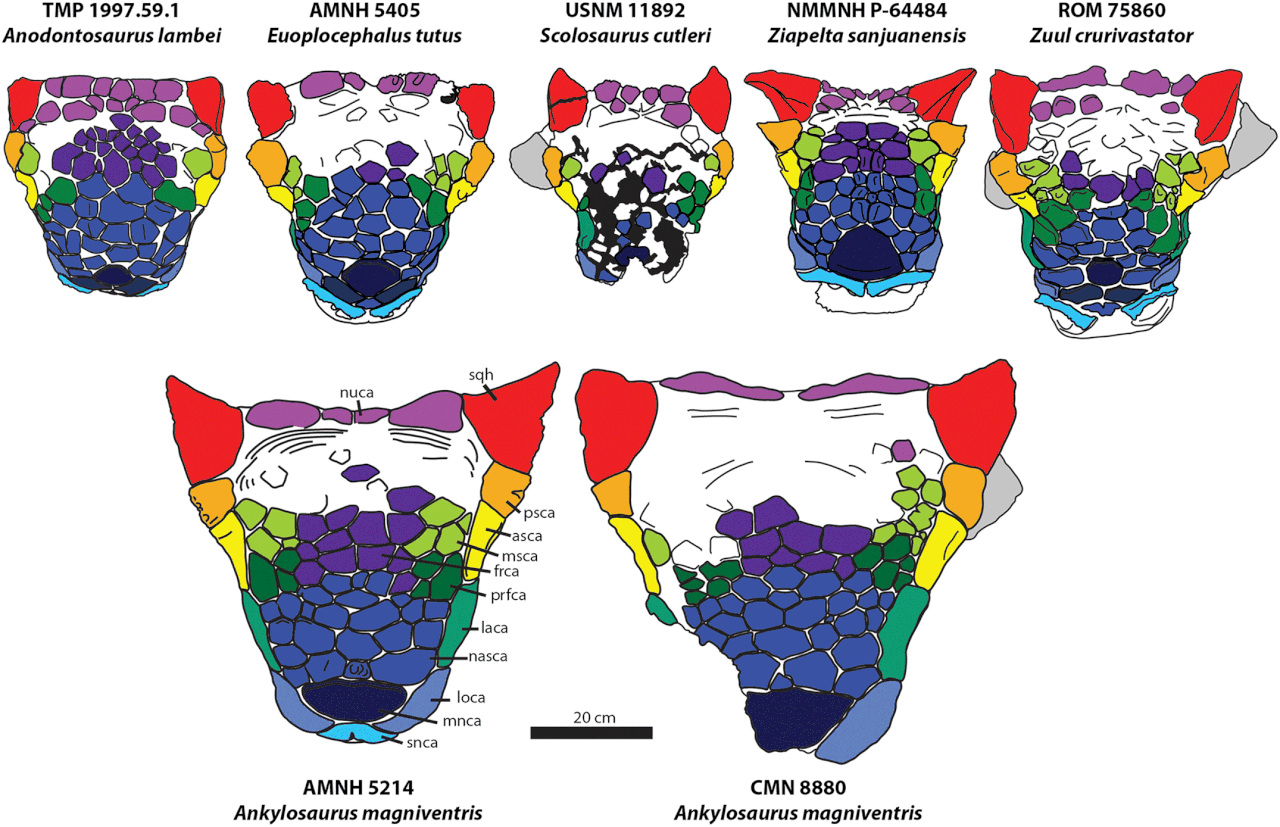


Physical characteristics
Ankylosaurus combined several anatomical features adapted for protection and a grazing lifestyle. Typical estimates put its length at several metres, often cited near 6–8 m, with a low shoulder height of about 1.5–2 m, and a heavy, muscular build weighing multiple tonnes. Distinctive features include:
- Thick bony plates and nodules (osteoderms) embedded in the skin, forming a protective covering over the back and flanks.
- A massive tail club formed by enlarged osteoderms and modified tail vertebrae, which could be swung as a defensive weapon.
- A relatively small, wide skull with a beak-like premaxilla and rows of leaf-shaped teeth suited for cropping vegetation.
- Short, robust limbs supporting a quadrupedal stance and a low center of gravity.
Armor and defense
The armor of Ankylosaurus consisted of a mosaic of bony plates of varying sizes and shapes. These osteoderms are often described in popular accounts as a natural suit of mail. In addition to passive protection, the tail club represents an active defensive adaptation: the posterior vertebrae and terminal osteoderms are reinforced and fused to allow forceful lateral swings. For more on armored dinosaurs see armored dinosaurs.
Diet and feeding
As a herbivore, Ankylosaurus fed on low-growing plants. Its beak and leaf-shaped teeth were suitable for cropping and processing tough vegetation rather than high browsing. Paleobotanical evidence and functional anatomy suggest it likely consumed ferns and other ground-level plants such as cycads and horsetails common in Cretaceous floodplain environments. See general resources on herbivorous dinosaurs at herbivore overview and plant groups like ferns or cycads for context.
Discovery and fossil record
Ankylosaurus was first described from fragmentary remains recovered in western North America; early discoveries produced skull fragments, armor pieces, and parts of the tail. The fossil record is incomplete compared with some other dinosaurs, which has led to revisions of reconstructions over time. Most material comes from Late Cretaceous strata in regions like Montana and Alberta, and further study continues to refine its anatomy and life appearance. For general background on dinosaur paleontology see dinosaur research.
Significance and distinctions
Ankylosaurus is often highlighted in discussions about defensive strategies in dinosaurs because it combined heavy passive armor with an active tail club. It differs from related nodosaurids, which lack a distinct tail club and often show other armor arrangements. While popular reconstructions emphasize its tank-like qualities, paleontologists stress that behavior, speed, and exact use of the tail are inferred from anatomy and comparison with living animals, not direct observation.
Although much is known about its general appearance, many details remain topics of ongoing research: the precise arrangement of skin armor, the musculature powering the tail club, and how Ankylosaurus interacted with contemporaneous predators and its environment. Continued fossil discoveries and modern techniques such as CT scanning and biomechanical modelling are improving our picture of this iconic armored dinosaur.
Questions and answers
Q: What is Ankylosaurus?
A: Ankylosaurus is a type of armoured dinosaur.
Q: What was the maximum length of Ankylosaurus?
A: The maximum length of Ankylosaurus was 8 meters or 26 feet.
Q: What was the height of Ankylosaurus?
A: The height of Ankylosaurus was 2 meters or 6 feet.
Q: Was Ankylosaurus covered in armor?
A: Yes, Ankylosaurus was covered in armor.
Q: What was the defense mechanism of Ankylosaurus?
A: Ankylosaurus could defend itself by using its clubbed tail.
Q: Was Ankylosaurus a carnivore or herbivore?
A: Ankylosaurus was a herbivore.
Q: What did Ankylosaurus eat?
A: Ankylosaurus probably ate ferns and cycads, which were common low-growing plants.
Related articles
Author
AlegsaOnline.com Ankylosaurus: the heavily armored, club-tailed herbivore of the Late Cretaceous Leandro Alegsa
URL: https://en.alegsaonline.com/art/4328
Sources
- species.wikimedia.org : Ankylosaurus
- commons.wikimedia.org : Ankylosaurus