
Harry Potter and the Prisoner of Azkaban — overview and significance
Third novel in J. K. Rowling's Harry Potter series. Follows Harry's third year at Hogwarts, introducing Sirius Black, Remus Lupin, Dementors, the Time-Turner and a darker, more mysterious tone.
Overview
Harry Potter and the Prisoner of Azkaban is the third novel in the Harry Potter sequence by J. K. Rowling. First published in 1999, it follows the title character, Harry Potter, through his third school year at Hogwarts School of Witchcraft and Wizardry. The book is notable for shifting the series toward a more mature and suspenseful tone while retaining the series' mix of fantasy, mystery and school-life detail. The motion-picture adaptation was released in 2004.
Image gallery
3 Images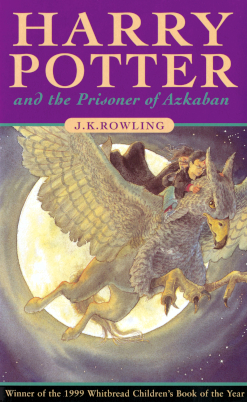


Plot and major elements
The story opens with news that a prisoner, Sirius Black, has escaped from the wizarding prison Azkaban. Black is believed to pose a serious threat to Harry. Hogwarts is guarded by Dementors, the gaunt soul-sucking sentinels from Azkaban, whose presence creates a darker atmosphere. New characters such as Professor Remus Lupin and magical objects such as the Marauder's Map and the Time-Turner play central roles. Key episodes involve Buckbeak the hippogriff and the use of time travel to resolve pivotal events.
Characters and devices
- Harry Potter — the protagonist confronting fear, injustice and growing independence.
- Sirius Black — an apparently dangerous escaped prisoner whose history connects to Harry's past.
- Remus Lupin — a compassionate and enigmatic new instructor who affects Harry's moral growth.
- Dementors — creatures that embody fear and depression, central to the book's darker mood.
- Time-Turner and Marauder's Map — plot devices that enable crucial revelations and clever resolutions.
Themes and style
The novel explores themes of loyalty, justice versus prejudice, the effects of fear, and the responsibilities of growing older. Rowling deepens character relationships and uses mystery conventions — red herrings, constrained settings and revelations — to maintain suspense. The third book is often singled out for its emotional complexity and for how it develops the series' longer-running arcs without the physical presence of the series' principal antagonist, Lord Voldemort, who does not appear in this installment.
Reception and legacy
Upon release the book was widely praised for its imaginative worldbuilding, tonal shift and inventive plot mechanics. It introduced concepts and characters that remain important in later volumes and in adaptations. The novel helped solidify the series' appeal to both younger readers and adults by combining accessible storytelling with darker, more sophisticated themes.
Notable distinctions
This is the only entry in the main seven-book sequence in which the central villain does not make a direct appearance. It is also the volume that most prominently features time travel affecting immediate events rather than grand historical changes, and it adds moral ambiguity to several key characters, expanding the series' ethical complexity.
For further reading about the author, the series and adaptations, see entries on J. K. Rowling, Harry Potter and Lord Voldemort.
Questions and answers
Q: What is Harry Potter and the Prisoner of Azkaban?
A: Harry Potter and the Prisoner of Azkaban is the third book in the Harry Potter series by J. K. Rowling.
Q: When was the book released?
A: The book was released on 8 July 1999.
Q: What is the main focus of the book?
A: The book covers Harry Potter's third year at Hogwarts.
Q: Has the book been adapted into a movie?
A: Yes, a movie based on the book was released on 31 May 2004.
Q: Who is the author of the book?
A: The author of the book is J. K. Rowling.
Q: Has Lord Voldemort made an appearance in the book?
A: No, Lord Voldemort does not make an appearance in the book. This is the only book where he is absent.
Q: How popular is the book?
A: Harry Potter and the Prisoner of Azkaban is a widely-read and popular book in the Harry Potter series.
Related articles
Author
AlegsaOnline.com Harry Potter and the Prisoner of Azkaban — overview and significance Leandro Alegsa
URL: https://en.alegsaonline.com/art/42637