
Harold Pinter: playwright, screenwriter and influential dramatist
Profile of Harold Pinter, the British playwright and screenwriter known for his distinctive dramatic language, major works, screen adaptations and lasting influence on 20th-century theatre.
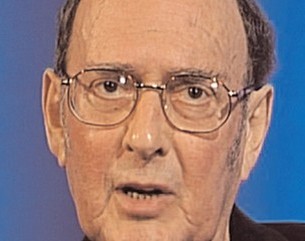
Harold Pinter (10 October 1930 – 24 December 2008) was a leading British dramatist and man of the theatre. Widely regarded for his terse dialogue and charged silences, he worked as a playwright, screenwriter, director and actor. Born into a working‑class family of immigrant origin and raised in the East London district of Hackney, Pinter's background and identity—he was born into a Jewish household—shaped an acute awareness of social tension and power struggles that runs through his work.
Image gallery
8 Images


Style, themes and influence
Pinter developed a recognisable dramatic voice marked by elliptical exchanges, pregnant pauses and a mixture of the banal and the menacing. Critics coined the term "comedy of menace" to describe the unsettling shift in his early plays from ordinary situations to oppressive or absurd outcomes; the phrase is associated with critic Irving Wardle. His sparse, suggestive technique—later widely referred to as "Pinteresque"—foregrounds silences and subtext, allowing power relations, memory and uncertainty to register between the lines. He acknowledged the impact of modernist predecessors such as Samuel Beckett, and his work has influenced generations of playwrights, directors and actors.
Major plays and screen work
Pinter's stage work ranges from early, claustrophobic pieces to later, more overtly political dramas. Notable plays include:
- The Birthday Party — an early and notorious example of his uneasy mixture of comedy and threat.
- The Homecoming — a family drama that exposes shifting authority and desire.
- Betrayal — a formally inventive study of infidelity and memory.
He also adapted other authors' fiction and wrote screenplays. Several stage works were adapted for the screen, and he contributed adaptations and scripts for films such as The Servant, The Go‑Between, The French Lieutenant's Woman, The Trial and Sleuth. The cinematic dimension of his career and his adaptations for film deepened his reputation; many of these projects are commonly described as his contributions to movies.
Life, personal history and recognition
Pinter's personal life included a long first marriage to actress Vivien Merchant; the couple separated and later divorced. He subsequently married biographer Antonia Fraser. In later years he became publicly engaged in political causes and commentary, especially concerning human rights and international affairs. He received numerous honours for his dramatic work and was widely celebrated in the theatre world.
Illness, death and legacy
In 2001 Pinter was diagnosed with oesophageal cancer. He continued to write and speak until his health declined; he died in London in December 2008, roughly seven years after his diagnosis. The illness had metastasised to his liver, and his passing prompted broad reflection on a career that reshaped modern drama. Today his plays remain in the repertoire of major theatres and are studied for their economy of language, moral ambiguity and lasting dramatic power.
For further reading on Pinter's plays, adaptations and critical reception consult specialized theatre histories and collections of his work; many resources and editions collect his scripts, essays and interviews for those who wish to explore the full range of his contribution to 20th‑century literature and performance.
Questions and answers
Q: Who was Harold Pinter?
A: Harold Pinter was a British playwright, screenwriter, director and actor. He was Jewish and born and raised in Hackney, east London.
Q: What plays did he write?
A: Harold Pinter wrote The Birthday Party, The Homecoming and Betrayal, all of which he adapted into movies. He also adapted others' works such as The Servant, The Go-Between, The French Lieutenant's Woman, The Trial and Sleuth.
Q: How were his early plays described by critics?
A: Critics described Harold Pinter's early plays as "comedies of menace", meaning that the plays begin with an apparently innocent situation but become both threatening and "absurd" as the characters behave in strange ways.
Q: Did Samuel Beckett influence his work?
A: Yes, Pinter acknowledged that Samuel Beckett influenced his early work and they became friends who would send each other drafts of their works in progress for comments.
Q: Who did Harold Pinter marry?
A: Harold Pinter married Vivien Merchant from 1956 until they divorced in 1980. He then married Antonia Fraser from 1980 until his death.
Q: What illness did he suffer from?
A: Harold Pinter suffered from oesophageal cancer which was diagnosed in 2001 and eventually led to his death seven years later when it metastasised to his liver.
Related articles
Author
AlegsaOnline.com Harold Pinter: playwright, screenwriter and influential dramatist Leandro Alegsa
URL: https://en.alegsaonline.com/art/42519
Sources
- enotes.com : eNotes