
Hard Rock Stadium
Hard Rock Stadium in Miami Gardens, Florida, is a multi-purpose venue hosting NFL, college football, soccer, baseball (historically), concerts and major championships since the late 1980s.
Overview
Hard Rock Stadium is a multi-purpose sports and entertainment facility located in Miami Gardens, part of the Miami metropolitan area. It serves as the home field for the National Football League's Miami Dolphins and for the University of Miami's football team, the Miami Hurricanes. Opened in the late 1980s, the stadium replaced the nearby Orange Bowl as the region's principal large-scale outdoor venue and has hosted thousands of events across different sports and entertainment genres.
Image gallery
10 Images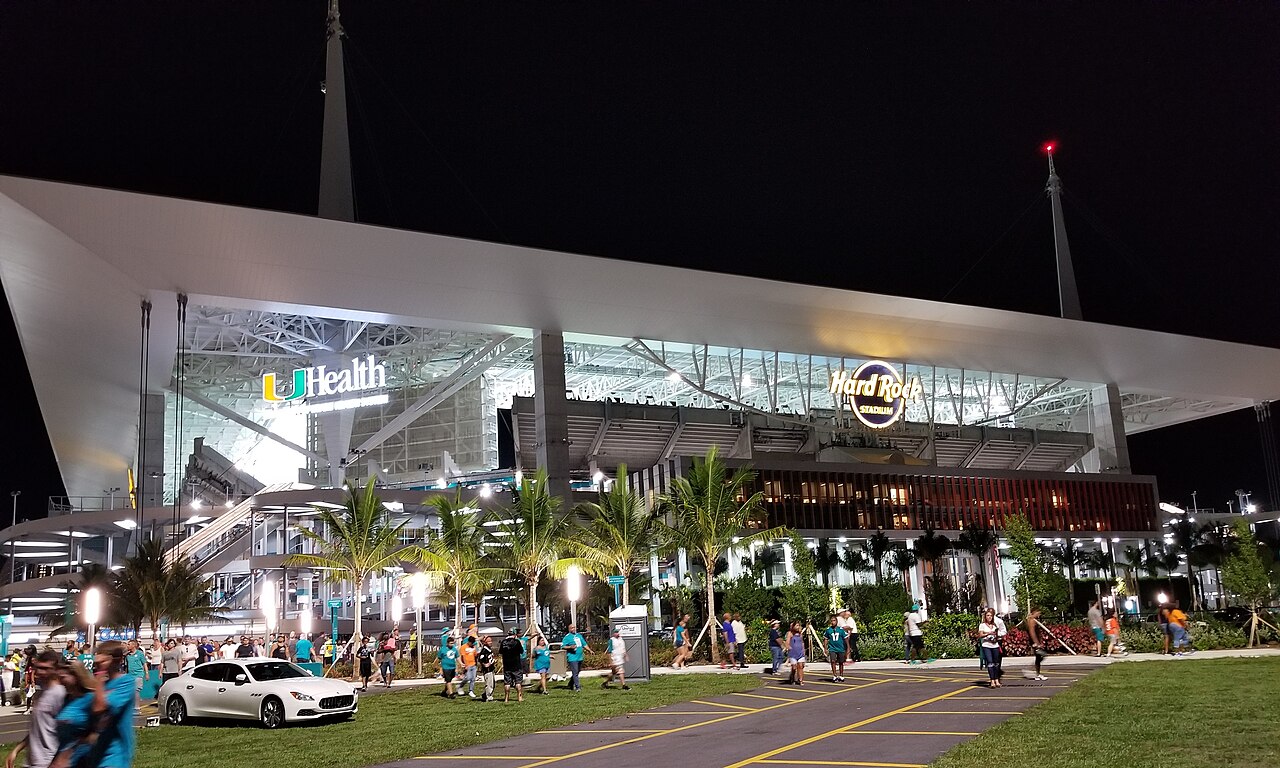




Design and facilities
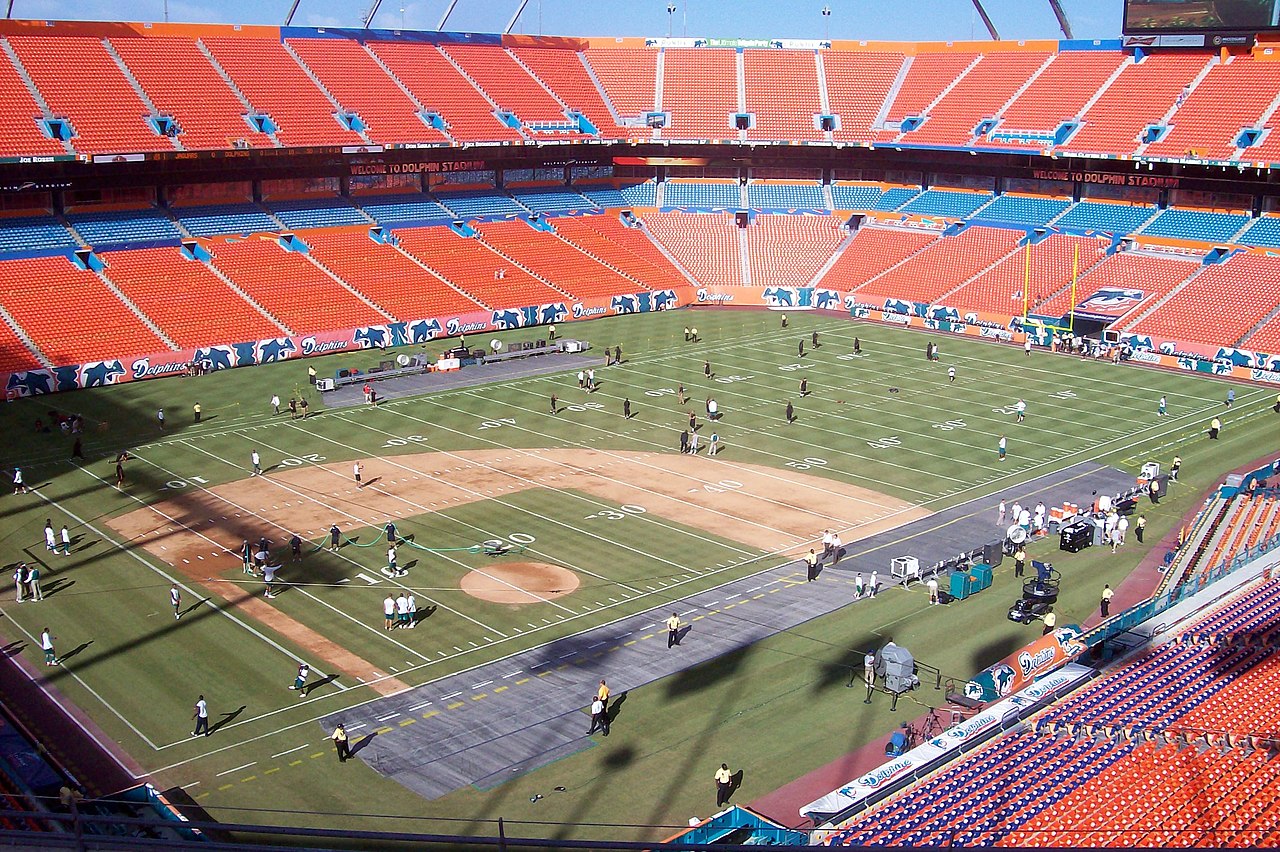
The venue is configured as an open-air bowl with seating tiers that can be adapted for different field sizes and crowd capacities. It is primarily arranged for football and has been reconfigured in the past for soccer and for other field sports. The stadium also accommodates other sports and large-scale concerts, trade shows and special events. Over the years it has undergone several surface and seating upgrades, and in recent renovations operators added shade structures, premium suites and upgraded club areas to improve comfort and broadcasting capabilities.
History and name changes
Since opening, the facility has been known under a number of corporate and commemorative names reflecting sponsorship and ownership changes. Its identity evolved as naming rights were sold and renewed, but its role as a major South Florida venue has remained constant. The stadium also accommodated a different configuration to host professional baseball when the region's Major League Baseball club played there during its early years.
Teams and former tenants
Long-term tenants include the NFL's Miami Dolphins and the collegiate University of Miami program. From 1993 through the 2011 season, Major League Baseball's Florida Marlins—now often referred to simply as the Miami Marlins—used the stadium as their home ballpark while their baseball-specific facility was under planning and construction; the MLB league is referenced here as Major League Baseball.
Major events and significance
Hard Rock Stadium has hosted many high-profile events, attracting national and international attention. It has been the site of multiple Super Bowls, which are among the most prominent single sporting events in the United States. The venue has also hosted World Series games (notably in the late 1990s and early 2000s), referred to here as the World Series, as well as important college football title contests such as several BCS National Championship Games. In addition, it has been used for premier entertainment spectacles including major wrestling events and large touring concerts.
Uses, access and notable facts
Beyond professional and college football, the stadium has accommodated international soccer matches, postseason baseball, collegiate bowl games and community events. Its location within the Miami metro area makes it accessible by regional highways and transit options, and it plays an important role in the area's sports economy by drawing visitors, television audiences and special-event business. The venue's long history, multiple renovations and repeated selection for marquee events underline its status as one of South Florida's principal sporting landmarks.
For further information about schedules, seating charts and event history, official and fan resources provide detailed archival material and current announcements about upcoming events and facility improvements. Many such references and documents are maintained online by league, team and municipal partners.
Stadium overview | Football events | Soccer fixtures | Other sports | Miami Gardens | Miami | Metro area | Orange Bowl site | Miami Dolphins | University of Miami | MLB | Florida Marlins | Super Bowls hosted | World Series hosted | BCS games hosted
Questions and answers
Q: Where is Hard Rock Stadium located?
A: Hard Rock Stadium is located in Miami Gardens, Florida, which is part of the Miami metropolitan area.
Q: What sports are played at Hard Rock Stadium?
A: Football, soccer, and other sports are played at Hard Rock Stadium.
Q: Who plays football in the stadium?
A: The Miami Dolphins (pro football) and the Miami Hurricanes (University of Miami football) both play in the stadium.
Q: Did Major League Baseball's Miami Marlins ever play there?
A: Yes, Major League Baseball's then-known Florida Marlins played there from their first season in 1993 through 2011 before they moved to Marlins Park.
Q: How many Super Bowls have been held at Hard Rock Stadium?
A: Six Super Bowls have been held at Hard Rock Stadium (Super Bowl XXIII, Super Bowl XXIX, Super Bowl XXXIII, Super Bowl XLI, Super Bowl XLIV, and Super Bowl LIV).
Q: How many World Series games have taken place at the stadium?
A: Two World Series games (1997 World Series and 2003 World Series) have taken place at Hard Rock Stadium.
Q: What other major events have happened there?
A: Three BCS National Championship Games (2001 Orange Bowl, 2005 Orange Bowl, 2009 BCS National Championship Game) and 2012 WWE WrestleMania XXVIII have been held in the stadium.
Related articles
Author
AlegsaOnline.com Hard Rock Stadium Leandro Alegsa
URL: https://en.alegsaonline.com/art/42398
Sources
- probaseballvenues.com : Pro Player Stadium
- sports.yahoo.com : Yahoo! Sports - Sports News, Scores, Rumors, Fantasy Games, and more