
Hammond organ: electromechanical keyboard and its musical legacy
Comprehensive overview of the Hammond organ: its electromechanical tonewheel design, drawbars, history since 1935, key models, musical uses, and why it remains distinctive in modern music.
The Hammond organ is an electromechanical keyboard instrument that produced a new kind of sustained, adjustable tone distinct from pipe organs and early electronic keyboards. Invented by Laurens Hammond with engineering help from John M. Hanert and first built in 1935, the instrument became widely used in churches, jazz clubs, recording studios, and popular music. Unlike purely electronic synths, many classic Hammonds generate sound mechanically and then amplify it, giving them a warm, complex timbre.
Image gallery
10 Images


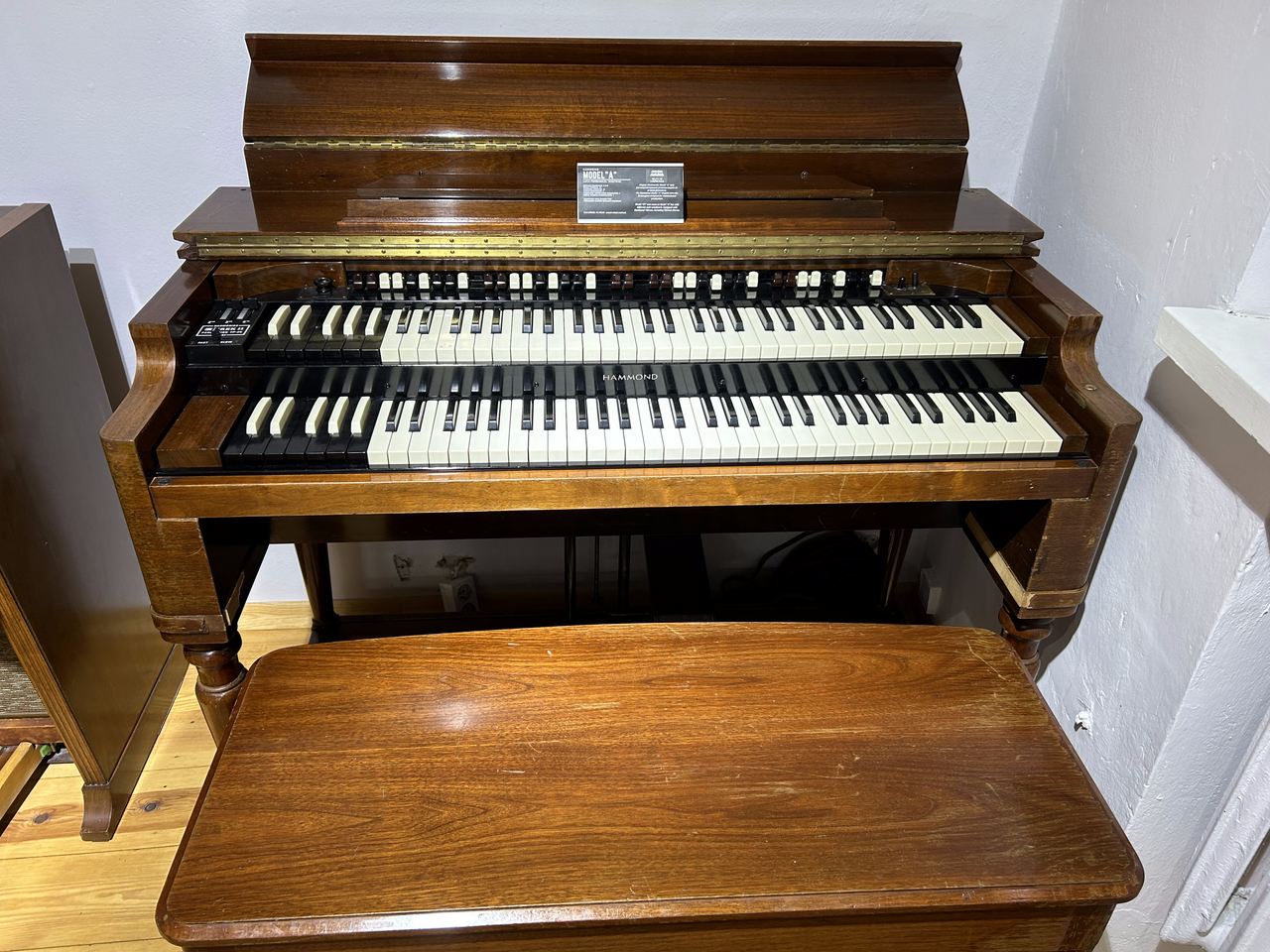
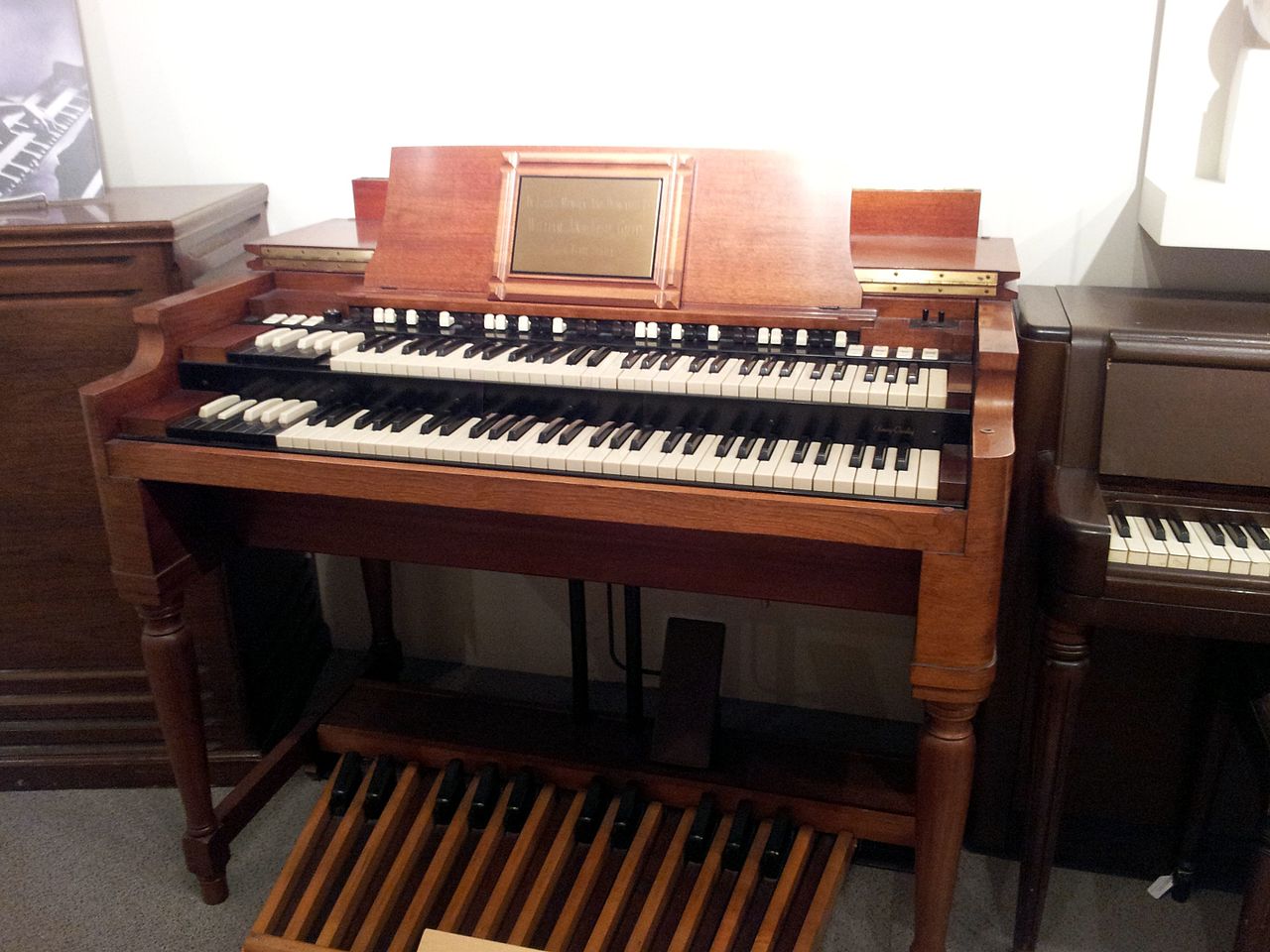


Design and sound production
At the heart of classic Hammonds is the tonewheel generator: spinning metal disks (tonewheels) pass magnetic pickups to produce standing audio tones. These base tones are mixed and shaped by a set of sliding "drawbars," which the player uses to combine harmonics and alter timbre in real time. Typical Hammonds feature two keyboards (manuals) and a set of pedals for bass notes; additional controls provide percussion (a short, percussive attack), vibrato and chorus effects, and volume expression.
- Tonewheel generator — electromechanical source of pitched tones.
- Drawbars — sliders that mix harmonic components and sculpt sound.
- Manuals and pedals — two keyboards plus pedalboard for bass lines.
- Rotating speaker — the Leslie or similar rotary cabinet is often paired with Hammonds to create a moving, Doppler-like effect.
History and development
Laurens Hammond and John Hanert developed the instrument as a compact, more affordable alternative to large pipe organs. Early models found use in smaller churches and radio stations. Through mid-century refinements the company introduced several models, among which the B-3 (introduced in the 1950s) became especially influential. Because the instrument blends mechanical and electronic components it requires different maintenance than solid-state keyboards, and many original instruments are prized for their particular sonic character. Over the decades nearly two million Hammond organs were sold, and the brand expanded into later electronic and digital instruments while inspiring many emulations.
Musical uses and cultural impact
The Hammond's flexible, sustaining sound and expressive controls made it a favorite across genres. In jazz it became central to organ trios and soloists; in gospel it provided a driving church sound; in rock, blues, R&B and funk it furnished iconic riffs and solos. Players value the instrument for its immediacy: drawbar settings and the use of a Leslie speaker allow a musician to shape tone and motion in performance. The Hammond's voice helped define the textures of mid-20th-century popular music and continues to be heard in recordings and live performance.
Notable features and distinctions
Compared with pipe organs, the Hammond is much more compact and offers continuous, easily modified tone via drawbars rather than fixed pipe ranks. Compared with later purely electronic organs or digital emulations, electromechanical Hammonds have unique noise, key "click," and harmonic behavior that many musicians find musically appealing. Important practical points include routine mechanical service for tonewheels and brushes, and the common pairing with a Leslie rotary speaker to achieve the classic swirling sound. Modern instruments and software often aim to imitate these characteristics but differ in maintenance, weight, and some aspects of response.
Further information and resources:
Questions and answers
Q: What is a Hammond organ?
A: A Hammond organ is a keyboard instrument that resembles a piano.
Q: How does a Hammond organ create sound?
A: A Hammond organ creates sound using metal wheels and electricity.
Q: Who invented the Hammond organ?
A: The Hammond organ was invented by Laurens Hammond and John M. Hanert.
Q: When was the Hammond organ first built?
A: The Hammond organ was first built in 1935.
Q: What do the sliding "drawbars" do in a Hammond organ?
A: The sliding "drawbars" adjust the type of sound that the organ makes.
Q: Why was the Hammond organ successful?
A: The Hammond organ was successful because it is an electric version of a pipe organ and almost two million of them were sold.
Q: What is the difference between a Hammond organ and a pipe organ?
A: A Hammond organ is an electric version of a pipe organ and uses metal wheels and electricity to create sound, while a pipe organ uses pipes and air to create sound.
Related articles
Author
AlegsaOnline.com Hammond organ: electromechanical keyboard and its musical legacy Leandro Alegsa
URL: https://en.alegsaonline.com/art/42093