
Hammer: types, parts, history, uses and safety
Comprehensive overview of the hammer: its structure, common types (claw, ball-peen, sledge), historical development, uses in construction and metalwork, and basic safety and care tips.
A hammer is a handheld striking tool used to drive fasteners, shape materials, or deliver impact. In its simplest form it consists of a weighted head mounted on a handle. Hammers are among the oldest human tools and appear in many forms tailored to particular tasks — from woodworking to metalworking and demolition. Commonly the tool is used to force nails into materials such as wood or to provide controlled blows during construction and repair.
Image gallery
10 Images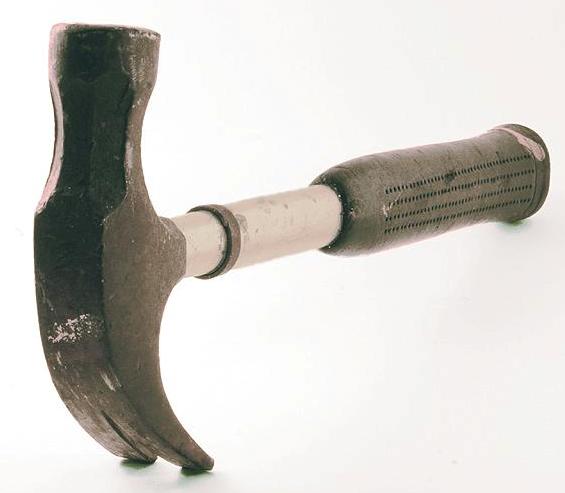




Structure and parts
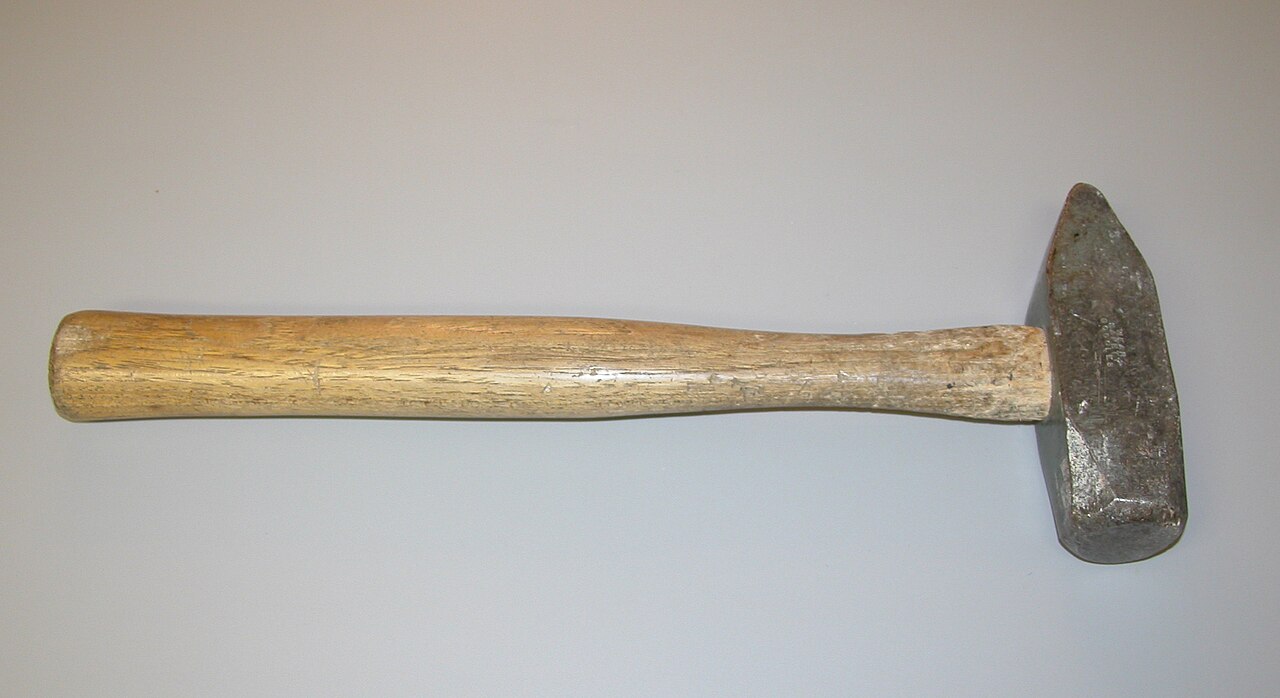
Most modern hammers share a few basic parts: the head, the face, the peen or opposite end, and the handle. Materials and shapes vary to suit function. Typical components include:
- Head: the heavy portion that delivers the blow; usually forged or cast steel.
- Face: the flat striking surface that contacts the work.
- Claw or peen: the rear part of the head; in a claw hammer it is curved for pulling nails, while in a ball-peen hammer it is rounded for shaping metal.
- Handle: provides reach and control; commonly made from wood, fiberglass, or metal with a grip.
History and development
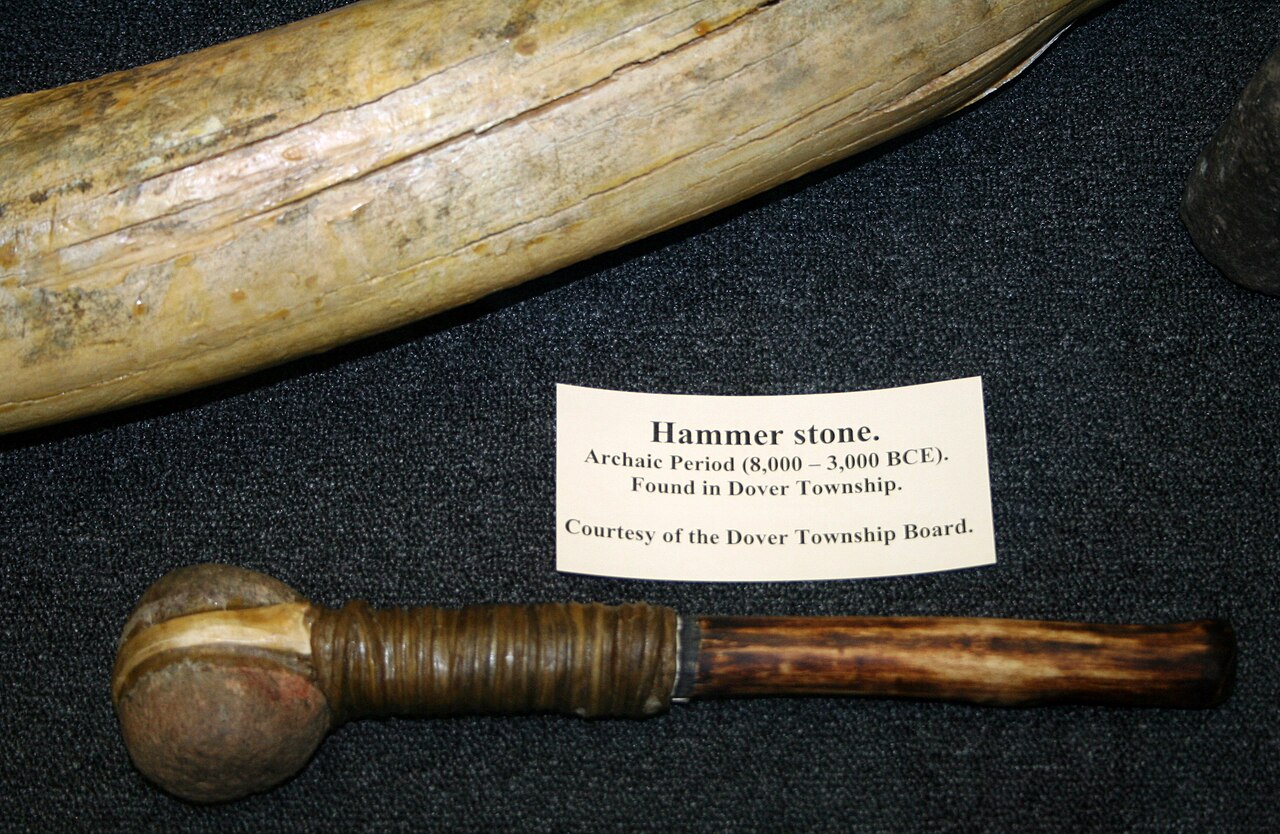
Hammers evolved from simple stones used as percussive tools in prehistory to specialized metal-headed tools after humans learned to shape and fix metal to handles. As metallurgy, woodworking and construction practices advanced, the hammer diversified into forms optimized for prying, finishing, forging and heavy impact. Industrialization and improved materials led to stronger, lighter designs and a wider array of specialized heads and handles.
Common types and uses
- Claw hammer: general carpentry and household work; one side for striking, the curved claw for extracting nails.
- Sledgehammer: heavy head and longer handle for two-handed swings used in demolition and driving large stakes.
- Ball-peen hammer: metalworking and riveting; a flat face and rounded peen for shaping and peening metal.
- Mallet: usually made of wood, rubber or plastic; used when a softer blow is needed to avoid damaging the workpiece.
Choices among these depend on the task: a framing hammer favors weight and balance for driving many fasteners, while a finishing hammer emphasizes a smooth face to avoid marring surfaces.
Care, safety and notable distinctions
Proper selection and maintenance extend a hammer’s usefulness. Inspect handles for cracks, keep heads securely mounted, and replace worn or mushroomed striking faces. When using a hammer wear eye protection, strike squarely to avoid glancing blows, and use the correct type for the job to reduce risk of injury. Distinguishing among hammer types — by head shape, weight and handle length — helps match tool to technique and material. For additional general information see a basic tool guide or introductory reference (tool guide).
Whether in ancient crafts or modern construction, the hammer remains a fundamental, versatile hand tool. For quick references on nails, materials and woodworking techniques consult practical manuals and how-to resources (nail guide, woodworking basics).
Questions and answers
Q: What is a hammer?
A: A hammer is a tool used for putting nails into objects such as wood.
Q: What does a typical hammer look like?
A: A typical hammer has a long handle and a tip with a flat end for hitting nails. It also typically has a curved end on the opposite side of the hitting end, which is used for pulling nails out.
Q: What is a sledgehammer?
A: A sledgehammer is similar to an ordinary hammer, but it has a longer shaft and more massive head. The user can swing it with two hands in order to apply more force.
Q: How do you use an ordinary hammer?
A: An ordinary hammer can be used by holding the handle and striking the nail with the flat end of the tip. The curved end can then be used to pull out any nails that need to be removed.
Q: How do you use a sledgehammer?
A: A sledgehammer should be held in both hands and swung in order to apply more force than an ordinary hammer would provide. This makes it useful for driving large nails or stakes into hard materials such as concrete or stone.
Q: What are some common uses of hammers?
A: Hammers are commonly used for nailing objects together, such as furniture or framing materials, as well as removing old nails from wood surfaces or other objects. They may also be used for breaking up hard materials such as concrete or stone when combined with larger tools like chisels or wedges.
Related articles
Author
AlegsaOnline.com Hammer: types, parts, history, uses and safety Leandro Alegsa
URL: https://en.alegsaonline.com/art/42083