
Hammer throw: history, equipment, technique and competition
Overview of the hammer throw: origins, equipment, rules, technique, training and notable facts about this track and field throwing event.
Overview
The hammer throw is a track and field event in which an athlete throws a heavy metal ball attached to a wire and handle. Competitors stand inside a circular throwing area and use rotational movement to build speed before releasing the implement for maximum distance. The event is contested at many levels, from local meets to international championships and the Olympic Games.
Image gallery
9 Images


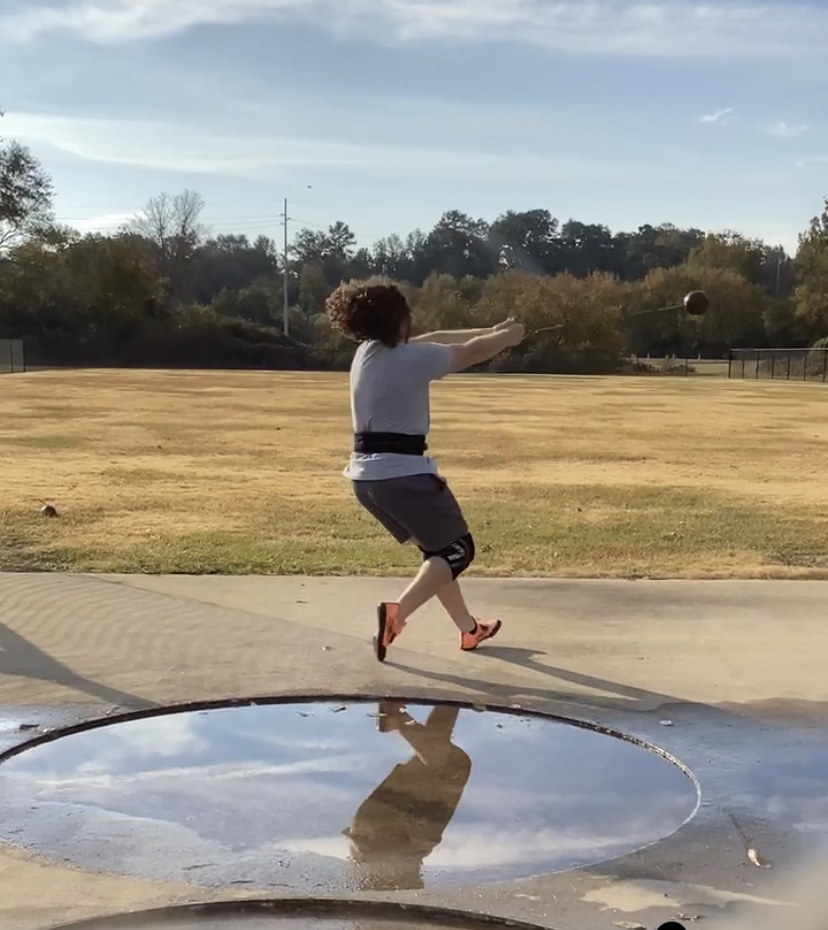


Equipment and playing area
The hammer consists of three main parts: the ball (usually made of metal), a flexible wire, and a handle. Standard competitions use different weights for men and women, with a heavier ball for the men's event and a lighter one for the women's. Throws are made from a marked circle surrounded by a protective cage that shields officials and spectators from errant implements. The surface of the circle is smooth to allow spinning footwork, and athletes must stay within the circle until the hammer lands.
Technique and mechanics
Successful hammer throwing depends on generating angular momentum and converting it into linear speed at release. Athletes begin with preliminary swings to establish rhythm and then perform a series of one to four full rotations (turns) across the circle. Most elite throwers execute three or four turns, progressively increasing rotational speed while maintaining balance and timing. Key technical factors are the speed of the hammer at release, the timing of the arm and body extension, the angle of release, and stable footwork. Coaches emphasize a compact posture, correct grip, and synchronization between lower-body drive and upper-body control.
Rules and competition format
In standard competition, each athlete is allowed a set number of attempts, commonly three in qualifying rounds and additional throws for finalists. A legal throw requires the athlete to release the hammer before stepping outside the circle and for the implement to land within a prescribed sector. Fouls occur for stepping on the circle's rim, releasing the hammer out of bounds, or failing to remain in the circle until the hammer lands. Safety protocols and the cage around the circle are essential because of the implement's mass and velocity.
History and development
The hammer throw has roots in traditional Scottish and Irish games that involved swinging and tossing heavy objects. It evolved into a standardized athletic event during the late 19th and early 20th centuries and became part of the international track and field program. The event has developed continuously through improved technique, coaching, and implements. Women’s competition in major international meets was incorporated later than men’s and became widely established in the late 20th century.
Training, biomechanics and notable aspects
Training combines strength work (especially for the hips, legs and core), technique drills, and explosive power exercises. Biomechanical analysis shows that release speed and effective transfer of energy from the legs through the torso to the arm are decisive for distance. Though records and elite marks often draw attention, the sport also values precision, timing and safety. Variations such as the weight throw exist in indoor competitions, and masters or youth categories use different implements to match developmental levels.
Further resources
- Official competition rules and specifications
- Technique guides and coaching resources
- Historical background and traditional roots
- Safety standards and equipment recommendations
- Biomechanics research on throwing events
- Training programs for hammer throwers
- Rules summaries for officials and athletes
- Competition results and records overview
- Youth and masters variations of the event
- Illustrated demonstrations and drill videos
Note: For further study, athletes and coaches consult governing-body documents and accredited coaching materials to ensure up-to-date technical and safety information.
Questions and answers
Q: What is hammer throw?
A: Hammer throw is an athletic throwing event where competitors throw a heavy metal ball attached to a wire and handle, aiming to achieve maximum distance.
Q: Why is it called hammer throw?
A: The name "hammer throw" is derived from the older Scottish sport competitions.
Q: What is the technique to throw the hammer?
A: To throw the hammer, competitors swing it above their head to set up the circular motion and then apply force and pick up speed by completing one to four turns in the circle. In competition, most throwers turn three or four times to gradually increase the velocity with each turn.
Q: What are the most important factors for a long throw in hammer throw?
A: The angle of release and the speed of the ball are the most important factors for a long throw in hammer throw.
Q: How is the ball released in hammer throw?
A: The thrower releases the ball from the front of the circle.
Q: When was the hammer throw introduced in Olympic games?
A: The hammer throw was one of the first Olympic games played.
Q: Is the hammer throw gender-specific?
A: No, any gender can take part in the event.
Related articles
Author
AlegsaOnline.com Hammer throw: history, equipment, technique and competition Leandro Alegsa
URL: https://en.alegsaonline.com/art/42081