
Hallasan — Jeju's central volcano and highest peak
Hallasan is the highest mountain in South Korea, a dormant volcanic massif on Jeju Island with a crater lake, rich ecology, and cultural significance as one of Korea's sacred mountains.
Overview
Hallasan rises near the center of Jeju-do and is the tallest mountain in South Korea at about 1,950 meters. The peak dominates Jeju Island and forms the core of Hallasan National Park, attracting hikers, naturalists, and pilgrims. It is commonly listed among Korea’s three most sacred mountains alongside other celebrated peaks; visitors often approach the mountain for both recreation and cultural reasons. For general background on Hallasan and regional context see Jeju-do.
Image gallery
10 Images





Geology and landforms
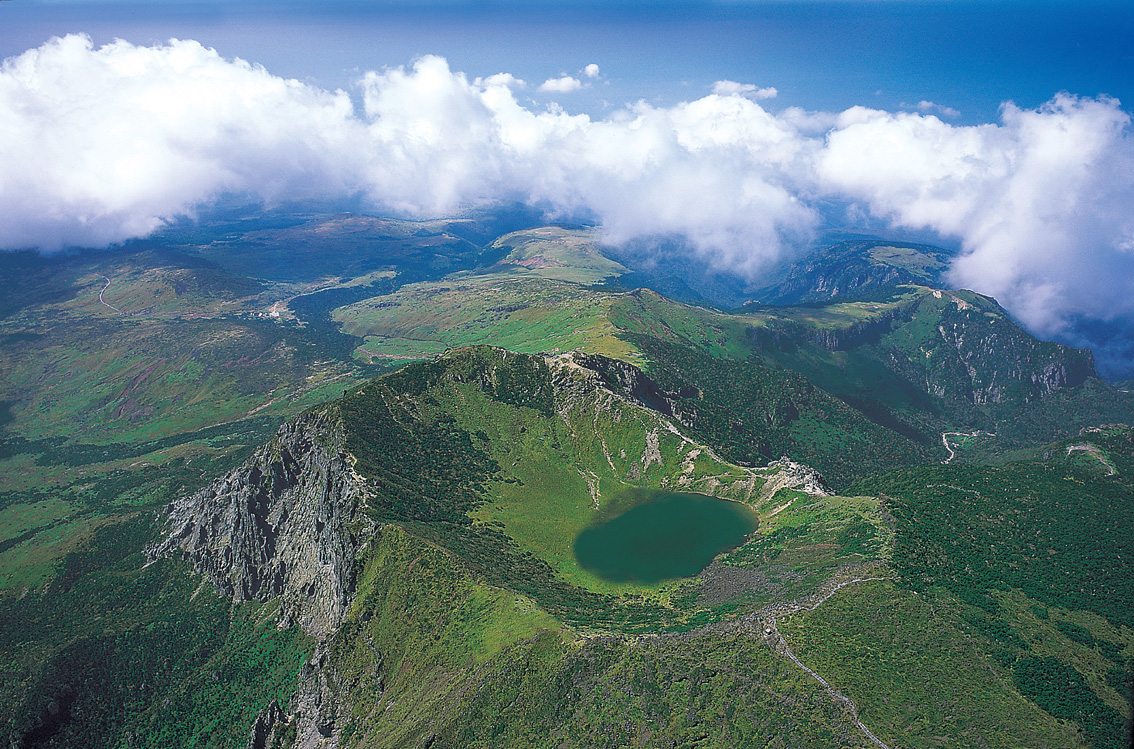
Hallasan is a volcanic edifice made largely of basalt, the dark volcanic rock typical of shield volcanoes and large lava flows. At its summit lies a crater lake commonly called Baengnokdam (also romanized as Baekrokdam), a shallow caldera formed by past eruptions. Geological evidence indicates Hallasan was volcanically active in the late Pleistocene, with the most recent eruptions occurring tens of thousands of years ago; today the volcano is considered dormant. The mountain’s flanks include numerous parasitic cones and lava terraces that helped shape Jeju Island’s characteristic east–west extension.
Ecology and conservation
Altitude and the island’s maritime climate produce distinct vegetation zones on Hallasan. Lower slopes are covered by broadleaf temperate forests; as elevation increases, flora shifts to mixed and subalpine communities with several species adapted to colder, windier conditions. The summit and its surroundings support specialized alpine plants and provide habitat for birds and other wildlife, including endemic or locally notable species. The mountain and surrounding lava formations are protected within the national park and form part of the broader Jeju Volcanic Island and Lava Tubes heritage area recognized for its geological and ecological value.
Trails, recreation, and visitor information
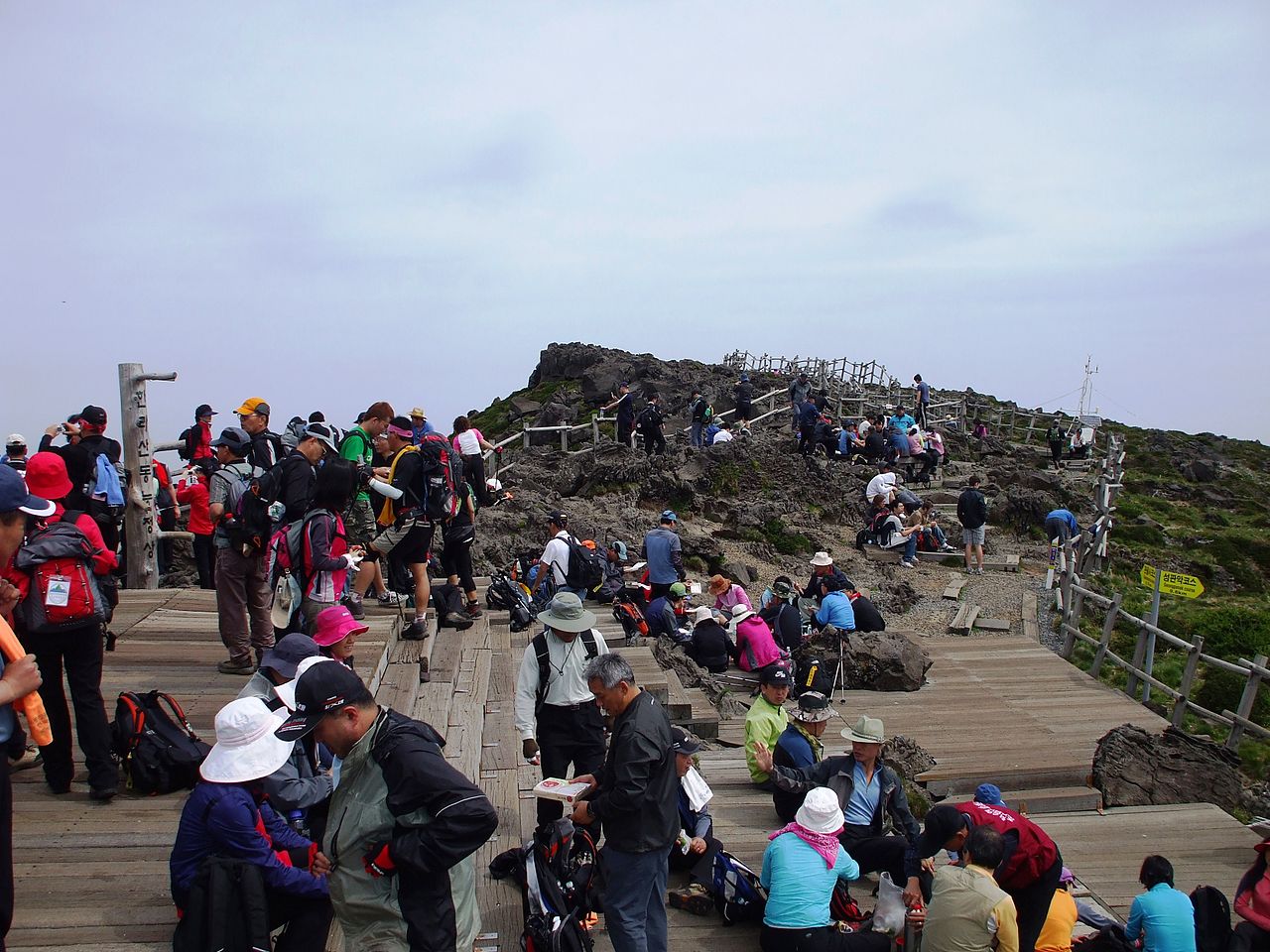
Hallasan offers a network of maintained trails that vary from short scenic paths to steep routes leading to the crater rim. Popular approaches to the summit include the Seongpanak and Gwaneumsa trails, which allow hikers to experience different vistas and vegetation belts; shorter trails such as Eoseungsaengak provide quick access to distinctive viewpoints without summiting. Weather changes rapidly at higher elevations, so hikers prepare for sudden cold, wind, or snow outside summer months. Park management enforces conservation measures to protect fragile plant communities and the crater lake.
Cultural and notable facts
The summit crater Baengnokdam is often translated as “white deer lake,” a name that appears in local legends and poetic descriptions of the mountain. Hallasan’s prominence on Jeju has made it a symbol of the island, appearing in folklore, art, and contemporary tourism. For information on its cultural status and broader significance see a general resource at related reference.
- Main features: summit crater (Baengnokdam), basaltic slopes, parasitic cones.
- Access: multiple trails with varying difficulty; protected park rules apply.
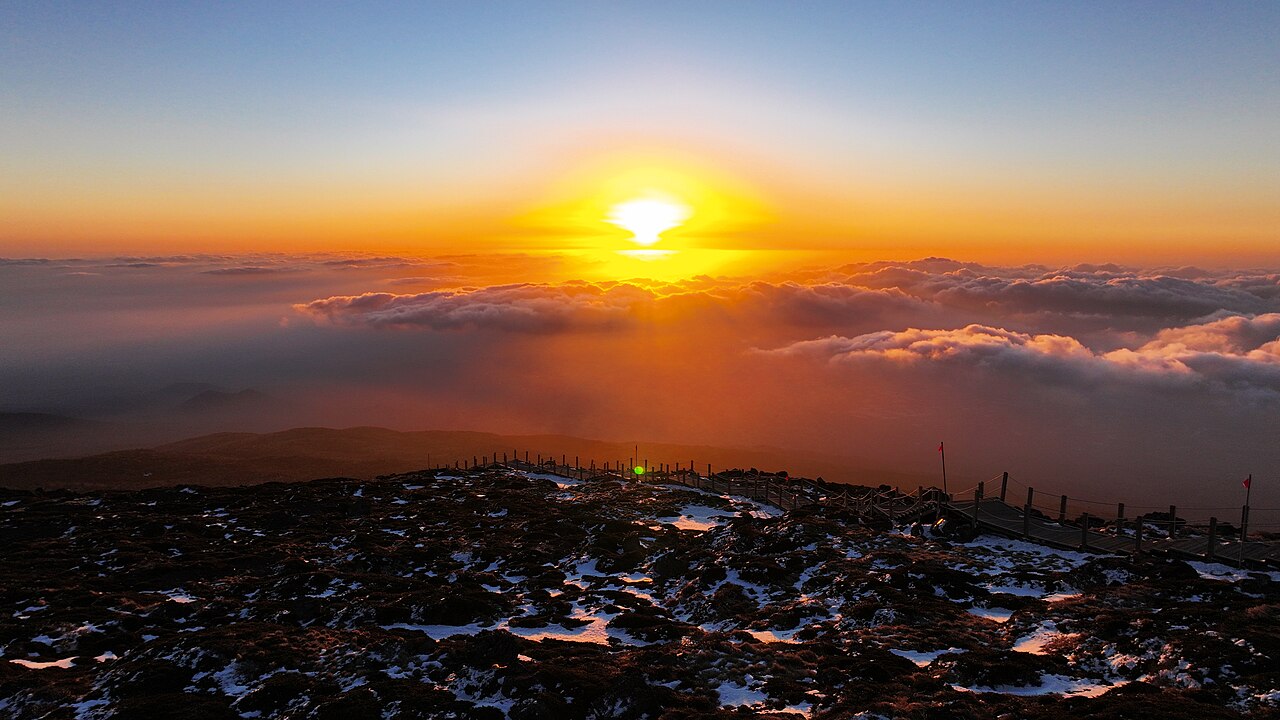
- Best times to visit: late spring to early autumn for milder weather and flowering plants; winter provides dramatic snowscapes but may limit access.
Questions and answers
Q: What is Hallasan?
A: Hallasan is one of Korea's three most sacred mountains located on Jeju-do, the southernmost island of Republic of Korea.
Q: How tall is Hallasan?
A: Hallasan is 1,950m tall.
Q: What is on the top of Hallasan?
A: On the top of Hallasan, there is a crater called Baek Rok Dam.
Q: What was Hallasan before it became dormant?
A: Hallasan was an active volcano until about 25,000 years ago.
Q: What is Hallasan made of?
A: Hallasan is made of basalt, a type of black rock that is produced by volcanoes.
Q: Which side of Hallasan is very steep?
A: The south side of Hallasan is very steep while the slope of the north side is gentle.
Q: Which sides of Hallasan are relatively high but smooth?
A: The east and south sides of Hallasan are relatively high but smooth.
Related articles
Author
AlegsaOnline.com Hallasan — Jeju's central volcano and highest peak Leandro Alegsa
URL: https://en.alegsaonline.com/art/41917
Sources
- terms.naver.com : Hallasan, Doosanpedia
- hallasan.go.kr : Hallasan official website
- terms.naver.com : Hallasan, Encyclopedia of Korean Culture