
Anglo–Dutch Wars (17th–18th centuries)
A series of naval wars between the Dutch Republic and England/Great Britain over trade, maritime dominance, colonies and naval tactics that shaped early modern shipping and empire.
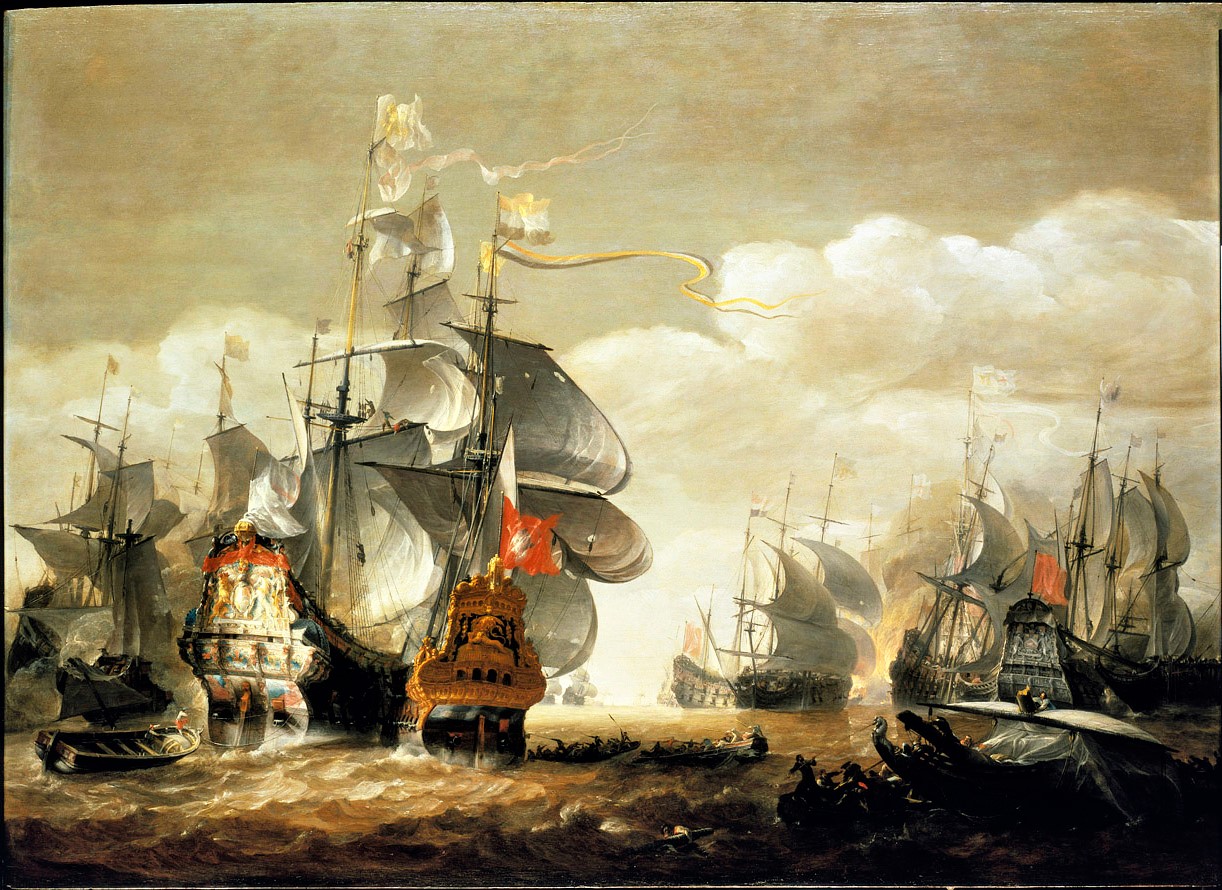
The Anglo–Dutch Wars were a sequence of naval conflicts in the 17th and 18th centuries fought principally between the Dutch Republic and England, and later Great Britain. These wars were driven above all by commercial rivalry: control of sea lanes, markets and colonial trade determined national wealth and strategic position. The conflicts are known in Dutch as Engels–Nederlandse Oorlogen and are commonly grouped into four wars fought at sea and at trading outposts across the globe (series overview).
Image gallery
9 Images


Nature and characteristics
Naval combat, convoy protection and disruption of rivals’ commerce dominated these wars. The Dutch Republic (Dutch Republic) had a large mercantile fleet and a commercial doctrine based on fast ships and global trade routes (trade routes). England, and after 1707 Great Britain (Great Britain), relied increasingly on a purpose-built Royal Navy (Royal Navy) to protect shipping, impose blockades and challenge Dutch lines. Tactically, the wars accelerated the development of disciplined fleet formations and the line-of-battle system, transforming previously more chaotic engagements into organized fleet actions (naval warfare).
Chronology and major episodes
- First Anglo–Dutch War (1652–1654). Fought during the English Interregnum after the English Civil War, actions took place largely in the English Channel and North Sea. Notable commanders included Maarten Tromp for the Dutch and Robert Blake for the English.
- Second War (1665–1667). Renewed contest over trade and colonial advantage; famous encounters include the Four Days’ Battle and the Dutch counteroffensive that culminated in the Raid on the Medway. The Treaty of Breda (1667) adjusted colonial possessions.
- Third War (1672–1674). Occurred after the Restoration of the monarchy (Restoration) and saw England allied with France; Dutch commanders such as Michiel de Ruyter defended Dutch maritime interests and ultimately preserved the Republic’s position.
- Fourth War (1780–1784). After the Acts of Union 1707 created Great Britain, disputes over neutral trade—especially Dutch commerce with the rebellious United States during the American Revolutionary War—led to open conflict and a heavy Dutch defeat.
Consequences and significance
Outcomes varied by war but included shifts in colonial control, legal and commercial measures such as navigation laws, and changes in naval doctrine. Early conflicts helped the English develop a blue-water navy capable of projecting power beyond European waters. The exchanges also affected colonial possessions: English capture of New Netherland (New Netherland) was formalized in later treaties while the Dutch retained lucrative territories such as Suriname in negotiated settlements. By the late 18th century, defeats and changing trade patterns contributed to erosion of Dutch global influence and losses in the wider Dutch Empire.
Notable facts and distinctions
- These wars were fought chiefly at sea and often targeted commerce rather than empire-for-empire annihilation; privateering and prize-taking were common.
- The Raid on the Medway stands out as a dramatic Dutch success that humiliated the English fleet and influenced subsequent treaties.
- Legal and economic instruments—such as navigation restrictions and convoy systems—became as important as tactical victories at sea.
- The Fourth War is linked to wider late‑18th-century politics, including British efforts to limit Dutch trade with the American revolutionaries and the international disputes surrounding neutrality.
These conflicts shaped early modern maritime law, naval organization and imperial rivalry in Europe. They illustrate how commercial competition can drive naval innovation and international politics: battles, treaties and trade regulations from the Anglo–Dutch Wars left a lasting imprint on the map of Atlantic and Indian Ocean commerce and on the rise of British naval predominance in the centuries that followed. For further context see related topics and treaties (monopoly and trade), colonial administrations (English colonies), and detailed battle studies (Fourth War) and diplomatic settlements (peace agreements).
References and additional reading can explore the social, economic and technological aspects of the wars; important figures and events are documented in naval histories and treaty records (Dutch sources), English chronicles (Restoration era) and modern syntheses of 17th‑ and 18th‑century maritime conflict (Royal Navy studies), including assessments of neutrality, commerce and empire (US trade) and the later political consequences in the Low Countries (Dutch Republic).
Further online and library resources are available for battles, biographies and treaties; examples include archival collections, specialist naval works and country studies (trade routes), (naval warfare), and overviews of colonial transfers such as New Netherland to Britain (New Netherland).
Questions and answers
Q: What were the Anglo-Dutch Wars?
A: The Anglo-Dutch Wars were a series of wars fought between the Dutch Republic and the Kingdom of England and later the United Kingdom of Great Britain during the 17th and 18th centuries. They fought for control over trade routes on the seas, mainly through naval warfare.
Q: When did the First War take place?
A: The First War took place during the Interregnum in England, which was a period after the English Civil War when England did not have a king or queen. It lasted from 1652 to 1654.
Q: What happened in both Second and Third Wars?
A: In both Second (1665–1667) and Third (1672–1674) Wars, England tried to end the Dutch monopoly over world trade. Most of their fighting was done in North Sea, with England also having France as an ally in Third War. Both wars ended with strong victories for Dutch Republic, confirming their position as leading maritime power of 17th century.
Q: What caused Fourth War?
A: The Fourth War (1780–1784) was caused by Britain disagreeing with Dutch trading with United States during American Revolutionary War.
Q: How did Fourth War end?
A: The war ended with Treaty of Paris (1784), resulting in a very big defeat for Dutch who lost parts of their empire.
Q: Who gained control over seas at end of First War?
A: At end of First War, Royal Navy of England gained control over seas and had monopoly over trade with English colonies.
Related articles
Author
AlegsaOnline.com Anglo–Dutch Wars (17th–18th centuries) Leandro Alegsa
URL: https://en.alegsaonline.com/art/4189
Sources
- historyofwar.org : History of War.