
Half‑staff (flag etiquette and protocol)
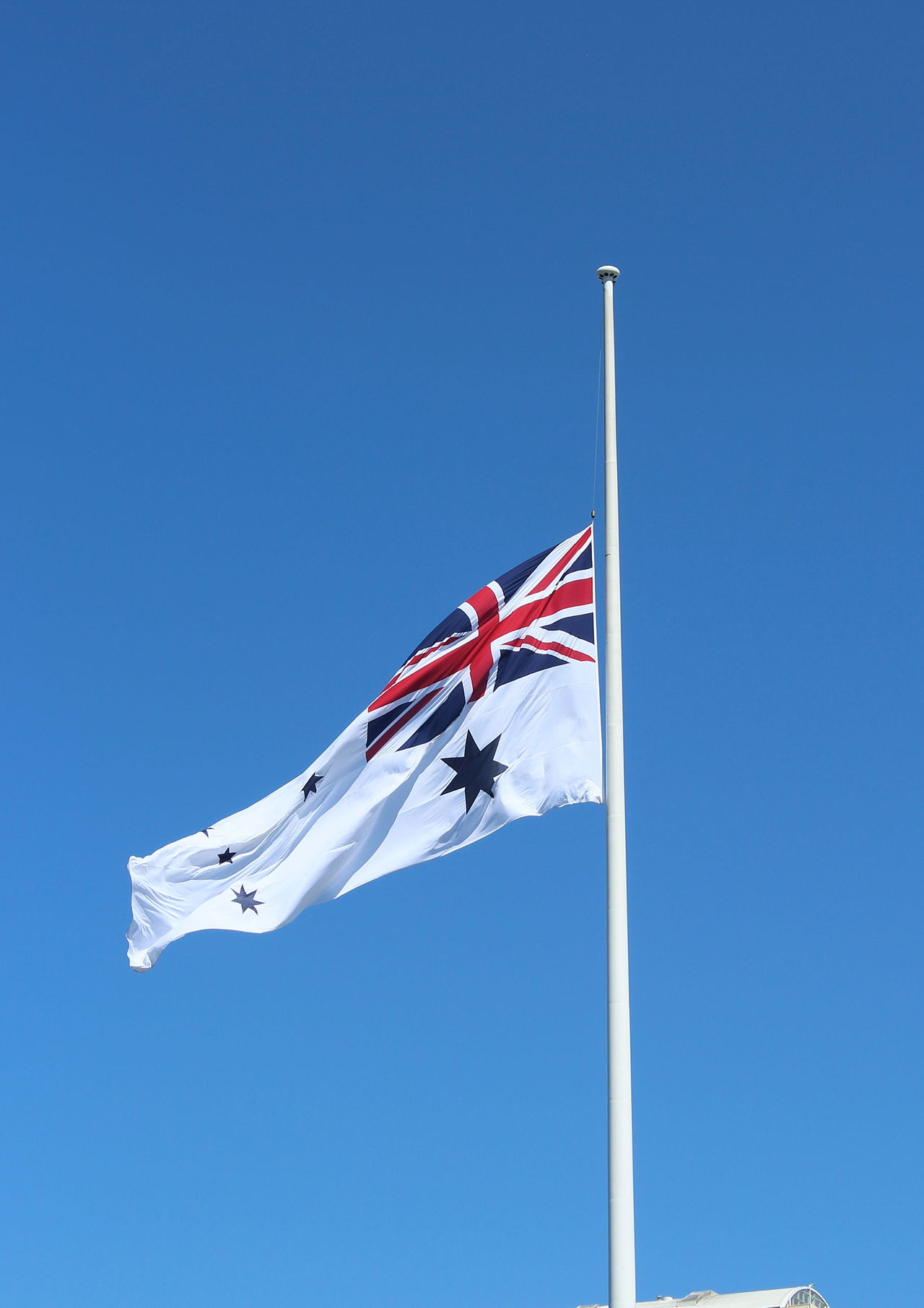
Half‑staff or half‑mast is the practice of flying a flag partway down a pole to show mourning, respect, distress or honor; specific placement and duration are governed by local protocol.
Overview
Half‑staff (often called half‑mast at sea) describes a flag flown below the top of a flagpole or mast as a visible symbol of mourning, respect, distress or commemoration. The gesture is widely recognized and used by governments, organizations and vessels. Although the precise placement and circumstances differ by country and institution, the basic idea is to set the flag lower than its customary full‑staff position so it is not at the peak.
Image gallery
10 Images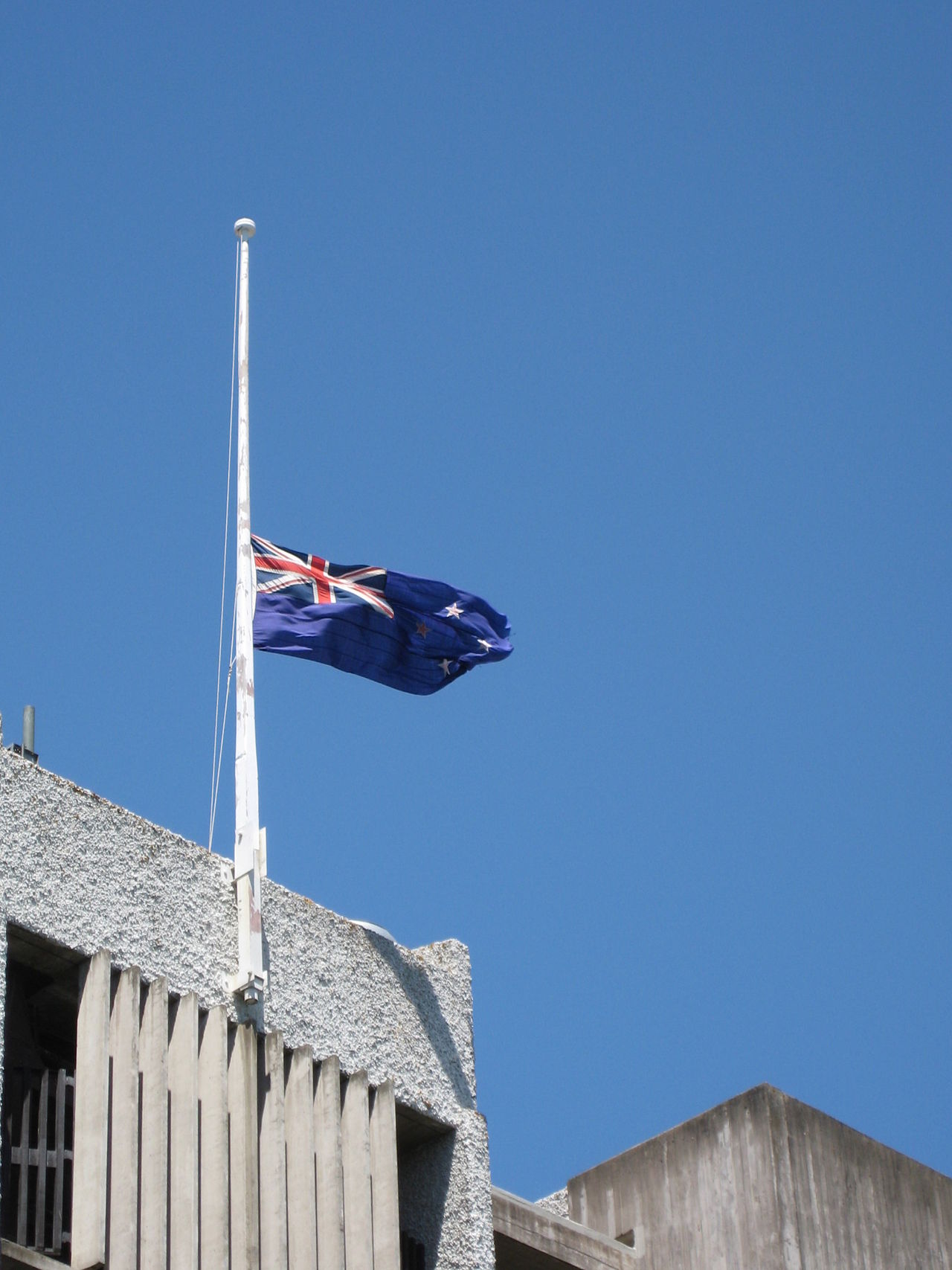




Characteristics and common procedure
Conventions typically emphasize dignity and care in handling the flag. In many traditions the flag is first raised briskly to the top of the pole and then lowered to the half‑staff position; when the period of mourning ends it is again raised to the peak before being lowered for the day. Protocols also stress that a flag must not touch the ground and should be treated with the same respect as when flown at full staff. Some authorities specify a measured distance — historically one flag‑width from the top — while other jurisdictions allow a visual midpoint or a slightly higher or lower placement.
Etiquette and occasions
- National mourning for prominent public figures or heads of state.
- Local or institutional remembrances after tragic events, disasters, or acts of violence.
- Commemorative dates such as memorial days or anniversaries of significant losses.
- At sea, as part of maritime signals or to honor a fallen sailor.
History and origin
The practice has roots in maritime custom, where lowering a flag indicated distress or the death of a shipmate; this seafaring origin explains the alternative term half‑mast. Over time the gesture migrated ashore and became formalized in civil and military traditions. Many countries codified details in official flag codes or guidelines; these documents outline when and how flags should be flown at reduced height and often provide examples for different types of institutions and events. For guidance, see national flag codes and historical notes on maritime tradition.
Notable variations and distinctions
Practices vary: some states forbid lowering certain flags (for instance, those representing monarchs or specific religious emblems), while others define a set number of days for official mourning. Civilian and military protocols may differ in wording and detail, and ships follow additional seafaring rules. The term half‑mast is usually reserved for ships and half‑staff for land, but in everyday use the terms are often used interchangeably. These distinctions and local regulations are important for accurate and respectful observance.
Questions and answers
Q: What does the term "half-staff" or "half-mast" mean?
A: The term "half-staff" or "half-mast" refers to the act of displaying a flag at halfway up a flagpole or a ship's mast.
Q: Why is a flag flown at half-staff or half-mast?
A: A flag is flown at half-staff or half-mast as a symbol of respect, mourning, or distress, or a form of honor.
Q: Does the flag have to be flown exactly at the halfway point?
A: No, the flag does not always have to be flown at exactly the halfway point. Sometimes it is acceptable to have the "half-mast" flag at slightly lower or slightly higher than the middle of the flagpole or mast.
Q: What did "half-staff" originally mean?
A: Originally, "half-staff" meant that the flag had to be flown one flag-width from the top to allow for the "invisible flag of mourning" to be at the top.
Q: Is displaying a flag at half-staff or half-mast a common practice in many countries?
A: Yes, displaying a flag at half-staff or half-mast is a common practice in many countries.
Q: Can a flag be flown at half-staff or half-mast for any reason?
A: No, a flag can only be flown at half-staff or half-mast for specific reasons such as mourning, respect, distress or as a form of honor.
Q: How is half-staff or half-mast usually conveyed to the public?
A: Half-staff or half-mast is usually conveyed to the public through official announcements or proclamations by the government or other authorities.
Author
AlegsaOnline.com Half‑staff (flag etiquette and protocol) Leandro Alegsa
URL: https://en.alegsaonline.com/art/41879
Sources
- commons.wikimedia.org : Flags at half staff