
Hainaut Province (Walloon Region, Belgium)
Hainaut is a western Walloon province of Belgium with Mons as its capital. It blends medieval towns, an industrial past and vibrant cultural traditions such as the Carnival of Binche.
Hainaut (French: Hainaut; Dutch: Henegouwen; German: Hennegau; regional names: Hénau) is a province of the Walloon Region in Belgium. Its capital is Mons. Located at the western edge of Wallonia, Hainaut combines urban centres, agricultural plains and former industrial valleys.
Image gallery
9 Images
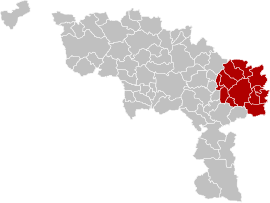


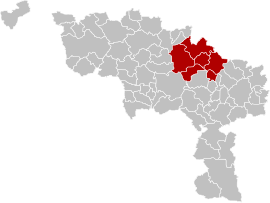


Geography and major towns
The province occupies low-lying territory that opens toward the French border and contains river valleys that supported heavy industry. Its landscape alternates between densely built urban corridors and quieter rural areas. Major towns and municipalities include:
- Charleroi — a principal industrial and service centre;
- Mons — the provincial capital with administrative and cultural functions;
- Tournai — one of Belgium’s oldest towns, known for its cathedral and medieval heritage;
- La Louvière, Binche and Mouscron — important local centres with distinct identities.
History and development
Hainaut's name and identity trace back to the medieval County of Hainaut. Over centuries this region was shaped by shifting European powers, trade and the Industrial Revolution, which left a strong imprint through coal mining and steelmaking. Parts of the historic county now lie across the border in northern France (often called French Hainaut), reflecting the long shared history of the frontier.
Administration and population
As a Belgian province, Hainaut is governed through provincial institutions and is further subdivided into administrative arrondissements and many municipalities. French is the dominant official language, while local Romance dialects such as Picard and Walloon persist in cultural and rural contexts.
Economy, transport and culture
The province moved from heavy industry toward a more diversified economy: services, light industry, logistics and research now play greater roles, although industrial heritage sites remain prominent. Transport links connect Hainaut to neighbouring Belgian provinces and to northern France, supporting cross-border work and commerce.
Notable places and traditions
- Historic centres: Tournai’s cathedral and Mons’ old town are valued for their architecture and museums.
- Industrial heritage: former mines, steelworks and workers’ towns illustrate the region’s 19th–20th century development.
- Festivals: the Carnival of Binche is a well-known popular event, recognized internationally for its cultural importance.
- Commemoration: towns such as Mons have battlefields and memorials linked to twentieth-century conflicts.
Hainaut occupies a distinct place in Belgium: a province where medieval history, industrial legacy and contemporary cultural life coexist, and where cross-border ties with France remain an important feature of daily life and identity.
Questions and answers
Q: What is Hainaut?
A: Hainaut is a province of the Walloon Region, one of the three regions of Belgium.
Q: How do you spell Hainaut in Dutch?
A: Hainaut is spelled as "Henegouwen" in Dutch.
Q: What is the capital of Hainaut?
A: The capital of Hainaut is the city of Mons.
Q: What language is spoken in Hainaut?
A: Several languages are spoken in Hainaut including French, Dutch, German, Picard, Walloon, and West Flemish.
Q: Is Hainaut in the eastern or western region of the Walloon Region?
A: Hainaut is in the westernmost province of the Walloon Region.
Q: What is the German name for Hainaut?
A: The German name for Hainaut is "Hennegau".
Q: What is the Picard name for Hainaut?
A: The Picard name for Hainaut is "Hénau".
Related articles
Author
AlegsaOnline.com Hainaut Province (Walloon Region, Belgium) Leandro Alegsa
URL: https://en.alegsaonline.com/art/41791
Sources
- statbel.fgov.be : Population per municipality as of 1 January 2016
- statbel.fgov.be : Institut National de Statistique - Direction générale Statistique et Information économique