
Habitable zone (Goldilocks zone)
Region around a star where conditions may allow liquid water on a planet’s surface; central to searches for life but limited by atmosphere and stellar effects.
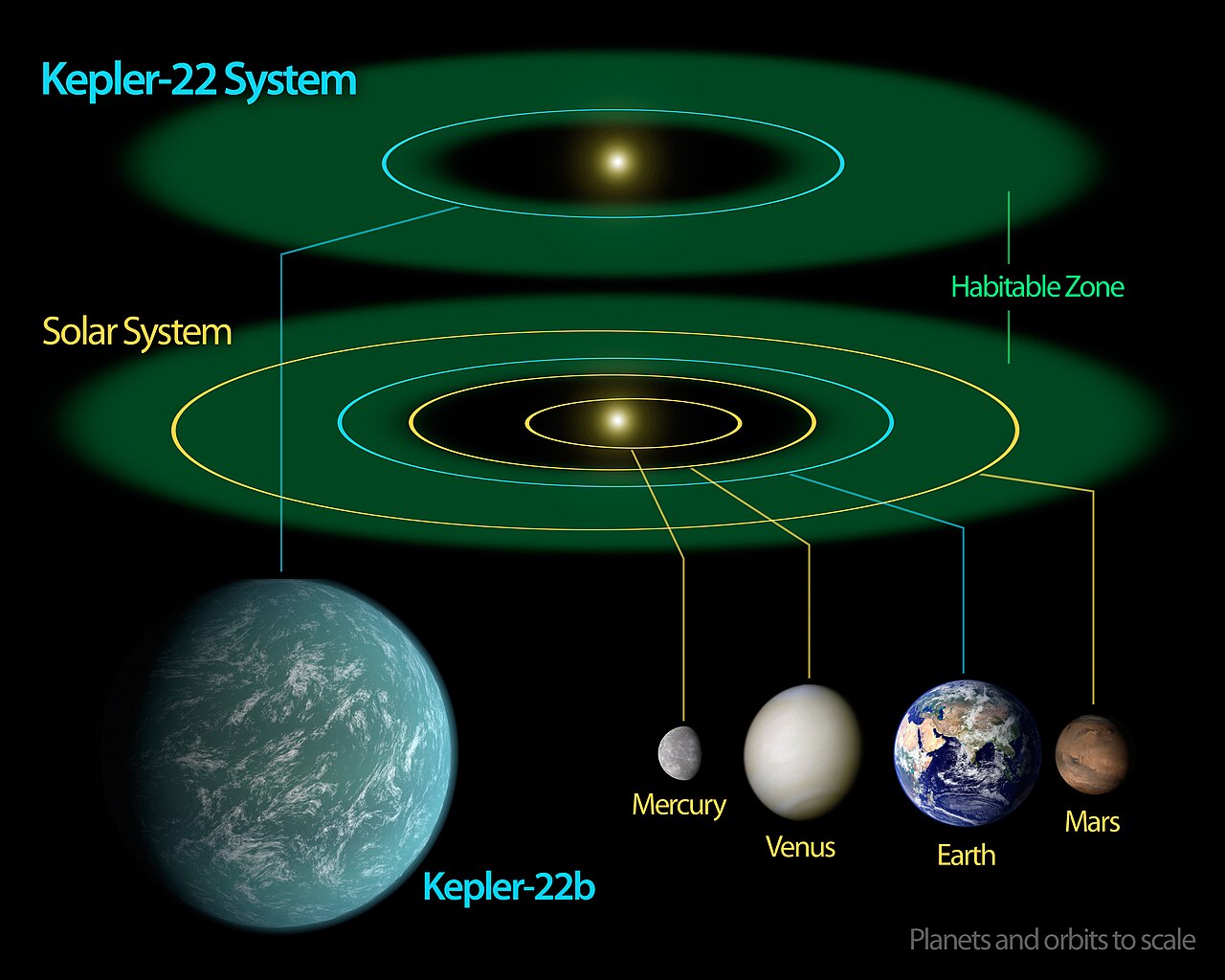
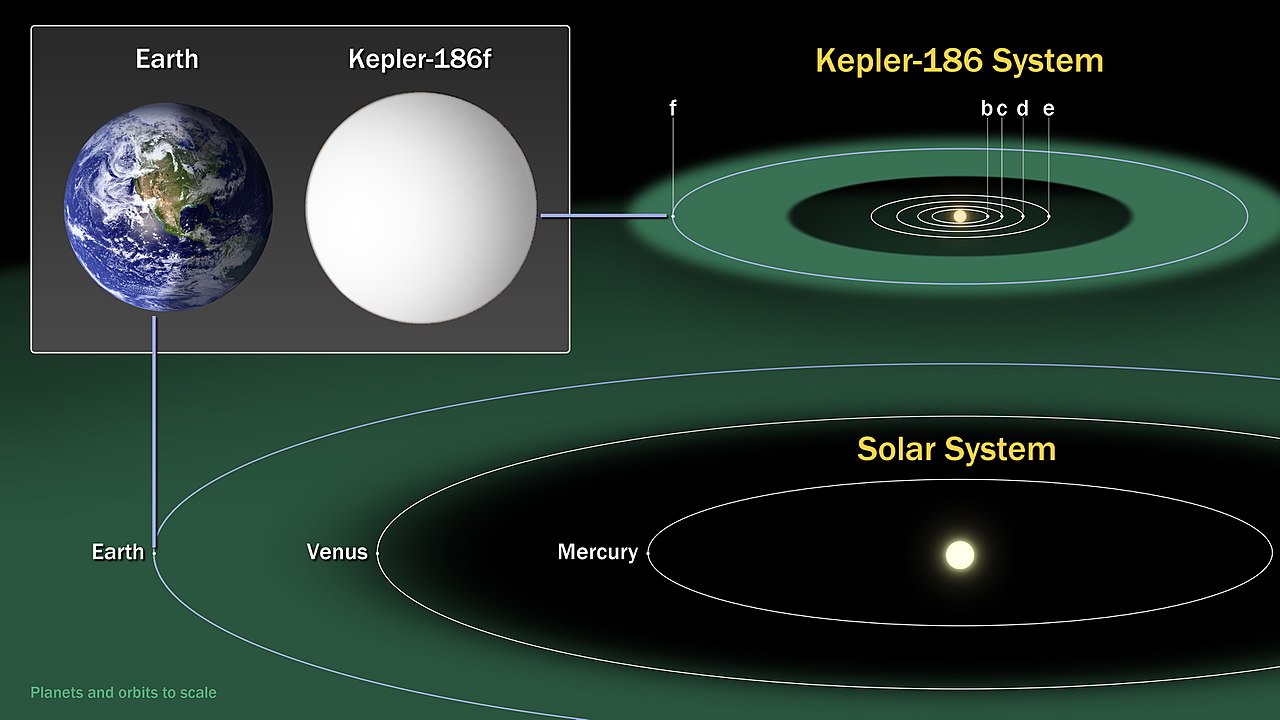
The habitable zone is the range of orbital distances around a star where a rocky planet with suitable atmospheric pressure could support liquid water on its surface. Because liquid water is a key requirement for life as we know it, this circumstellar region is often the first filter astronomers use when assessing a planet's potential habitability. The concept is commonly called the Goldilocks zone, life zone, or comfort zone.
Image gallery
10 Images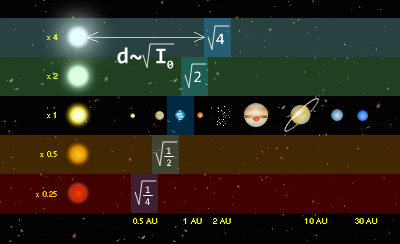



Key characteristics
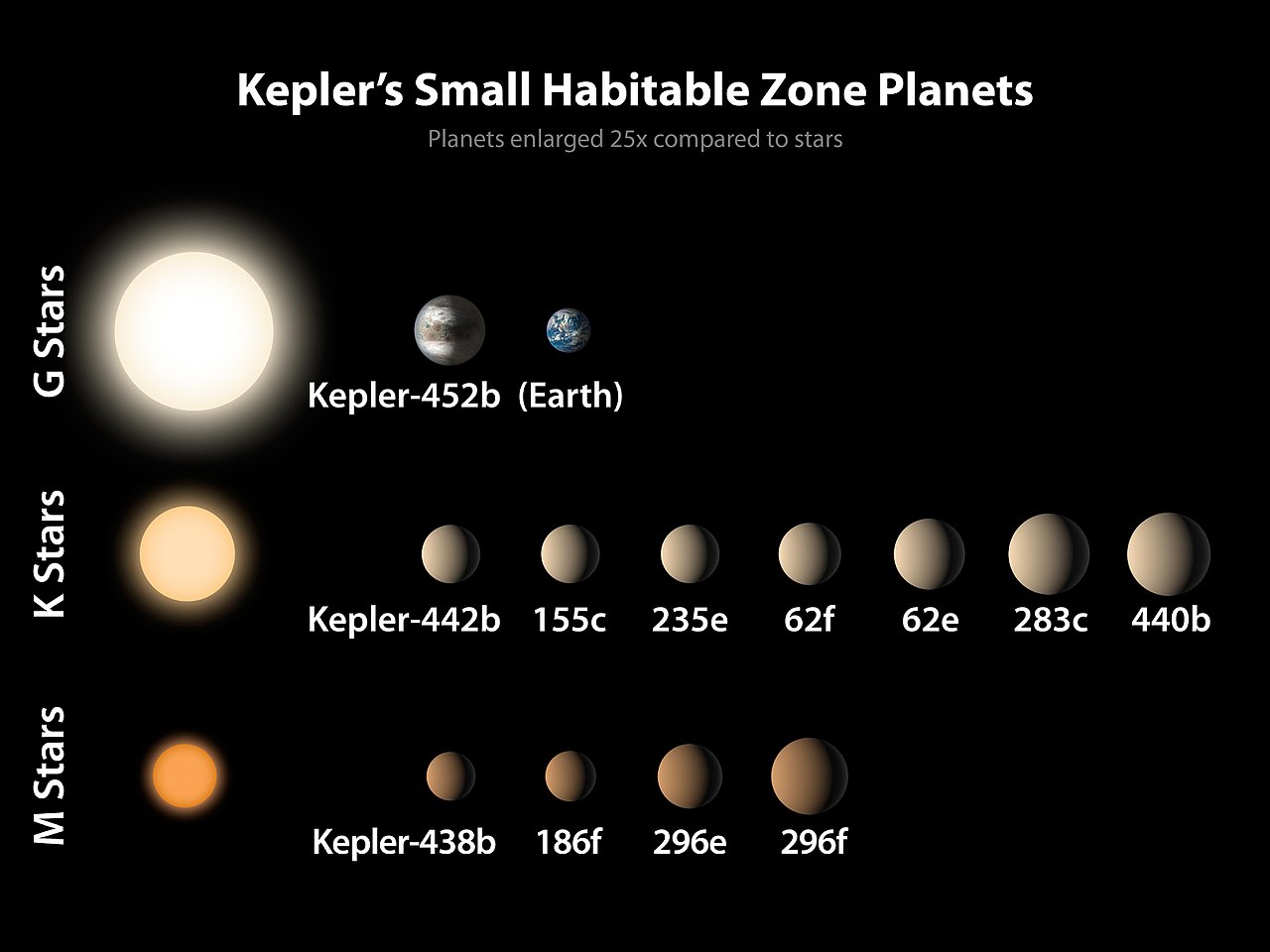
The exact location and width of a habitable zone depend mainly on a star's luminosity and spectral type. For hotter, brighter stars the zone lies farther out; for cooler, dimmer stars it lies closer in. Other important factors include:
- Atmosphere: A planet's greenhouse gases can expand or shrink the range where liquid water is stable.
- Planetary mass and composition: Sufficient gravity helps retain an atmosphere and maintain surface liquid water.
- Orbital eccentricity and rotation: High eccentricity produces extreme temperature swings; slow rotation or tidal locking can alter climate patterns.
Development and usage
Astronomers use habitable-zone calculations to prioritize observations and to interpret exoplanet discoveries. Surveys of nearby stars and space missions have led to estimates that roughly one in five Sun-like stars may host an Earth-sized planet within its habitable zone, though whether those worlds are truly habitable depends on many additional details. For background on the astrophysical framework, see astronomy resources.
Limitations and important distinctions
Being inside the habitable zone is neither necessary nor sufficient for life. Subsurface oceans kept liquid by tidal heating (as on some moons) lie outside the classical circumstellar HZ. Conversely, a planet within the HZ could be sterile if it lacks a supporting atmosphere, has a hostile chemistry, or is exposed to intense stellar flares. Discussions of habitability therefore consider other concepts such as the continuously habitable zone (how long a planet remains in the zone) and the galactic habitable zone (regions of a galaxy more favorable for life).
Why it matters
Identifying planets in habitable zones helps direct follow-up studies that probe atmospheres, surface conditions, and possible biosignatures. Searches for extraterrestrial life often begin by cataloging planets in habitable zones and by evaluating their conditions for life in more detail. For accessible summaries and further reading, consult educational entries on Earth-like environments and professional overviews in astronomy.
Questions and answers
Q: What is a habitable zone?
A: A habitable zone (HZ) in astronomy is a region of space where conditions are best for life to form as on Earth.
Q: What other names may the habitable zone be referred to as?
A: The habitable zone may also be called the "life zone", "comfort zone", "green belt" or "Goldilocks zone".
Q: How many stars have an Earth-sized planet in the habitable zone?
A: One in five stars has an Earth-sized planet in the habitable zone.
Q: Is it known what proportion of these planets would have conditions suitable for life?
A: No, it is not known what proportion would have conditions suitable for life.
Q: What kind of planets are most likely to have extraterrestrial life?
A: Planets in the habitable zones are most likely to have extraterrestrial life.
Q: Are all planets located within a star's HZ capable of sustaining life?
A: No, not all planets located within a star's HZ are capable of sustaining life.
Related articles
Author
AlegsaOnline.com Habitable zone (Goldilocks zone) Leandro Alegsa
URL: https://en.alegsaonline.com/art/41674
Sources
- bbc.co.uk : One in five suns has habitable world. BBC News Science & Environment
- dltk-teach.com : Story of Goldilocks
- ucar.edu : The Goldilocks principle: a model of atmospheric gases
- newscientist.com : "'Goldilocks' planet may be just right for life"
- bbc.co.uk : "The Goldilocks Planet"
- astrobio.net : "Galactic habitable zones"
- vpl.astro.washington.edu : "VPL Glossary"
- science.nasa.gov : "The Goldilocks Zone"
- apnews.excite.com : "Cosmic census finds crowd of planets in our galaxy"
- arxiv.org : 1009.5733
- arxiv.org : astro-ph.EP
- space.com : "Newfound alien planet is best candidate yet to support life, scientists say"
- arxiv.org : 1108.3561
- ui.adsabs.harvard.edu : 2011arXiv1108.3561K
- arxiv.org : 0912.3243