
Habemus Papam — the traditional proclamation announcing a new pope
Habemus Papam is the Latin declaration made when a new pope has been elected, announced from St Peter’s Basilica and followed by the pope’s first public blessing (Urbi et Orbi).
Overview
"Habemus Papam" is the short Latin announcement used to inform the public that a new pope has been chosen. The phrase — literally, "we have a pope" — opens a formal proclamation delivered at the end of a papal conclave. The proclamation itself is in Latin and is traditionally voiced by the Senior Cardinal Deacon on behalf of the College of Cardinals. The newly elected pontiff (the pope) then appears publicly for the first time and bestows his inaugural blessing.
Image gallery
1 Image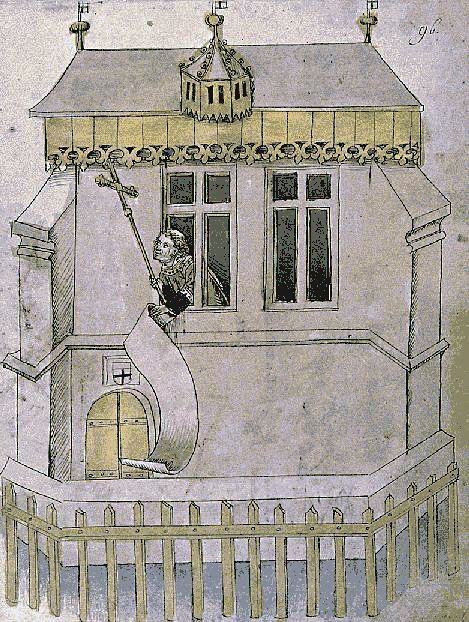
Where and how it is announced
The ritual proclamation is made from the central balcony of St. Peter's Basilica in the Vatican. It follows the conclusion of the secret conclave and the traditional signals (smoke from the Sistine Chapel chimney) that indicate the election result. After the words "Habemus Papam!" the new pope customarily comes to the balcony to greet those gathered in St. Peter’s Square and to impart the first Urbi et Orbi blessing.
The traditional wording
The public formula begins with the Latin announcement and continues with identification of the elected cardinal and the papal name he has chosen. A standard version reads:
Annuntio vobis gaudium magnum: Habemus Papam! Eminentissimum ac reverendissimum Dominum, Dominum [First Name], Sanctæ Romanæ Ecclesiæ Cardinalem [Last name], Qui sibi nomen imposuit [Papal name].
In English, this is commonly rendered as: "I announce to you a great joy: We have a Pope! The most eminent and most reverend Lord, the Lord [First Name], Cardinal of the Holy Roman Church [Last name], Who takes to himself the name of [Papal name]." Specific placeholders in announcements (such as the cardinal's family name or chosen papal name) are often inserted live into that formula, for example citing the cardinal's surname via his last name and the assumed title via the papal name.
Ceremony sequence
- The conclave meets and votes until a candidate receives the required majority.
- Smoke signals are released from the Sistine Chapel to indicate continued voting (black smoke) or a successful election (white smoke).
- When the cardinals accept the result and the new pope accepts, the Senior Cardinal Deacon appears on the balcony and declares "Habemus Papam!" in Latin.
- The pope appears, greets the crowd, and shortly thereafter gives his first Urbi et Orbi blessing.
History and notable examples
The practice of publicly announcing a newly elected pope developed over centuries as papal elections became more formalized. The wording and the ritual have varied at times, but the Latin proclamation has become the recognizable climax of modern conclaves. In some recent elections the announcement has been preceded by multilingual greetings to the crowd; for example, during the 2005 election that produced Pope Benedict XVI, the announcement sequence included addresses in several languages before the formal Latin formula — an instance reported in connection with the events of 19 April 2005. Languages used at times include Italian, Spanish, French, German, and English.
Significance and cultural impact
Beyond its liturgical and canonical role, "Habemus Papam" is a widely recognized phrase in global news media and popular culture, signaling a moment of major interest for Catholics and many others around the world. The announcement marks both the end of the conclave's secrecy and the beginning of a new papal ministry: the public introduction of the pope, the name he has chosen, and the pastoral and diplomatic work he will undertake during his pontificate.
Questions and answers
Q: What does "Habemus Papam" mean?
A: Habemus Papam is a Latin phrase meaning "We have a Pope". It is the announcement given by the Senior Cardinal Deacon when a new Pope has been chosen.
Q: Where is the announcement made from?
A: The announcement of Habemus Papam is made from the central balcony of St. Peter's Basilica in the Vatican.
Q: What happens after the announcement?
A: After the announcement, the new pope meets with people and gives his first Urbi et Orbi blessing to them.
Q: What is included in the Habemus Papam announcement?
A: The format for the Habemus Papam announcement includes announcing a great joy, introducing the most eminent and most reverend Lord, stating their first name, last name, and papal name.
Q: How many languages was Jorge Cardinal Medina Estévez's Habemus Papam greeting given in?
A: Jorge Cardinal Medina Estévez's Habemus Papam greeting was given in Italian, Spanish, French, German and English.
Q: Who gave Jorge Cardinal Medina Estévez's Habemus Papam greeting?
A: Jorge Cardinal Medina Estévez gave his own Habemus Papam greeting upon election of Pope Benedict XVI on 19 April 2005.
Related articles
Author
AlegsaOnline.com Habemus Papam — the traditional proclamation announcing a new pope Leandro Alegsa
URL: https://en.alegsaonline.com/art/41666