
Gustave Courbet: leader of French Realism and social painting
Gustave Courbet (1819–1877), French painter who led the Realist movement. Known for large-scale depictions of everyday life, techniques emphasizing material presence, controversy, and lasting influence on modern art.
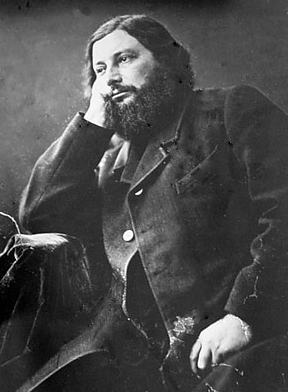
Gustave Courbet (10 June 1819 – 31 December 1877) was a French painter who became the principal figure of mid-19th century Realism. Born in Ornans in eastern France, he rejected the academic idealization common in official taste and insisted that painting should represent the visible world and contemporary life. For basic biographical overviews and further reading see biographical resources.
Image gallery
10 Images


Life and career
Courbet rose to prominence in the 1840s and 1850s by exhibiting works that treated ordinary people and provincial life with a scale and seriousness previously reserved for history painting. He mounted his own independent display in 1855, often called the Pavillon du Réalisme, to present works refused by or at odds with official juries. His public career combined frequent exhibition with controversies over subject matter and manners. After the upheavals of 1871, including his association with events around the Paris Commune, he left France and spent his final years in Switzerland, where he continued to paint until his death.
Style, themes and technique
Courbet's work is marked by weighty forms, a sombre or earthy palette, and vigorous handling of paint. He emphasized surface and texture—often applying pigment in thick passages—to convey the material reality of objects and bodies. He made subjects such as quarrymen, peasants, and tavern interiors the focus of large canvases, thereby challenging the hierarchy of genres. His aim was not simply documentary: he sought a truthfulness of appearance and social presence that would make viewers aware of modern conditions and human labour. For discussions of the movement he helped to shape, see Realism.
Major works
Several paintings remain emblematic of Courbet's ambitions and the debates they provoked. Among his best-known works are:
- The Stone Breakers (mid‑19th century) — an unidealized view of manual labour with monumental treatment of ordinary figures.
- Burial at Ornans (1849–1850) — a large depiction of a provincial funeral that treats villagers with the dignity of grand historical subjects.
- The Origin of the World (1866) — a frank, intimate study of the female body that has been widely discussed for its realism and provocation.
He also produced landscapes, portraits, and subject pictures that explored local life and environment rather than classical themes. Critical responses to these works varied widely in his lifetime, and debates about realism and taste continue to shape Courbet scholarship; see further critical studies at studies of 19th-century art.
Influence and reception
Courbet's insistence on modern subjects and direct observation influenced many younger painters. Édouard Manet acknowledged debts to Courbet's freedom of subject and brushwork, and other contemporaries and successors — including Édouard Manet, Edgar Degas, and later figures such as Claude Monet — found in his work models for dealing with contemporary life, light, and paint. Post-Impressionists and several strands of modern art also traced intellectual or technical links back to Courbet's example.
Politics, controversy and legacy
Courbet combined artistic independence with outspoken, sometimes radical political views. His involvement in the events of 1871 and his opposition to official institutions intensified disputes about his work. After his death, his role as a pioneer of realist approaches, his innovations in handling paint and scale, and his willingness to connect art with social realities secured his place in art history. Today Courbet is studied both for the formal qualities of his paintings and for the ways they challenged established ideas about subject matter, the role of the artist, and the relation between art and society.
For further exploration of Courbet's paintings, techniques and historical context, consult museum catalogues, authoritative monographs and specialized essays that examine his major canvases, exhibition strategies and long-term influence on modern painting.
Questions and answers
Q: Who was Gustave Courbet?
A: Gustave Courbet was a French painter and the leader of the Realist movement in 19th-century French painting.
Q: What was Courbet known for?
A: Courbet was known for trying out new ideas and ways of painting, and making social commentary through his paintings.
Q: Who were some painters inspired by Courbet's paintings of people?
A: Edouard Manet, Edgar Degas, Vincent van Gogh, and Henri Toulouse-Lautrec were all inspired by Courbet's paintings of people.
Q: Who were some painters inspired by Courbet's landscape paintings?
A: Claude Monet, Seurat, Cezanne, and many other painters were inspired by Courbet's landscape paintings.
Q: What was the Realist movement in French painting?
A: The Realist movement was an artistic movement in 19th-century French painting that aimed to represent the world as it really was, without idealization or exaggeration.
Q: How did Courbet contribute to the Realist movement?
A: Courbet was the leader of the Realist movement in French painting, and his paintings made social comment on the world around him.
Q: When did Courbet live and what were the dates of his birth and death?
A: Courbet lived from 1819 to 1877, with his birthdate being June 10, 1819 and his deathdate being December 31, 1877.
Related articles
Author
AlegsaOnline.com Gustave Courbet: leader of French Realism and social painting Leandro Alegsa
URL: https://en.alegsaonline.com/art/41520
Sources
- tls.timesonline.co.uk : "The history of 'The Origin of the World'"