
Gustav Holst: life, music and legacy
English composer Gustav Holst (1874–1934) composed The Planets, wrote influential band and choral music, taught at St Paul’s Girls’ School, and helped shape early 20th-century British musical life.
Overview
Gustav Holst (21 September 1874 – 25 May 1934) was an English composer and teacher whose works for orchestra, choir and wind band remain central to British repertory. Best known for the orchestral suite The Planets, Holst combined a practical understanding of instruments with interest in folk song, hymnody and non-Western traditions to create music of distinctive colours, drive and economy.
Image gallery
10 Images


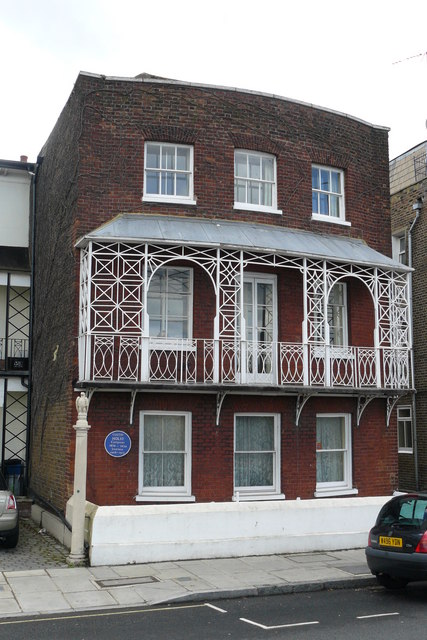
Early life and education
Holst was born in Cheltenham, Gloucestershire, into a musical family. He trained at the Royal College of Music in London, where he studied composition and orchestration and developed skills as a performer on the trombone. Early in his career he worked as an orchestral and theatre musician, learning the practical demands of ensemble playing and gaining experience that later informed his writing for wind and brass.
Teaching and St Paul’s Girls’ School
For much of his life Holst combined composing with teaching. He was Director of Music at St Paul’s Girls’ School in Hammersmith, where he wrote accessible yet musically substantial pieces for capable pupils. The St Paul’s Suite (completed 1913) is a neat example: tailored for strings, it remains popular with student and amateur orchestras.
The Planets
Composed in the 1910s and first performed complete in public in 1918, The Planets is a seven-movement orchestral suite that links each movement to the character of a different planet through its mythological namesake. Holst intended musical portraits of Roman divinities rather than literal astronomical depictions: thus Mars is the “Bringer of War,” marked by relentless, driving rhythm and unusual metric groupings such as five beats to the bar; Jupiter includes a broad tune later adapted as the hymn "I Vow to Thee, My Country". Holst omitted Earth, and Pluto had not been discovered at the time.
Other major works and band music
Outside The Planets, Holst wrote important pieces for wind band that expanded the concert repertoire for military and civic ensembles, including the popular First and Second Suites for Military Band. He composed choral works such as The Hymn of Jesus and a range of songs, hymns and short works intended both for performance and pedagogical use.
Style and influences
Holst’s style is concise and often modal, drawing on English folk-song and hymn tunes as well as melodic and rhythmic ideas gathered from travels and study of non-Western sources. His orchestration is admired for clarity of texture and imaginative colouring; his rhythmic inventiveness influenced many contemporaries and later composers.
Reception and legacy
Holst’s music has been widely performed, taught and recorded. He is seen alongside figures such as Ralph Vaughan Williams in the formation of a recognisable English musical voice in the early 20th century. His work for schools and bands helped elevate educational and wind repertoire to concert standards. For biographical overviews and catalogues of works consult standard reference entries and recorded anthologies (biography, catalogue, discography).
Selected works
- The Planets (suite for large orchestra)
- St Paul’s Suite (string orchestra)
- First and Second Suites for Military Band (landmark wind band works)
- Jupiter — contains tune adapted as "I Vow to Thee, My Country"
- Choral works such as The Hymn of Jesus and numerous songs and arrangements
Death and commemoration
Holst continued composing and teaching until his health declined; he died of heart failure in London in 1934. Numerous festivals, recordings and editions have kept his music in the repertoire, and many conservatoires include his works in performance study and wind-band curricula.
For introductions to particular works, consult library catalogues and authoritative editions and recordings that offer score commentary and historical notes (local histories, performance histories, program notes, thematic guides). Additional online resources include composer pages, scholarly articles and discographies (movement studies, rhythmic analysis, metric topics, medical and biographical summaries, local archives). For performance practice and editions see specialist publishers and band-hall resources (editions, instrumental guides, critical editions, college resources, composer introductions).
Further detailed study is recommended for those preparing performances or academic work: examine primary sources, consult annotated scores and seek recent recordings and scholarly commentary (school archives, authoritative biographies, suite analyses, recording catalogs, work lists). These resources will provide deeper insight into Holst’s craft, his teaching legacy and his place in twentieth-century music.
Questions and answers
Q: Where was Gustav Holst born?
A: Gustav Holst was born in Cheltenham, Gloucestershire.
Q: What did he study at the Royal College of Music in London?
A: He studied composition at the Royal College of Music in London.
Q: What instrument did he learn to play?
A: He learned to play the trombone.
Q: Where did he become Director of Music?
A: He became Director of Music at St Paul’s Girls’ School, Hammersmith, (London).
Q: What is his most famous work?
A: His most famous work is The Planets (1918), a suite of seven movements for orchestra.
Q: How many planets are included in The Planets suite?
A: The Planets suite includes seven planets - Earth is not included and Pluto had not yet been discovered when it was written.
Q: How did Gustav Holst die?
A: Gustav Holst died of heart failure in London.
Related articles
Author
AlegsaOnline.com Gustav Holst: life, music and legacy Leandro Alegsa
URL: https://en.alegsaonline.com/art/41514
Sources
- concise.britannica.com : ConcBritannica-GHolst Britannica Concise, "Gustav Holst", 2006, webpage
- britannica.com : B-GH Encyclopædia Britannica Online, "Gustav Holst", 2006