
Günzburg (district)
Günzburg is a rural district (Landkreis) in Swabia, southwestern Bavaria, Germany. It combines Danube valley landscape with small towns, agriculture, industry and notable tourist attractions.
Overview
Günzburg is a rural district (Landkreis) located in the administrative region of Swabia in southwestern Bavaria, Germany. The district's administrative seat is the town of Günzburg. The area mixes small urban centres, villages and agricultural land; its economy is shaped by medium-sized industry, farming and a growing local tourism sector.
Image gallery
1 Image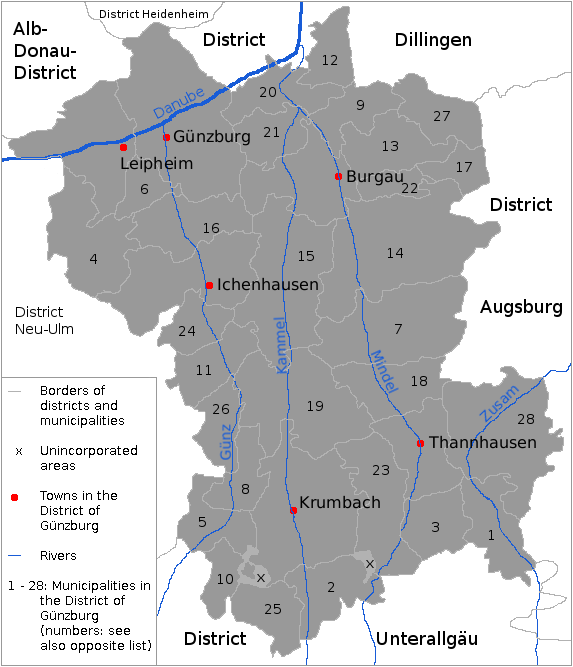
Geography and neighbours
The district lies largely within the Danube river valley and nearby low hills. Fertile plains and patches of woodland characterize the landscape, which is used intensively for arable farming and pasture. Günzburg shares borders with several German districts and with the neighbouring state of Baden-Württemberg.
- Dillingen (district)
- Augsburg (district)
- Unterallgäu
- Neu-Ulm (district)
- Alb-Donau (Baden-Württemberg)
- Heidenheim (district) (Baden-Württemberg)
History and administration
The present administrative outline of the district was largely determined during the municipal and district reforms in Bavaria in the late 20th century, which rationalized many smaller units into larger rural districts. The district is governed by an elected council (Kreistag) and an administrative head (Landrat or Landrätin) who manage regional services such as schools, roads and social welfare.
Economy and transport
Günzburg's economy combines agriculture, manufacturing and service activities. Small and medium-sized enterprises form the backbone of local industry. The district is accessible by major road and rail routes connecting Augsburg and Ulm; the A8 Autobahn runs nearby and regional trains serve the towns, supporting commuters and visitors alike. Tourism benefits from family attractions and outdoor recreation along the Danube corridor.
Towns, culture and attractions
Major towns in the district include the administrative centre Günzburg and other market towns such as Burgau, Ichenhausen and Krumbach. Visitors are drawn to family-friendly attractions, local festivals rooted in Swabian traditions and opportunities for cycling and walking along the river. The mix of rural scenery and historical towns gives the district a distinct regional character within Bavaria.
Questions and answers
Q: Where is Günzburg located?
A: Günzburg is located in Swabia in southwest Bavaria, Germany.
Q: What type of district is Günzburg?
A: Günzburg is a rural district.
Q: Which districts are neighbors to Günzburg?
A: The neighboring districts to Günzburg are Dillingen (district), Augsburg (district), Unterallgäu, Neu-Ulm (district), Alb-Donau, and Heidenheim (district).
Q: Which German state is Günzburg located in?
A: Günzburg is located in the state of Bavaria.
Q: What is the common name for the region in which Günzburg is located?
A: The common name for the region in which Günzburg is located is Swabia.
Q: Which state in Germany borders Günzburg?
A: Günzburg is situated in Bavaria, which borders the state of Baden-Württemberg.
Q: In which direction is Günzburg from Augsburg (district)?
A: The text does not provide information on the direction in which Günzburg is from Augsburg (district).
Related articles
Author
AlegsaOnline.com Günzburg (district) Leandro Alegsa
URL: https://en.alegsaonline.com/art/41464