
Gulab Singh: Founder of the Princely State of Jammu and Kashmir
Gulab Singh (1792–1857), a Dogra leader, established the princely state of Jammu and Kashmir and ruled as its first Maharaja after the 1846 Treaty of Amritsar; his rule and legacy remain influential and contested.
Gulab Singh (1792–1857) was a Dogra Rajput nobleman who rose from local chieftaincy to become the founder and first Maharaja of the princely state of Jammu and Kashmir. His emergence reflects the turbulent politics of early 19th-century northern India, when the decline of older powers and the expansion of Sikh and British influence created opportunities for ambitious regional leaders. Gulab Singh's political life is often discussed both for his administrative achievements and for the long-term social consequences of Dogra rule in the Himalayan province.
Image gallery
10 Images


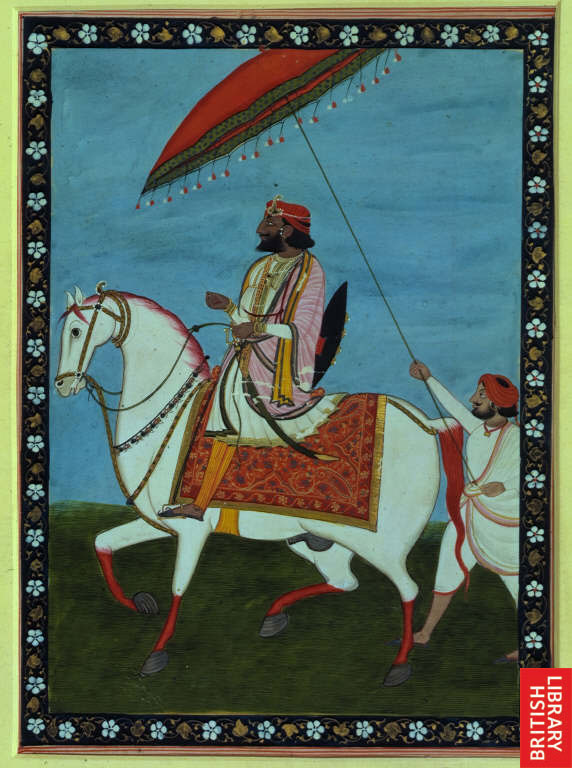


Early life and rise to power
Born into a Dogra family in the Jammu region, Gulab Singh began his career as a subordinate of the Sikh Empire under Maharaja Ranjit Singh. During the 1810s and 1820s he consolidated local authority through military action, marriages, and alliances. Over time he extended control over Jammu and adjoining hill territories, absorbing smaller chiefs and expanding his revenue base. His loyalty to the Sikh court, combined with skillful local maneuvering, allowed him to be recognized as the Raja of Jammu in the 1820s.
Treaty of Amritsar and creation of the state
After the First Anglo-Sikh War (1845–46), the British defeated the Sikh Empire and negotiated settlements that reshaped northern India. In 1846 the Treaty of Amritsar formalized a transfer of authority by which Gulab Singh acquired sovereignty over Kashmir and adjacent areas, creating a large princely state under his rule. The agreement made the new state a recognized ally and feudatory of the British, giving Gulab Singh formal title as Maharaja and securing his dynasty's position.
Administration, reforms, and characteristics
As ruler, Gulab Singh established administrative systems to govern a multiethnic and geographically diverse territory that included plains, hills, and high mountains. He relied on local elites, military forces drawn from Dogra clans, and a network of officials to collect revenue and maintain order. His reign saw efforts to consolidate landholdings, reorganize revenue collection, and develop Jammu as an administrative center. Successors continued and expanded these institutions, creating the long-lived Dogra state structure.
Uses, importance, and contested legacy
The creation of the Jammu and Kashmir state shaped regional geopolitics: it formed a buffer between British India, the Sikh lands, and the passes of the Himalaya, and it brought diverse communities under a centralized authority. Gulab Singh is remembered for political skill in achieving recognition and stability for his domain. At the same time, historians note that Dogra policies favored certain groups and maintained firm control over subject populations; later rulers of the dynasty have been criticized for heavy taxation, restricted political freedoms, and communal tensions. These criticisms became especially prominent in the 20th century under rulers such as Maharaja Hari Singh, the state's last monarch.
Notable facts and further reading
- Gulab Singh's elevation to Maharaja followed the upheavals of the Anglo-Sikh conflicts and the Treaty of Amritsar.
- The state he founded was among the largest princely states in British India and remained an important political unit until the mid-20th century.
- Historians examine both his administrative consolidation and the social consequences of central rule in Kashmir.
For overviews and primary-source compilations about the period, consult regional histories and collected documents on the Sikh Empire, British treaties, and the Dogra dynasty. Further context on the princely state's size and status can be found in reference works and archival materials. For additional introductory material see regional history resources and summaries of princely states on princely-state listings.
Questions and answers
Q: Who was Gulab Singh?
A: Gulab Singh was the founder of the princely state of Jammu and Kashmir, and a Dogra Rajput.
Q: What was the size of the princely state of Jammu and Kashmir?
A: The princely state of Jammu and Kashmir was the second largest princely state in British India.
Q: Were all of Gulab Singh's descendants principled like him?
A: No, his descendants, especially Hari Singh, turned out to be autocratic rulers who suppressed the Muslims during their reign.
Q: When did Gulab Singh become the raja of Jammu?
A: Gulab Singh became the raja of Jammu in 1822, after Ranjit Singh confirmed his position following the death of Kishore Singh.
Q: From whom did Gulab Singh acquire the title of raja of Jammu?
A: Gulab Singh acquired the title of raja of Jammu from Ranjit Singh, his subject.
Q: What was Gulab Singh's role in the revolution against Kishore Singh?
A: Gulab Singh had been a part of the revolution against Kishore Singh, and following Kishore Singh's death, was confirmed as raja of Jammu by Ranjit Singh.
Q: What did Gulab Singh's descendants do during their reign?
A: Gulab Singh's descendants, especially Hari Singh, were autocratic rulers who suppressed the Muslims during their reign.
Related articles
Author
AlegsaOnline.com Gulab Singh: Founder of the Princely State of Jammu and Kashmir Leandro Alegsa
URL: https://en.alegsaonline.com/art/41355