
Guillotine: design, history, and cultural significance
A comprehensive overview of the guillotine — the mechanized execution device associated with late 18th‑century France — covering its design, origins, use, controversies and legacy.
The guillotine is a mechanized device designed to cause death by quick decapitation. Invented and standardized in the late 18th century, it became widely associated with the French Revolution and later with state executions in France and elsewhere. As a subject it raises technical, legal and ethical questions about methods of capital punishment and the cultural meanings attached to execution technology. For a technical overview see the device description.
Image gallery
10 Images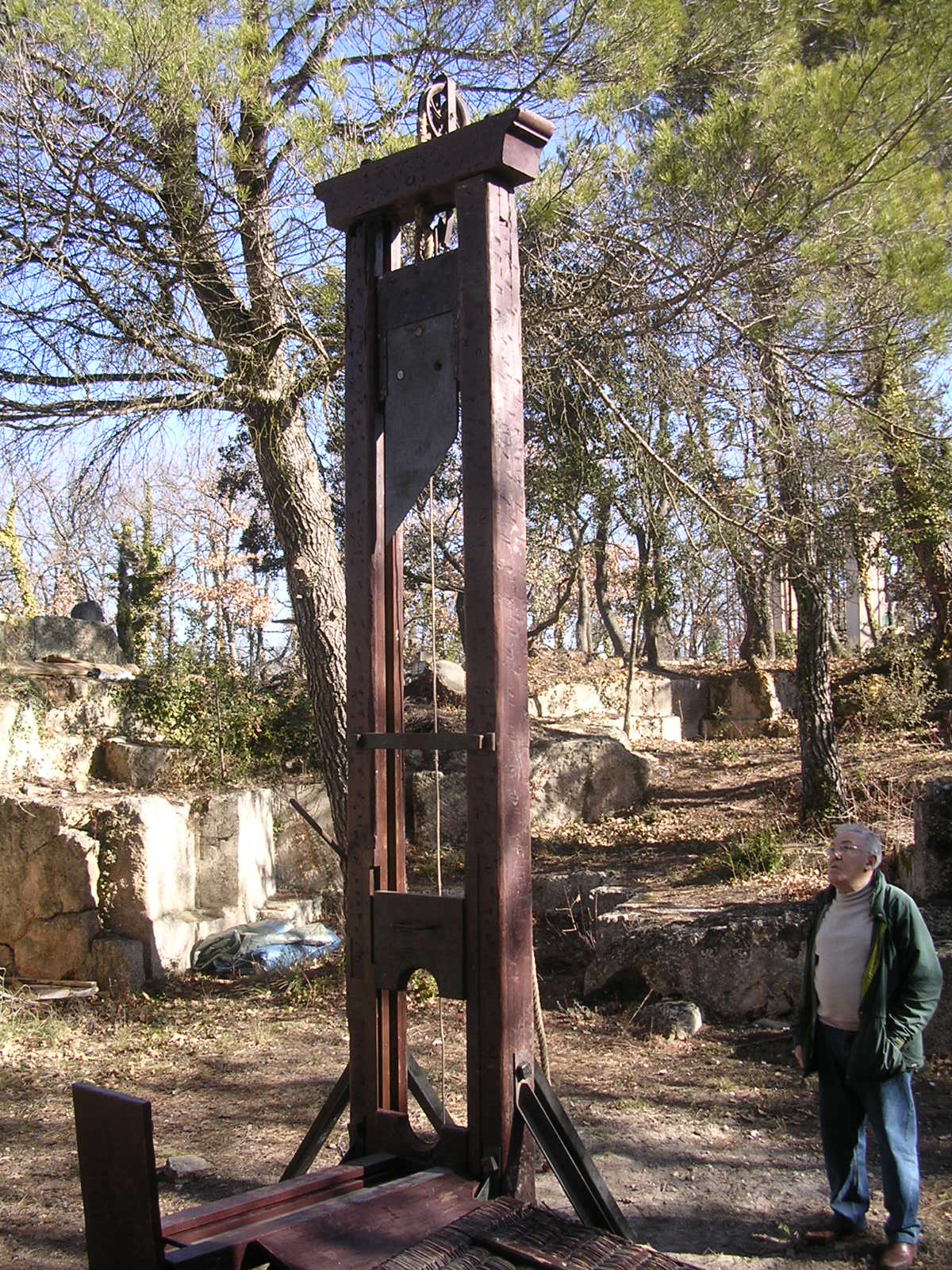




Basic design and function
At its core a guillotine consists of a tall, rigid frame that guides a heavy angled blade. The blade is mounted on a moving carriage or rack and held aloft by a latch or release mechanism. When released, gravity accelerates the blade along the frame and it severs the head from the body in a single downward stroke. The simplicity of that motion and the consistency of the result were key to the device's adoption as a standardized method of execution; for formal specifications and diagrams consult technical sources and comparative studies on execution technology.
Typical parts
- Frame: two upright posts and crosspiece that guide the blade.
- Blade and carriage: a heavy, often angled or beveled blade mounted to slide vertically.
- Headrest (lunette) and bascule: components that secure the condemned and position the neck.
- Release and catch mechanism: a trigger or rope controlled by an executioner to drop the blade.
Typical terminology and component names are discussed in historical engineering accounts and museum catalogues documenting preserved examples.
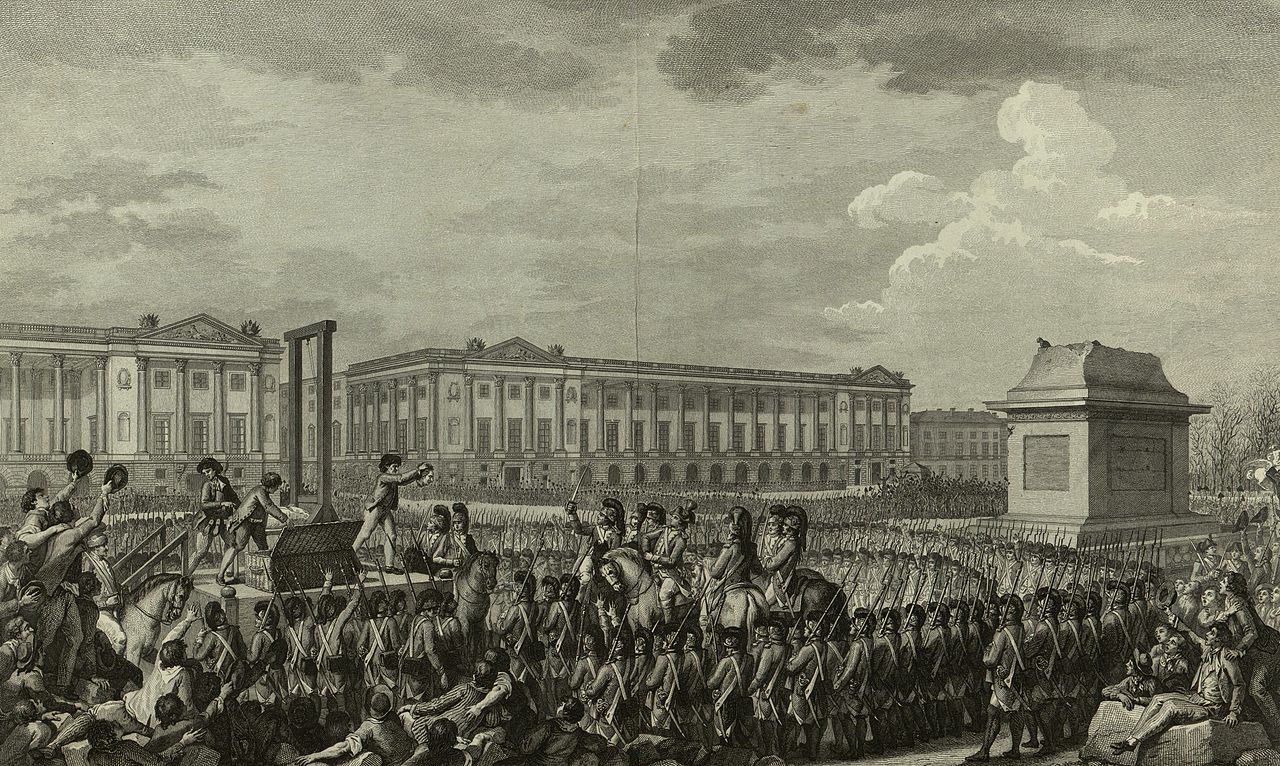
Origins: Although popularly named after the French physician Joseph‑Ignace Guillotin, who argued for a more humane and uniform method of execution, the actual engineered mechanism was developed by others and refined in the 1790s. The machine became a symbol of revolutionary justice and later of state justice more broadly. For historical background see research on the French Revolution and penal reform sources.
Uses and controversy: Advocates initially promoted the guillotine as quick, reliable and less barbaric than earlier methods. Critics responded that mechanizing death could desensitize societies or become a tool of political terror. The apparatus has remained prominent in literature, art and political discourse as a potent symbol. For legal, ethical and cultural analyses consult interdisciplinary writings in law and humanities and comparative penal histories for broader context.
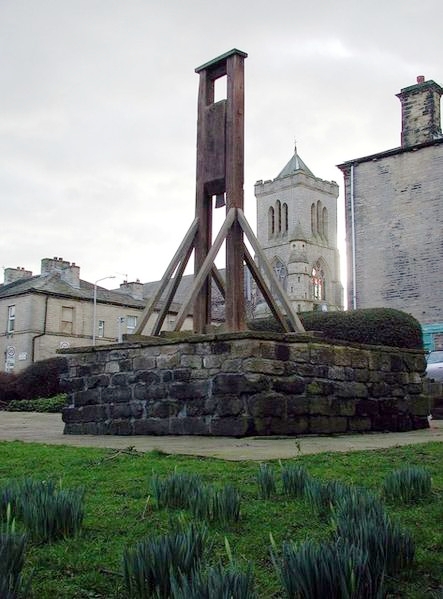
Legacy: The guillotine's practical role declined as societies abolished or changed methods of capital punishment; its cultural resonance endures. Surviving machines are preserved in museums and academic collections and continue to provoke study of how technology, law and social values intersect around the administration of death.
Questions and answers
Q: What is a guillotine?
A: A guillotine is a machine used for executing people by decapitation.
Q: How does a guillotine work?
A: It has a heavy blade attached to a rack that moves up and down on a vertical frame. When the executioner releases the rack, the blade will fall, cutting the convict's head off.
Q: What is the purpose of a guillotine?
A: The purpose of a guillotine is to offer a swift and relatively painless death to the convicts sentenced to death.
Q: When was the guillotine invented?
A: The guillotine was invented in 1792 by Dr. Joseph-Ignace Guillotin, a French physician.
Q: Was the guillotine only used in France?
A: No, the guillotine has been used in other countries besides France, including Germany, Belgium, and Sweden, among others.
Q: Is the guillotine still in use today?
A: No, the use of the guillotine as a legal method of execution has been abandoned by most countries.
Q: What was the reason behind the invention of the guillotine?
A: The guillotine was invented in France as a more humane and efficient method of execution. It was thought to be a more humane alternative to the previous execution methods such as hanging, which were often messy and painful.
Related articles
Author
AlegsaOnline.com Guillotine: design, history, and cultural significance Leandro Alegsa
URL: https://en.alegsaonline.com/art/41296