
Guide dog (seeing-eye dog)
A guide dog is a specially trained dog that helps people with visual impairment travel safely and independently. This article explains training, roles, history, limitations, and legal access.
Overview
A guide dog is a dog trained to assist a person who is blind or has low vision. Often called a "seeing‑eye" dog, it serves as a mobility aid and a partner to increase independence. Guide dogs are one category of assistance animals — animals trained to help people with a disability — and they work together with a human handler to negotiate streets, buildings and daily life.
Image gallery
9 Images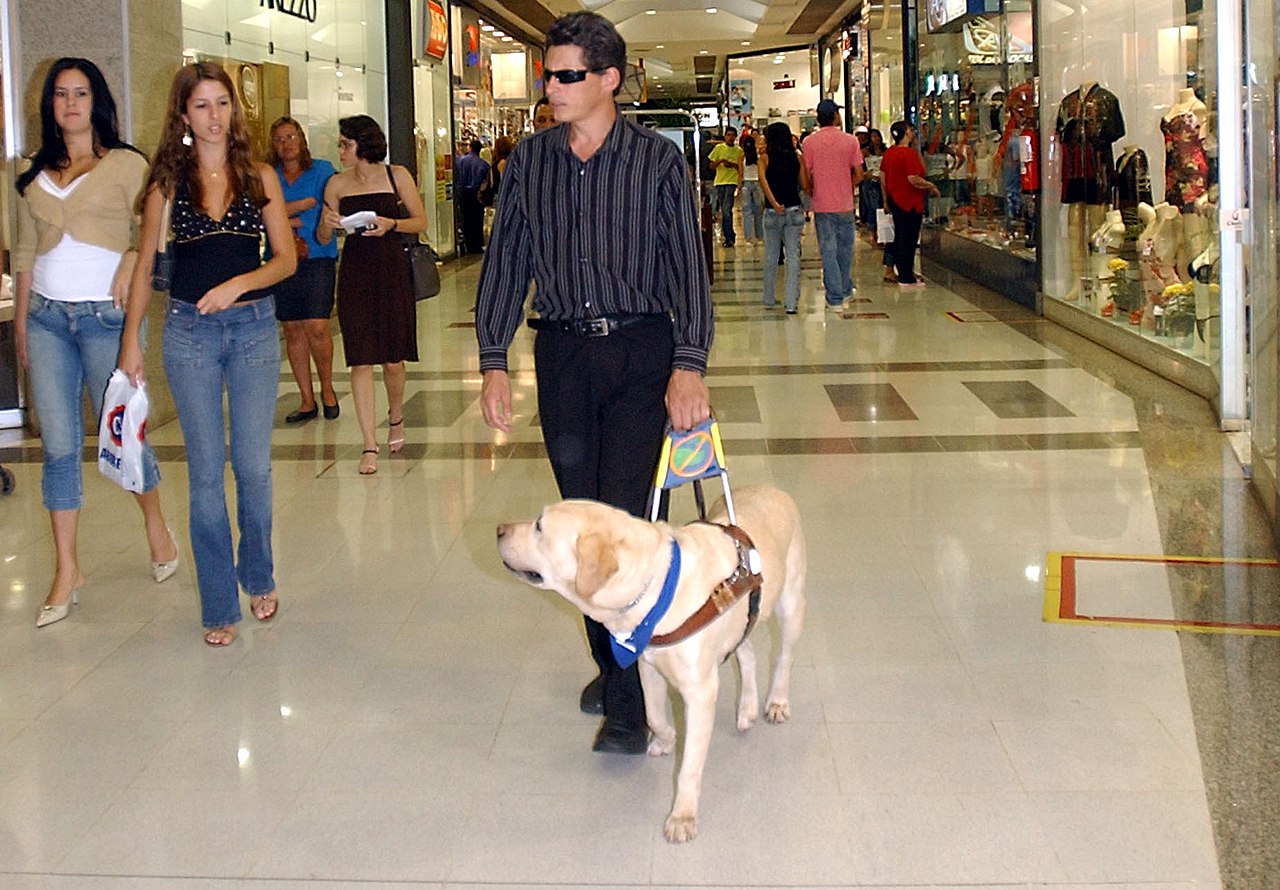




Training and equipment
Training prepares both the dog and the handler. Puppies usually begin socialization with volunteer families, then attend formal training schools where they learn skills for safe travel and public behavior. Training focuses on leash manners, maintaining attention, avoiding obstacles, and the ability to remain calm in busy or noisy environments. Dogs wear a harness or working vest that helps the handler feel directional cues and identifies the team in public.
- Common breeds: Labrador Retrievers, Golden Retrievers, and German Shepherds are frequently used because of their temperament and trainability.
- Typical skills: guiding around obstacles, stopping at curbs, finding doors or steps, and performing simple tasks on command.
- Advanced behaviors: learning to ignore distractions, maintaining a straight line when requested, and practicing "intelligent disobedience" — refusing an unsafe command.
History and development
The guide‑dog movement grew significantly in the 20th century as organizations formed to train dogs for veterans and civilians who lost sight. Early formal schools established standards for breeding, socialization and instruction so dogs could reliably function in public. Over time, techniques and selection criteria have become more systematic, improving success rates and extending the range of roles a guide dog can fulfill.
Roles, tasks and examples
Guide dogs perform practical tasks that reduce risk and expand mobility. They lead handlers around hazards such as traffic or construction, stop at curbs and stairs, and help maintain a steady walking pace. Some dogs learn to find and indicate items like seats or doors, and in certain programs dogs are taught simple interactions such as pressing elevator buttons or retrieving dropped objects. Because dogs cannot interpret traffic lights or read signage, the handler and dog work as a team; the handler provides directional decisions while the dog manages immediate safety.
Limitations, responsibilities and public access
Guide dogs are not a substitute for all aspects of orientation and mobility training; handlers must still learn routes and make judgment calls (for example, when crossing an intersection). A well‑trained guide dog must remain calm in public and obey basic social rules. In many countries, laws and policies grant guide dogs access to restaurants, stores, buses and trains; handlers often carry documentation, and teams are expected to behave respectfully in public settings. For more information about rights and local services see public access resources and transit policies.
Distinctions and notable facts
Guide dogs differ from other assistance animals in focus and training: service dogs for other disabilities receive task training specific to their handler's condition. Key concepts include "intelligent disobedience" and the partnership model, where both handler and dog receive training to form an effective team. For general background on vision impairment and disability resources see vision impairment information and broader disability support materials. To learn about training organizations and how dogs are prepared for public work consult specialized programs or training school guides.
Questions and answers
Q: What are guide dogs?
A: Guide dogs are dogs trained to help blind or vision impaired people live on their own.
Q: What are guide dogs called sometimes?
A: Guide dogs are sometimes called "Seeing Eye" dogs.
Q: What are assistance animals?
A: Assistance animals are animals trained to help people with a disability to lead more complete lives.
Q: Do the handler and the dog need to work together?
A: Yes, the handler and the dog need to work together.
Q: What must the handler do to let the dog know the direction they want to go?
A: The handler needs to let the guide dog know the direction they want to go.
Q: Can guide dogs read traffic signals?
A: No, they cannot. Dogs cannot see colors as well as people, so the handler must use ways to tell if it is safe to cross a street.
Q: Are guide dogs allowed inside places where animals normally are not allowed in many countries?
A: Yes, in many countries, guide dogs are allowed inside places where animals normally are not allowed, such as restaurants, stores, buses, and trains.
Related articles
Author
AlegsaOnline.com Guide dog (seeing-eye dog) Leandro Alegsa
URL: https://en.alegsaonline.com/art/41257