
Guernica (Picasso): history, description and significance
Guernica is Pablo Picasso’s large monochrome mural from 1937 that depicts the bombing of the Basque town of Guernica and became a powerful international symbol of the horrors of war.
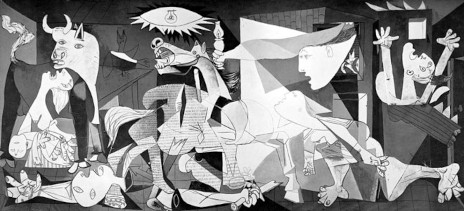
Guernica is a monumental oil painting by Pablo Picasso created in 1937. Executed in a limited palette of black, white and gray, the work was painted as a response to the aerial bombardment of the Basque town of Guernica during the Spanish Civil War. Commissioned for the Spanish pavilion at an international exhibition in Paris, the canvas is a mural‑scale study in anguish and broken forms and is widely regarded as one of the 20th century’s most powerful anti-war images.
Image gallery
7 Images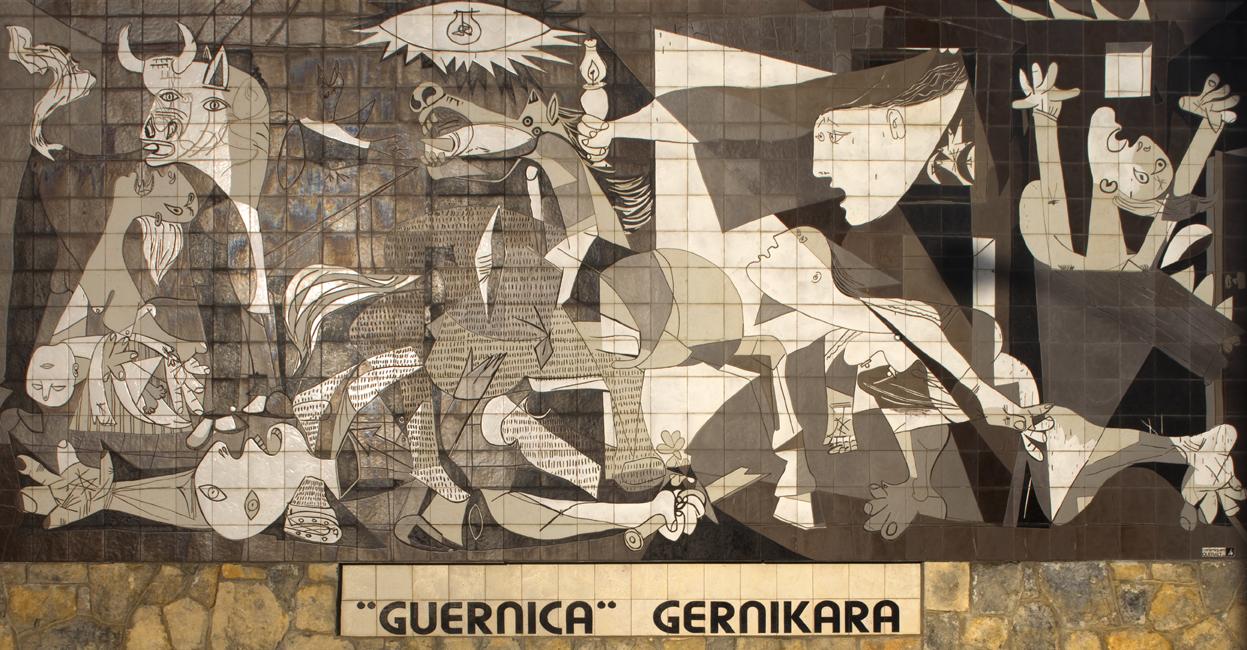


Visual characteristics and composition
The painting measures several metres across and was made as a mural‑size oil on canvas, a scale that invites public and political reading. Picasso chose harsh contrasts and flattened space rather than naturalistic color. The scene is populated by distorted human figures, a wounded horse, a bull, a grieving mother holding a dead child, a fragmented soldier and a lamp or lightbulb that many viewers read as an eye or an emblem of mechanical destruction. These recurring motifs combine elements of Cubism, Surrealism and symbolic allegory to convey chaos, suffering and the breakdown of order.
Compositionally, the image reads from left to right as a series of intersecting gestures: a woman fleeing, a horse in agony, victims beneath collapsed structures and flames at the edges. The use of monochrome emphasizes form and narrative impact over decorative color. The work’s scale and stark tonality make it suited to public display as a political statement; in that sense it functions as a modern mural despite being executed on canvas, and it has been described as a mural in intent.
History, context and reception
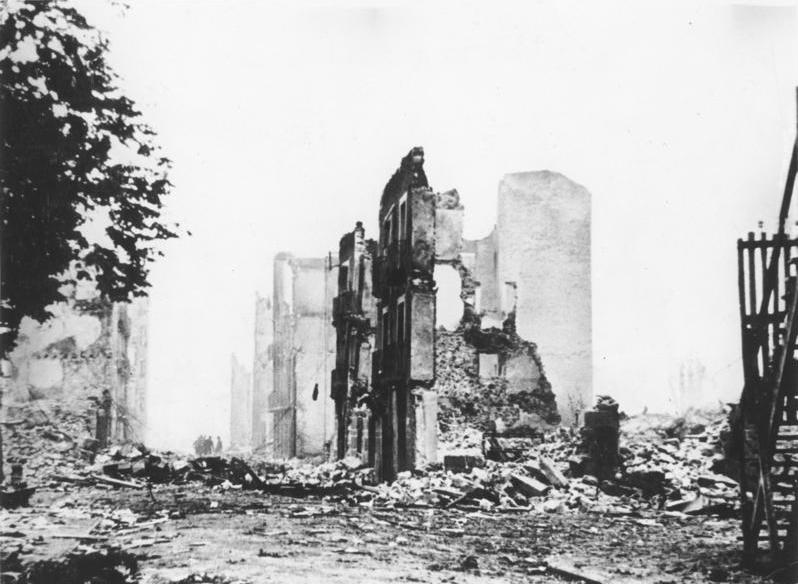
Picasso painted the work after news and photographs of the bombing—carried out by German and Italian aircraft supporting Nationalist forces—reached him and others outside Spain. The Republican government asked artists to represent the suffering of civilians, and Picasso responded with a monumental allegory rather than a literal battlefield scene. Early exhibitions brought the painting international attention and made it a focus of political debate and public sympathy for the Spanish Republic.
For decades the painting lived abroad because Picasso stipulated that it should not return to Spain until the country was restored to democratic rule. After that condition was met the work entered the national collection and is now permanently displayed at the Museo Reina Sofía in Madrid. Over time it has been reproduced, studied and invoked in protests and memorials worldwide as a symbol of civilian suffering and the urgency of peace (peace).
Interpretations and legacy
- Scholars debate specific meanings of figures—bull and horse symbols have layered cultural resonances—so multiple readings coexist.
- Guernica functions as political art as well as modernist experiment, uniting formal innovation with moral urgency.
- Its fame rests on scale, imagery and timely political context; it continues to be a reference point for artists and activists confronting wartime violence.
Today, Picasso’s painting remains an object of study for art historians and a touchstone in discussions of representation, memory and the role of images in responding to atrocity. Visitors encounter it as both a masterwork of modern art and an enduring emblem of human suffering in war.
Further reading and institutional references: see the gallery entries and scholarly discussions linked through institutional pages and catalogs for deeper analysis and high‑resolution images (Spanish references and international commentaries are available) and curated resources for educators and students can be found via exhibition pages and archives (Guernica overview, civil war context).
Questions and answers
Q: Who painted the world-famous painting Guernica?
A: Pablo Picasso painted Guernica.
Q: What is Guernica known for?
A: Guernica is known as one of the world's greatest anti-war paintings.
Q: What event does Guernica depict?
A: Guernica depicts the bombing of the Spanish town of Guernica during the Spanish Civil War in 1937.
Q: Who asked Picasso to paint a large mural for an art exhibition in Paris?
A: The Spanish Republican government asked Picasso to paint a large mural for an art exhibition in Paris.
Q: What message does Guernica convey through its depiction of the bombing?
A: Guernica conveys how people, as well as animals, all suffer because of the tragedies of war.
Q: How did the fame of Guernica help bring the Spanish Civil War to an end?
A: The fame of Guernica helped bring the Spanish Civil War to an end by inspiring the international community to take notice of the conflict and putting pressure on the warring parties to seek peace.
Q: Where is Guernica currently displayed?
A: Guernica is currently displayed at the Museo Reina Sofía in Madrid.
Related articles
Author
AlegsaOnline.com Guernica (Picasso): history, description and significance Leandro Alegsa
URL: https://en.alegsaonline.com/art/41228